
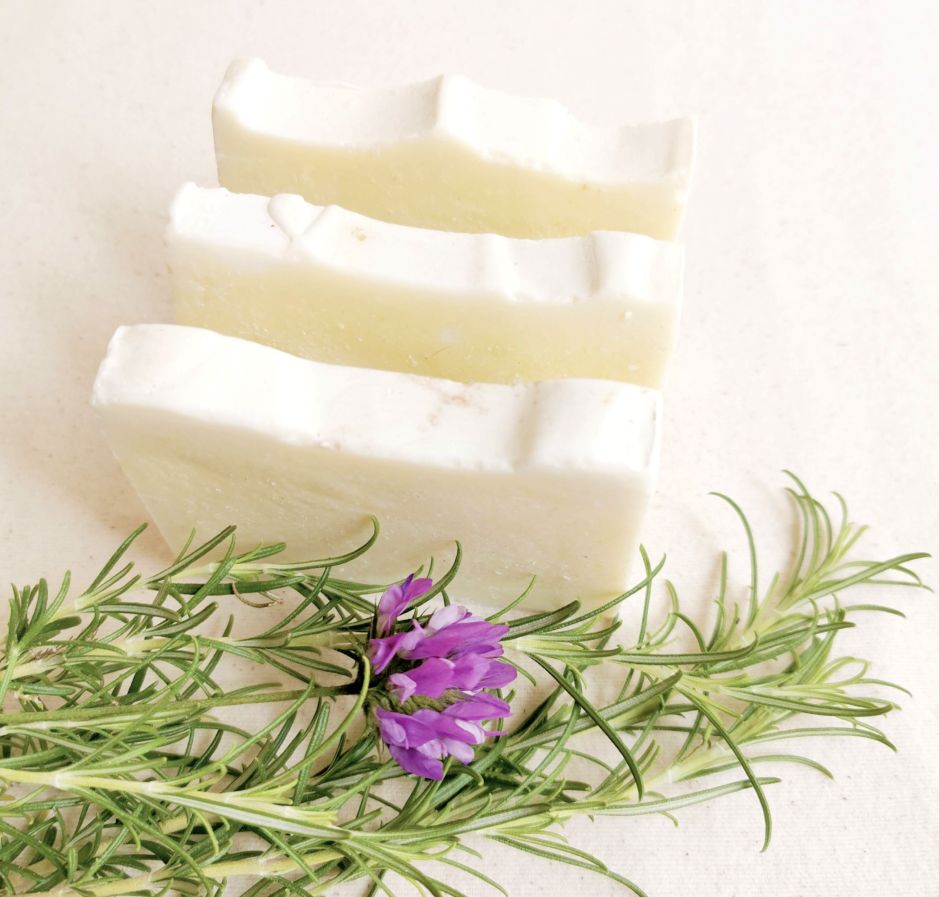
Do you want your clothes, in addition to washing them in the most environmentally friendly way possible, to be white, stain-free and smelling clean?
Do you want a very stable recipe to prepare a cold saponified laundry soap? With this recipe you will be left with a beautiful white soap that will leave your clothes perfect.
Apply this recipe for Marseille soap with 2% overgreasing:
| MARSEILLE SOAP FOR THE LAUNDRY | |
| Palm shortening | 750 grs |
| Coconut oil | 200 grs |
| Borax powder | 110 grs |
| Caustic soda | 140 grams |
| Water | 328 grams |
| TOTAL: | 1518 grs of soap |
*Palm fat is often found in some supermarkets for use in frying and is often called hydrogenated vegetable palm fat.
PROCEDURE
- Weigh components.
- Mix the soda into the water (not the other way around) in a heat-resistant container, like Pyrex. It’s best to do this outside (on a terrace or balcony) to avoid inhaling fumes. Once the mixture cools below 40 degrees, it’s safe to add it to the melted oils.
- At the same time, melt the palm shortening and coconut oil on low heat.
- Check that both the lye (water and soda mix) and the melted oils are below 40 degrees using a soap thermometer.
- Now, add the lye to the melted oils and mix gently with an electric mixer.
- When the soap starts to thicken, known as “trace,” stop mixing and pour it into a plastic or silicone mold for easier removal. Work quickly because it thickens and hardens fast.
- Let it harden for a few hours or overnight. The next day, it will be ready to remove from the mold and grate. If you wait too long, it will be harder to grate.
- After grating, use this soap in your laundry at a rate of one tablespoon of flakes per load of phosphate-free detergent, as shown in the washing box image.
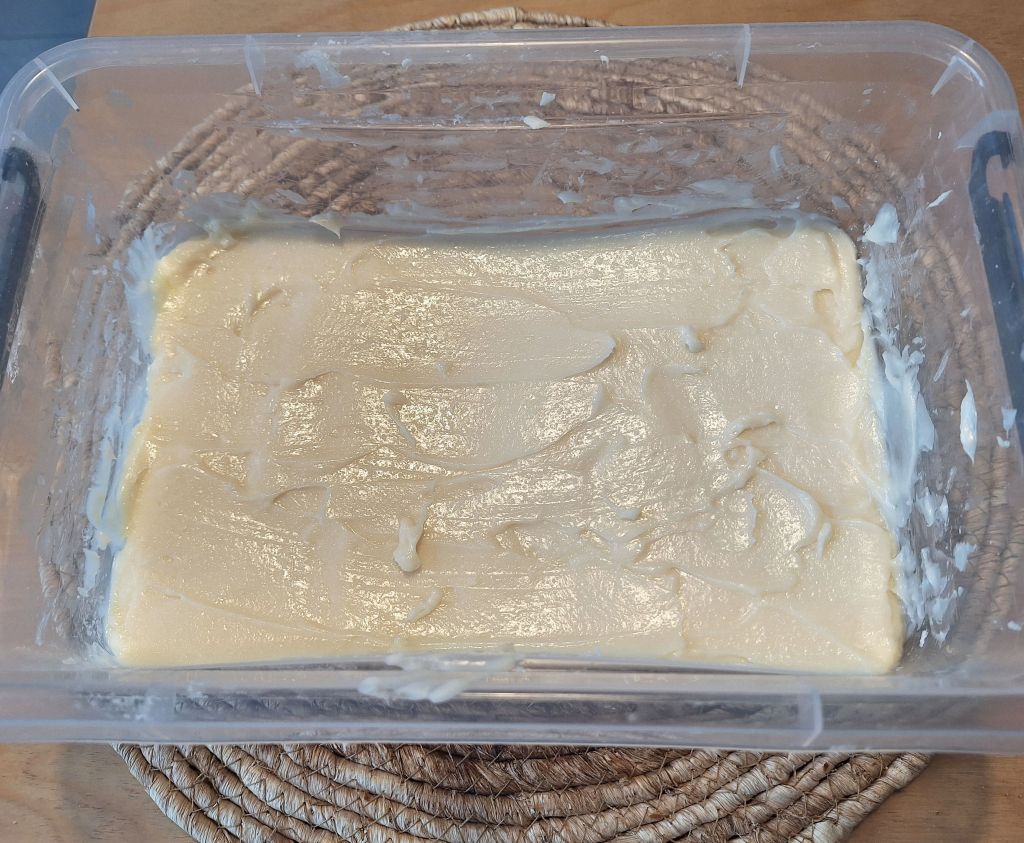
With this amount of Marseille soap that we have prepared in the recipe, when we reduce it to flakes, we will obtain several containers (jars) of approximately 1 liter capacity, to use for months in the weekly laundry.
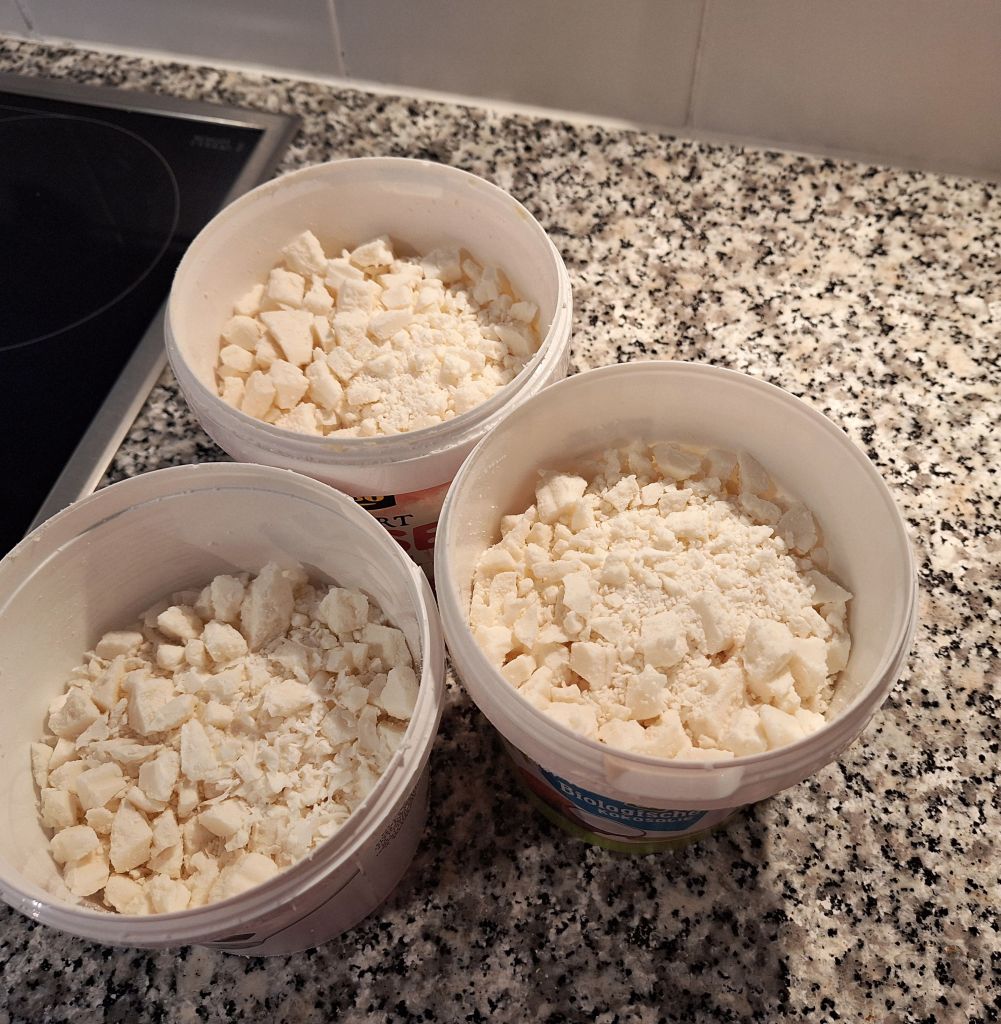
And with these soap flakes, and a few additives detailed below, your laundry will be unbeatably clean.
HOW TO ORGANIZE THE ECOLOGICAL WASHING BOX
When doing the laundry, if you use this Marseille soap, or any other cold saponified soap based on natural oils and fats, you can organize the drawer of your washing machine in this way:
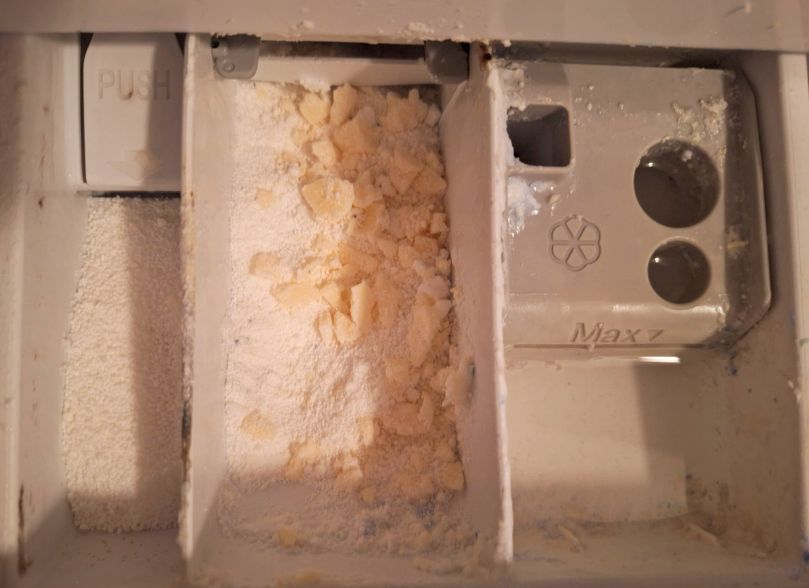
Current washing machine drawers usually have 3 sub-drawers:
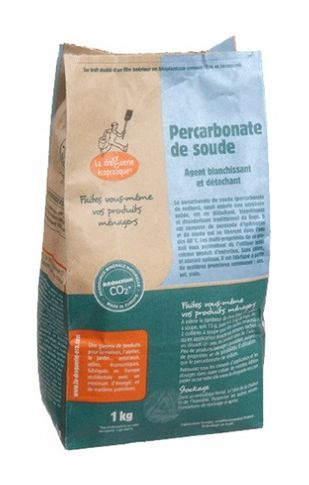
1.- A small box in which oxygen is introduced to whiten the laundry and remove blood stains, etc… If you use oxygen, it is quite ecological and biodegradable. In any case case, you can always use an even more environmentally friendly bleaching solution that is already on sale in many supermarkets, sodium percarbonate, which performs the same functions while being even more biodegradable and cheaper.😊
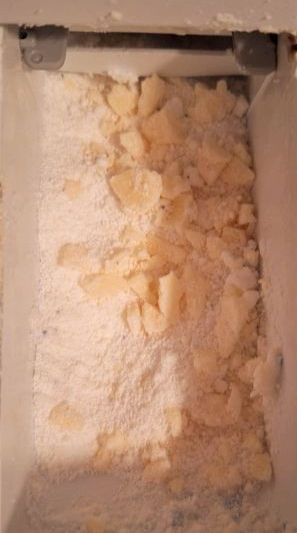
2.- In the center drawer, more spacious, we can add a phosphate-free and ecological detergent powder and, mixed with it, our Marseille soap flakes, which we will have obtained after grating the cold saponified soap. In this way, our laundry, especially cotton and natural fibers, will be much better.
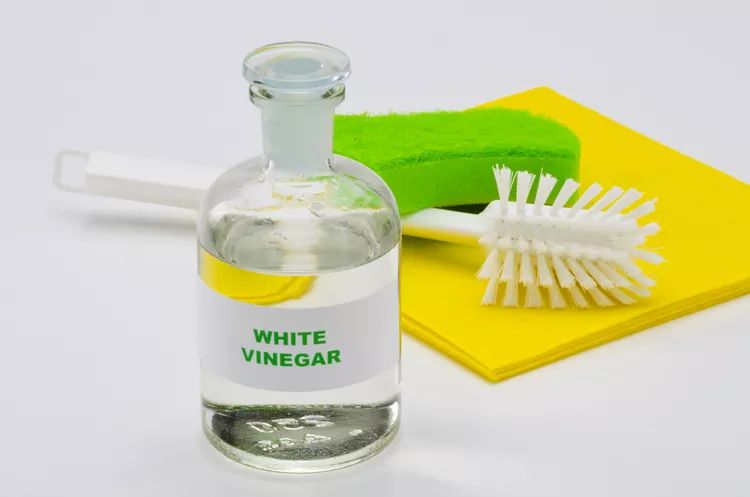
And in the third drawer, where the softener is usually added, it is possible to replace the commercial softener with white cleaning vinegar, which leaves a totally neutral aroma in the laundry, and also takes care of the machine. Thus, not only do we reduce the limescale in the washing machine, but we also take care of the environment, since natural vinegar is a much less harmful product.
THE ABOVE RECIPE HAS MANY ADVANTAGES AND SOME DISADVANTAGES
The advantages of this recipe is that this soap remains in perfect condition for months when crushed into flakes, which is not the case with all homemade cold saponified soaps.
Another great advantage is that, immediately after unmolding, it can be easily broken into smaller pieces that also grate very easily to become flakes, which we can then add to an ecological powder detergent with which to wash our clothes, especially white and cotton clothes.
The third major advantage is that, due to the addition of borax, it leaves white and cotton linen particularly well. Much better than soaps made from recycled olive oils that tend to leave a rancid greasy smell if not processed properly. And, all this, while still being a fairly inexpensive recipe.
And the only disadvantage is that it is largely made with palm oil, which, as we know, is a monoculture produced in Indonesia and other tropical places for which large tracts of rainforest are cut down. But without this butter, we have found that the soap is not as stable. In fact, this type of oil is widely used industrially because of its high saponification rate, especially in soap making.
OILS THAT HARDEN OUR BARS OF SOAP AND GIVE THEM CONSISTENCY
There are a number of oils that accelerate the trace and result in harder and more stable soaps. This is the case, for example, with palm oil, castor oil, almond oil or shea butter.
Palm oil (in this case palm shortening) curdles easily and accelerates the trace, so you have to work fast with it or the soap will harden quickly. The same thing happens with castor oil, which is why it results in very hard, stable and creamy-looking soaps with lots of lather.
These characteristics are also present in the bars that include almond oil or shea butter among their ingredients. Shea butter is a solid vegetable shortening that can also be used to make hard soap.
These oils can be combined with others (such as coconut oil, olive kernel oil…), but it is not advisable to use only one of them because the soap will not have the consistency and foam qualities we are looking for.
For example, one of the oils that provide our soap with a high lathering capacity is coconut oil, which is essential oil when making washing soaps.
In general, certain percentages of these oils are always included in washing soaps:
Palm oil: at least 10% to 30%, depending on how thick we want it.
Castor oil: 10% to 20%.
Coconut oil: 20% to 30%.
Olive oil (pomace oil): 20% to 30%.
*What is clear is that when we try to substitute palm shortening with a cheap and soft oil such as commercial sunflower or corn oil for frying, the soap is not hard and consistent enough and tends to go rancid in a short time. Therefore, it is not interesting for washing, since it takes months from the time we prepare a batch of soap and grind it into flakes until it is fully used.
ALTERNATIVES BY ADDING ROSIN OR STEARIC ACID
Another possibility to obtain a more environmentally friendly recipe could be to replace the palm shortening with a mixture of coconut oil and olive kernel oil, which also provides hardness and washability, and also add a few grams of rosin to the recipe.
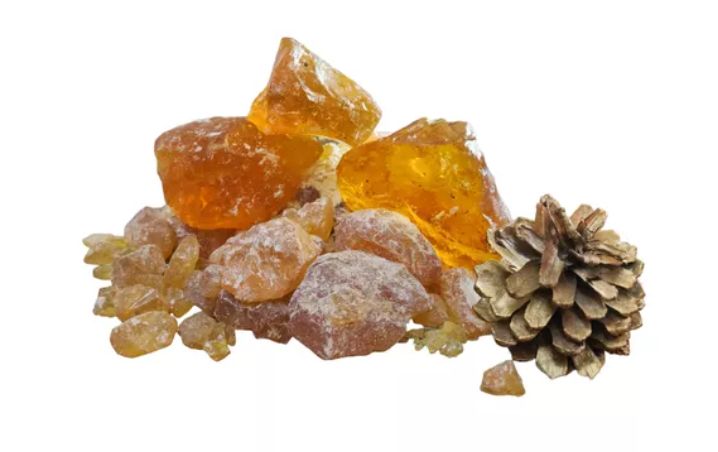
Rosin, also known as pece greca, rosin or Pez de Castilla, is a yellow vegetable resin, a kind of solid, transparent amber crystal obtained from the exudation of growing coniferous type trees.
This “pez”, which was used in the past to waterproof wineskins and wine skins, as well as the hulls of wooden ships to seal them and, even today, in northern Europe, traditional wooden huts, is used today to make high quality industrial and handmade soaps, or even to make ointments and salves to which it provides emollient and preservative properties.

Therefore, we know that rosin is insoluble in water, although it does dissolve in most organic solvents. So it will be important if we are going to prepare some kind of recipe with rosin, that we provide us with the appropriate solvent. The best solvent for pine rosin is alcohol or ethanol. In this way we will avoid possible complications in clothes or other type of utensils because rosin, once dissolved, is extremely sticky.
THE ADDITION OF ROSIN OR PINE RESIN IN COLD SAPONIFIED SOAP
As we were saying, it is used in the elaboration of natural soaps for laundry since it improves the cleaning properties, favors the saponification of fats and prevents oils from becoming rancid. It is also used as a hardener, helping the soap to take longer to break down with use.
However, if we want to make homemade soap with rosin, it is essential to respect the percentages. At most, the addition of rosin should be 1% of the total amount of oils and butters used. If we exceed this amount, our soap will curdle so quickly that it may not be able to be molded, as rosin greatly accelerates the trace.
Rosin is a resin that is commercialized in small stones of different sizes. When incorporating it into our homemade soap recipe, it is better if we can crush it and pulverize it as much as possible because it will be easier to melt it with the rest of the oils and shortenings. The saponification index of rosin is approximately 123 for caustic soda.
THE OPTION OF STEARIC ACID TO HARDEN OUR SOAPS
Another option is to use stearic acid to obtain harder soap bars. In this case, the recommended percentage is 5% of total oils and shortenings. Stearic acid should be combined with less saturated oils, such as olive oil (better olive pomace) or coconut oil, otherwise the resulting soap will be too hard and brittle. Its saponification value, when calculating the recipe, is approximately 147 for caustic soda. And it is put into the calculator like any other fat or oil.
A THIRD ALTERNATIVE WITH TALLOW/FAT FROM ANIMAL ORIGIN
Another alternative would be to use animal tallow, which is a fat that also provides great consistency and stability to the soap. But this alternative, as with palm shortening, is not a very environmentally friendly alternative either.
THE ADDITION OF SALT OR SUGAR TO THE LYE
Lye is the name given to the mixture of water and soda (sodium hydroxide). Salt or sugar is added to the lye water and dissolved before the soda is added. The salt adds consistency and hardness to the soap and the sugar adds a little more bubbles.
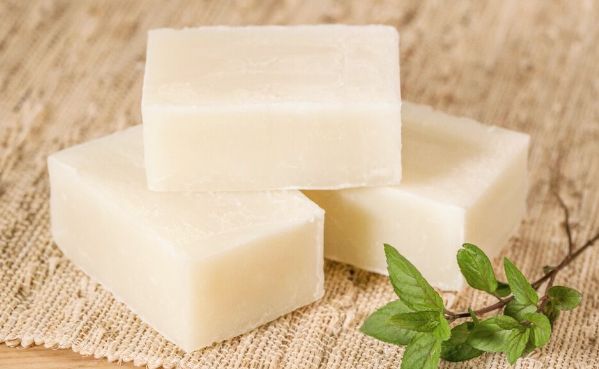
We haven’t worked on the formulation of this new recipe yet, perhaps because the previous one works so well. Can you readers think of a more environmentally friendly formulation for this laundry soap including olive kernel oil, coconut oil and pine resin?
Let me know in the comments.
However, we bring you a coconut soap recipe to make organic and biodegradable washing butter that you will love.
COCONUT SOAP FOR LAUNDRY
This is a recipe for laundry soap based on coconut oil. The reason we wanted to introduce this recipe is because it makes it easier to make the washing butter that we will talk about next.
In general, coconut oil is used to a greater or lesser extent in all cold saponified laundry soap recipes, and this is mainly due to the enormous cleaning capacity that this oil provides and also because it produces more foam than other oils.
On the other hand, coconut oil soap is one of the easiest soaps to make, mainly because it hardens and sets very quickly. In addition, it is very easy to grate once we have unmolded it, which facilitates its quick incorporation into our washing recipes.
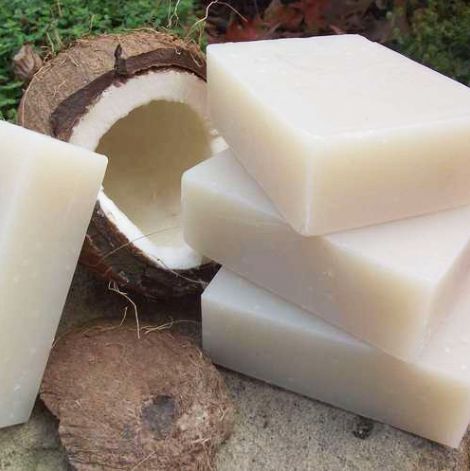
As you can see, this soap is even whiter than the previous palm butter soap.
Special coconut soap recipe for laundry:
| COCONUT SOAP FOR LAUNDRY | |
| Coconut oil | 225 grs |
| Caustic soda | 45 grs |
| Water | 75 ml |
| TOTAL: | 350 grs of soap |
This recipe is to prepare 350 grams of coconut soap, exactly enough for a full recipe of washing butter.
It is convenient to remember that the handling of caustic soda requires certain precautions, so do not forget to use eye protection and polypropylene gloves to weigh and mix the water with the caustic soda, which is the mixture known as lye in the soap industry.
PROCEDURE:
- Weigh the ingredients.
- Mix the soda with water (never the other way) in a heat-resistant container, like Pyrex. It’s best to do this outside (on a terrace or balcony) to avoid breathing in fumes. Once the mixture cools below 40 degrees, you can safely add it to the melted oils.
- Meanwhile, melt the coconut oil over low heat.
- Use a soap thermometer to check that both the lye (water and soda mixture) and melted coconut oil are below 40 degrees.
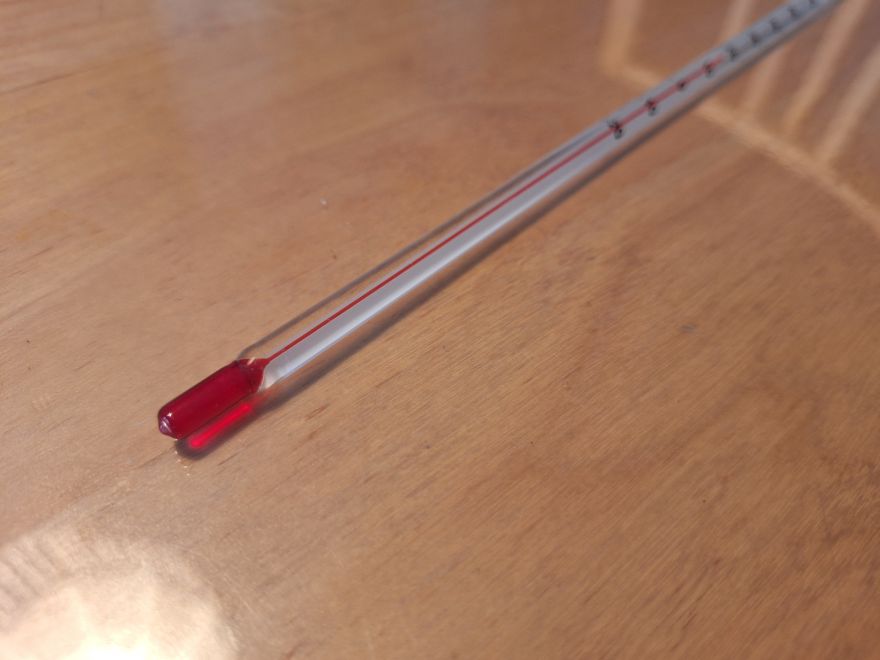
5. Add the lye to the melted coconut oil and stir gently with an electric mixer.
6. When the soap starts to thicken, known as “trace,” stop mixing and pour it into a plastic or silicone mold to make it easier to remove later.
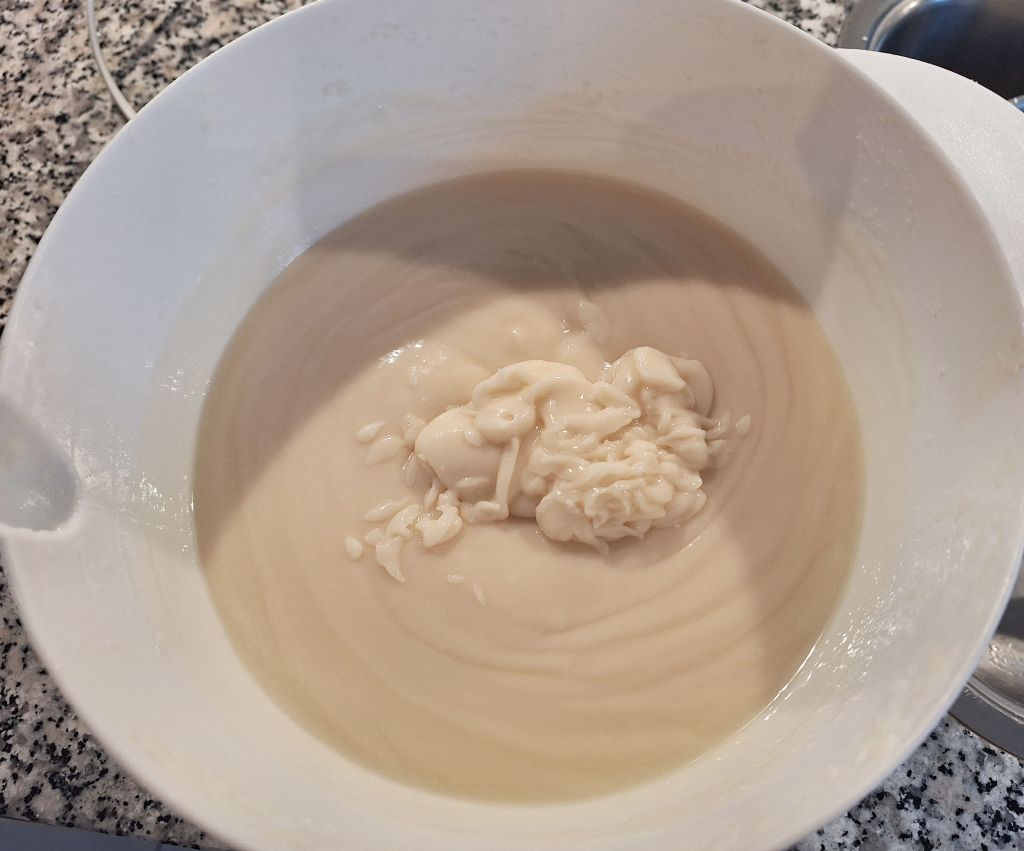
7. Let it harden for a few hours or overnight. If you wait longer, it will be harder to grate.
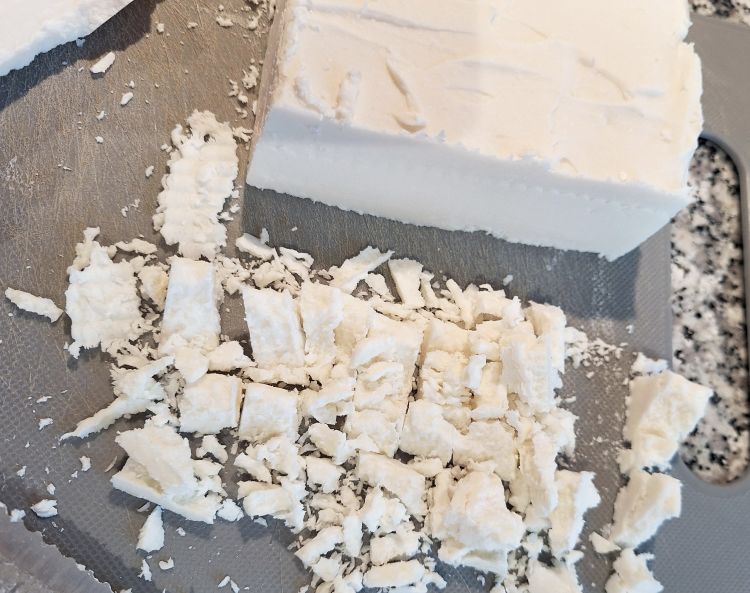
Since this soap hasn’t saponified for long, wear gloves to remove and grate it in case there are leftover active lye traces that could irritate your skin.
Once grated, this soap can be used right away to make the washing butter recipe that follows.
WASHING BUTTER
Here is a recipe for a homemade, biodegradable laundry butter made from natural ingredients such as soap, borax and soda.
In principle, the coconut soap recipe we have just described would be the ideal recipe for preparing this butter because we have also calculated the recipe based on the 350 grams of coconut soap we need to make our washing butter.
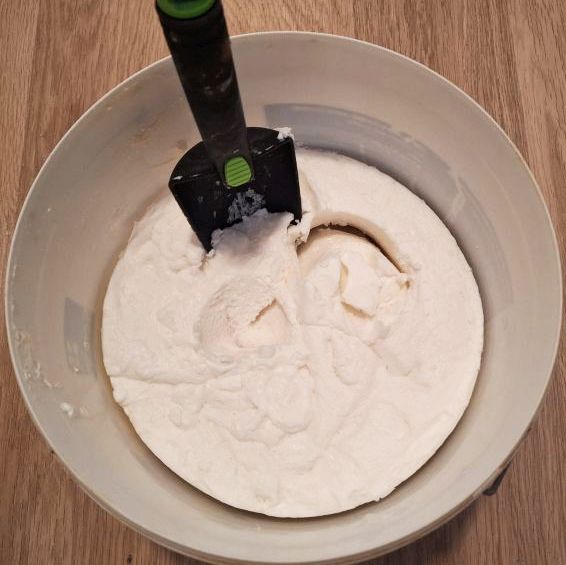
However, if you have prepared the previous Marseille soap, you can also use 350 grams of it to prepare this washing butter.
Washing butter recipe for laundry:
| WASHING BUTTER | |
| Coconut soap | 350 grs |
| Borax | 2 cups, about 500 grs |
| Washing soda | 2 cups |
| Water | 3 liters |
INSTRUCTIONS:
1. Bring 3 liters of water to a boil, and remove from heat.
2. Pour the grated soap into the hot water and stir to dissolve completely.
3. Slowly add (avoiding excess foam) the 2 cups of borax and stir until dissolved.
4. Add the 2 cups of washing soda (sodium carbonate, usually called natron or washing soda) and stir to integrate the whole mixture.
*It is important not to confuse the soda we use in this recipe, based on sodium carbonate, with some types of washing soda that are based on calcium carbonate.
5. The grated soap, borax and washing soda now dissolve in the hot water. The step now is to cover the pot with the lid and let the mixture sit at room temperature for about 8 hours (overnight works well) until it cools and settles completely.
If we lift the lid to take a look after a couple of hours, we will see that the liquid in the pot has become almost completely transparent, it almost looks like a pot full of water. However, after the mixture has rested at room temperature for a few hours, a major transformation takes place, the mixture gels.
6. When the mixture is completely cold and gelled, we can beat it with an electric mixer so that all the mixture is well integrated, even the remains of borax that may have been more at the bottom.
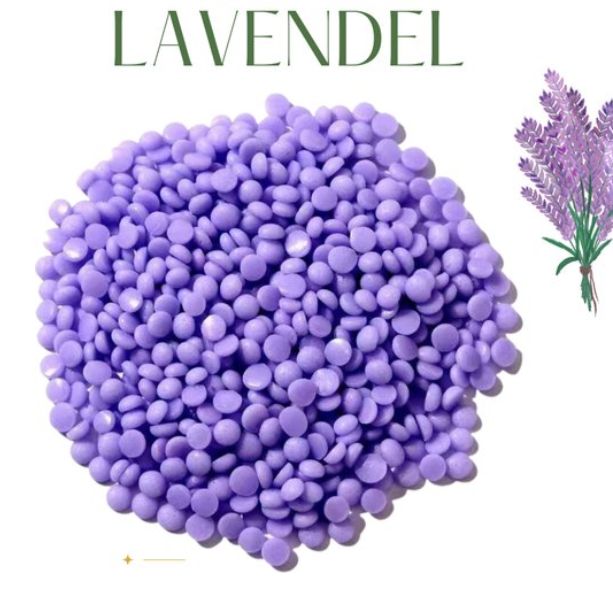
7. Optionally, now is the time to add some type of aroma to the mixture. We can add some combination of essential oils that we like, or it is also possible to add fragrances. For example, by crushing some of the commercial fragrance bars for the laundry, which in this way will be better integrated into our soap butter base.
8. Now, with the addition of the 3 liters of water, we will have about 3000 grams of soap butter ready to use in our washing machine, even with the most delicate clothes. We will place it in a storage container such as plastic containers or buckets.

We will only need from two to four tablespoons of butter to wash, depending on the size of the load and the soiling of the clothes.
Some people like to add a little white vinegar to the rinse cycle, this not only conditions the clothes, especially natural fibers such as cotton, but also removes any soap residue that may remain and keeps our washing machine in good condition by preventing limescale build-up.
If you have never used white vinegar in the washing machine you might think that the clothes are left with a vinegar scent, but this is not the case at all. Even if we don’t add fragrances to our laundry butters, the result is that the laundry comes out of the washer smelling completely clean.
In addition, if you have this washing butter, you do not need to add much more to your ecological box because the borax and the soda it contains take care of the rest.
Happy eco-washing!
 Naturamatters blog