For those who do not know what a serum is in natural cosmetics, to explain that it is a very simple preparation that normally consists of the combination of a quality vegetable oil appropriate to the skin problem that we want to treat and a few drops of essential oils also suitable to our specific problem.
There are variations of serums like this that we are going to prepare in which we include aloe vera because it will be very useful as a regenerator of skin exposed to the sun.
Continuing with the theme of summer and photoprotection, we wanted to include a recipe for skin regenerating serum for those who, despite all the advice, have not been able to avoid toasting excessively during these holidays.
Ingredients:
-2 tablespoons (15grs each) of infused lavender (it is also possible to use lavender hydrolate if you have it).
– 1 tablespoon of purifying and dermoprotective vegetable oil, such as those of neem or calendula.
– 1 tablespoon of aloe vera dry extract. We are going to use dry extract because it is to regenerate sunburned skin and we don’t want it to have preservatives like commercial gels do. If you have the natural aloe vera plant, it is also possible to use this gel obtained from a stalk of the plant.
-Lavender essential oil, 1 drop for every 10 ml of final product.
Modus operandi:
In a bain-marie and over low heat we will infuse the lavender for a few minutes.
We will proceed to reconstitute our dry aloe vera extract with pure water. Next, we will add the oil and the reconstituted aloe gel and beat very well. We will integrate the infusion of lavender with the mixture of aloe and oil and we will continue beating. When everything is well integrated into a homogeneous mixture, the serum is ready.
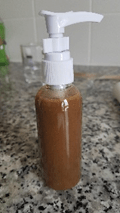
Now is the time to add our lavender essential oil and pack. Perhaps in a dispenser container like the one in the photos for ease of use.
PROCESS REGENERATING SERUM FOR SUNBURNS:
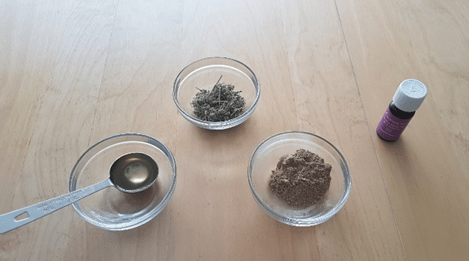
1.- We prepare the ingredients: the dry extract of lavender, (I have dried it from my own garden), the dry extract of aloe, the oil of calendula, and the essential oil of lavender.
2.- We infuse lavender, it would also serve a hydrolate if we had it.
3.-We reconstitute our aloe gel with pure water
4.-Now we add the calendula oil to our aloe extract and beat well. It is interesting if you have a milk skimmer as a mini blender. If not, simply an egg whisk will suffice.
5.-Now is the time to add a few drops of lavender EA to our repair serum. As you know, the essential oil of lavender, in addition to preserving our product for a longer time, is a great regenerator of sunburned skin.
6.-It is convenient that you use a dispensing container like this to be able to easily apply your skin regenerating gel.
Despite its colour, to indicate that this gel does not stain the skin, it only refreshes and regenerates it.
Many times we have in the garden, or even in pots, plants that we do not know that if we dry them they can be very useful. In this article we want to explain to you how we can prepare infused oil with the dried flowers of our garden to obtain their properties and be able to use them in creams and ointments.
A MACERATED OIL is nothing more than oil infused with the essence and therapeutic properties of a plant that we let macerate in the oil.
Some examples of macerated oils and their properties:
Arnica (flowers): Contusions, bumps, bruises, oedema, heavy legs. Arnica, St. John’s wort and Calendula are 3 plants against muscle pain with anti-inflammatory and analgesic properties that, when used externally, can help relieve injuries and inflammations. They prevent and help muscle and ligament recovery.
St. John’s Flower (flowers): Although many people know this herb for its antidepressant properties, it is tremendously useful, at the same time, to treat muscle pain due to its analgesic and anti-inflammatory properties.
Daisy (daisy flowers): Skin toner, repairer, tightener, neck, bust and décolleté shaper. Restructuring and nourishing.
Calendula (marigold flowers): Powerful anti-inflammatory, healing and disinfectant, which treats fragile, dry, rough, tight and reactive skin. Calendula calms irritations, cracks, frostbite, small wounds, razor burns, psoriasis, eczema, ulcers, sunburns, hives, insect bites … And even the pain of bruises and neuralgias.
Chamomile (flowers): Inflammation of the face, itching, rosacea (redness).
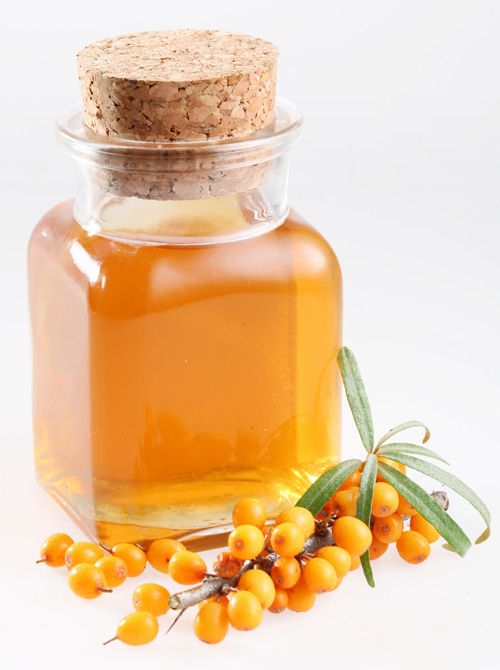
Sea Buckthorn (berries): These berries have a lot of vitamin C that make of this macerated oil a very good anti-aging oil to give glow to our skin.
Mallow (flowers): mature skin, dry and sensitive skin, rosacea. Softening.
Carrot (roots): The carrot macerate produces an orange oil very rich in carotenes. This infused oil promotes tanning and allows the skin to maintain an even tone after sun. Softening, regenerating and soothing.
Plantain (leaves): Plantain stands out for its healing and calming power; hence it is ideal for treating small wounds or bites. To this must be added its emollient properties that help hydrate the skin. It is also anti-inflammatory and detoxifying.
Laurel (leaves): Treatment of acne, oily skin, sores and ulcerations, in case of cooling, in massages and to relieve rheumatism.
Rosemary (leaves): Oily, mixed skin. Firming and draining, in addition to improving microcirculation.
Rose (flowers): Wrinkles, aging, age spots. Rose is a great rebalancing agent that treats dehydrated, devitalized, dry skin, with cracks, scars, acne, rosacea, eczema, psoriasis.
Green tea (leaves): Decreases the production and storage of fat. Powerful antioxidant.
Vanilla (pods): Skin tonic, protective, softening and nourishing. Softens face and body skin and is a mild scrub with a delicious scent for use in massage oils. Also, in our culinary preparations of cakes or vinaigrettes (in addition, if it is for cooking, it is not necessary to filter it).
Red vine (leaves): Improves blood circulation. Heavy leg care.
WHY TO MAKE A MACERATED OIL
If you’re wondering why to bother making macerated oils when we have essential oil, it is important to know that not every constituent of a plant comes over in distillation. Only the smaller molecules come over using that method and so we never quite capture the essence of the whole plant.
Maceration captures the heavier larger molecules. Other extraction techniques will capture other chemicals too. Water extracts will harness the water-based compounds, for example. So, the more ways you have to extract the properties of a plant, the closer you get to accessing everything that plant has to offer.
When making a cream that is based on lavender, for example, then you can augment the therapeutic effect by also including macerated lavender oil and even the fluid extracts or hydrosols too.
In addition, another advantage of macerated oils is that they add properties to our recipes in a milder way than essential oils. These can sometimes cause rashes on sensitive skin.
Also, you may have access to a plant that doesn’t have a corresponding essential oil, like Lilac or Elderflower for example, or perhaps you wish to use a plant where the essential oil is very expensive, Jasmine (distilled) or Lemon Balm, for example. By using maceration, you can access the healing chemical compounds in these plants and use them in your skincare.
As we said before, many times we have plants in the garden that we do not know that if we dry them, they can be very useful. This is the case with the humble marigolds. Surely many of us have them in the garden without knowing it. However, calendula flowers have great therapeutic value if we collect and dry them.
CALENDULA is a plant with great therapeutic potential for the skin. Regenerates, fights possible germs and fights against inflammation. It is a restorer par excellence of irritated skin, with itching, eczema, chilblains caused by cold, etc.
Another use for calendula oil is to treat earaches. We will place 2 to 3 drops in our ear and hold a hot bag or cloth over it. However, if the symptoms persist or there is an infection, it will be better to consult with our doctor.
By letting the flowers infuse in oil, we can extract many of those properties and incorporate them into easy-to-use products such as: recipes for salves, lip balms, soaps, creams and lotions.
That is why we are going to explain below the two known methods to prepare an oleate, that is, to infuse a vegetable oil with the properties of an herb or plant.
In this case, we are going to explain how to prepare a calendula macerated oil, although it would be perfectly possible with any other dried plant or flower.
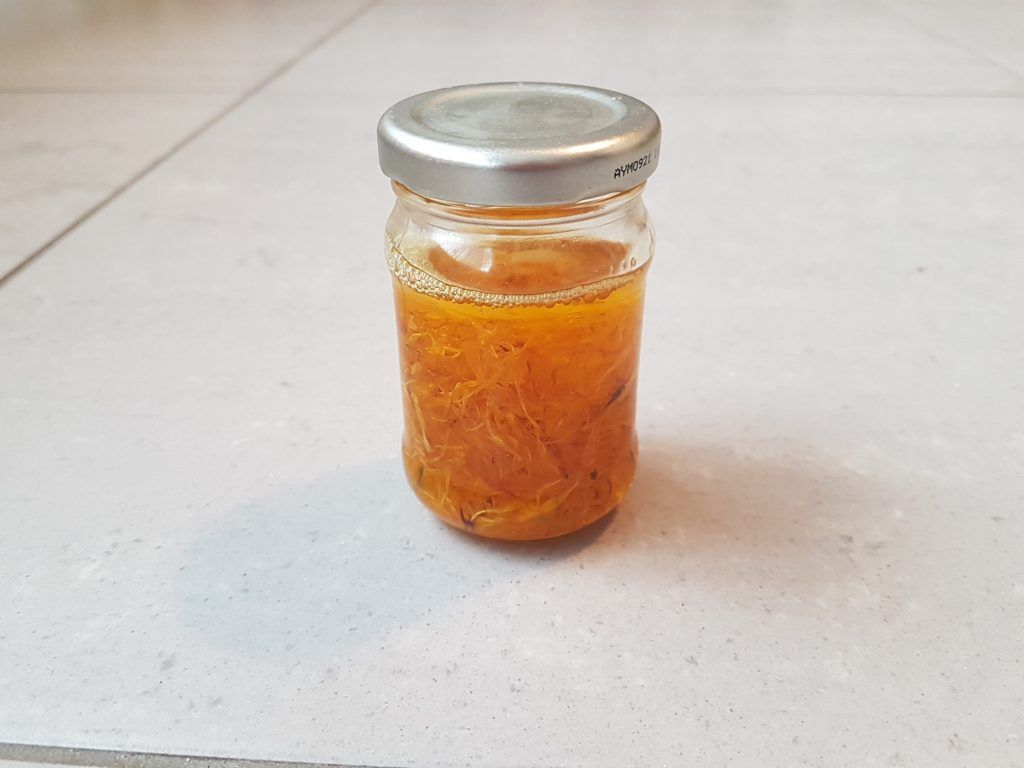
CALENDULA INFUSED OIL
We will need dried calendula flowers for this. Fresh herbs can also be used to prepare the infused oils, but this is not a good idea because the water content of fresh flowers and herbs tends to create moulds and spoil the oleates.
Simply, we will spread the previously collected flowers on a paper towel in a dry place or in the sun and we will turn them daily for a week or two until they are completely dry.
When we have them dry, we will fill 1/3 of a glass jar with our dried flowers and we will refill it with some oil that does not easily rancid like those of jojoba, apricot, coconut, almonds or even olive. (See entry about rancidity of oils).
As in the “freak of natural” website is said: “Jojoba and coconut oils are also often used or added, while sweet almond oil suit best the making of smaller batches as it goes rancid faster then the other oils”.
We will cover the jar well and store it in a cool, dark place, for a minimum of four weeks (40 days is usually ideal). We will shake it periodically. There are even “schools” that affirm that it should be given the light of the sun and the moon for that question of the energies. Anyway, don’t worry if you don’t, the result will also be acceptable.
After 40 days, we will strain the flowers and we will have our macerated oil ready. To strain the herbs, you can use a cotton filter or a fine cloth. In some cases, you will have to repeat the operation so that the oil is clean of residues.
The oil, now infused oil, we will reserve it in a bottle, if possible, in dark glass so that it has a longer expiration date. We will keep the jar in a dry and dark place, protected from heat sources. And if we think that our oil can become rancid, we can add a little wheat germ oil or a few drops of vitamin E to prevent oxidation and rancidity.
IT IS POSSIBLE TO MAKE A FASTER PROCESS WITH A HOT METHOD like the one detailed by Maria Treben in her books.
In this case, we would place our oil, with the flowers or dried plants, in a glass container (temperature resistant) to the water bath. And we would keep it on a very soft heat for several hours (1 to 3 hours according to various sources). It is important that the temperature of the assembly does not exceed 50º degrees Celsius so that the oil does not become harmful and the oleate does not lose properties.
This hot method is best suited for harder parts of the plant such as roots.
After this time, we will filter well and package as in the previous case.
With this method, it is possible to use the infused oil immediately. Although it is also possible, after infusing it, to reinforce the process and obtain a better infused oil by letting it macerate a few more days in a dark place.
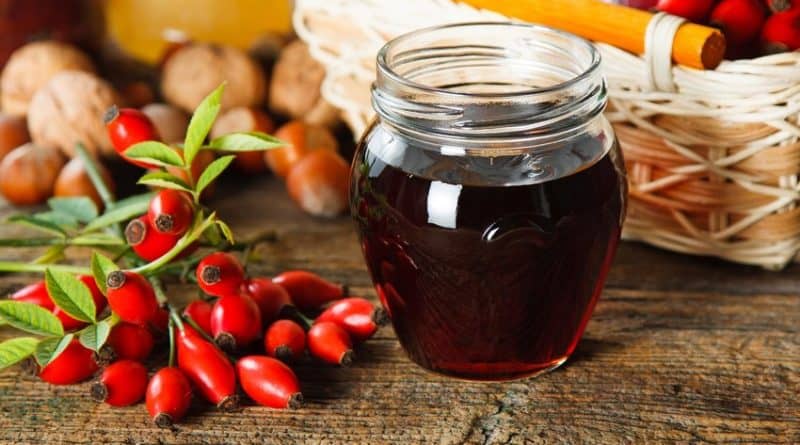
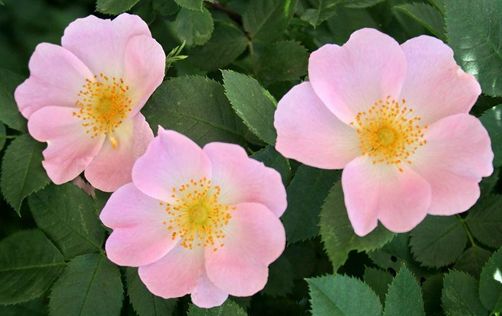
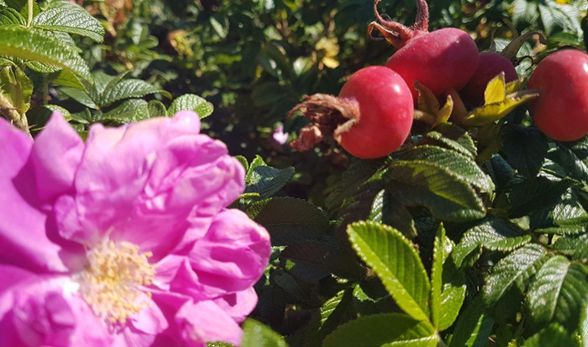
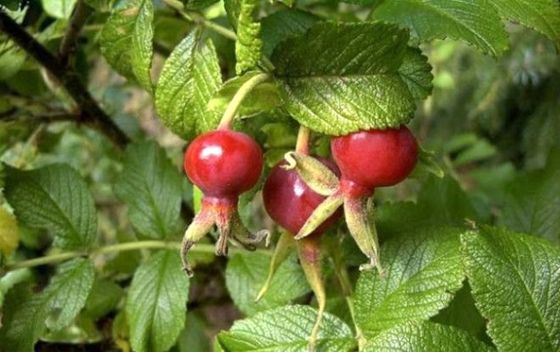
If you live in the countryside or have the opportunity to find wild rose hips nearby, something very interesting you can do is collect them to prepare an infused oil with innumerable vitamins for the skin.
Most wild rose bushes, when autumn arrives, offer us these edible berries that are very rich in vitamin C, antioxidants (that’s why there are people who prepare syrups with them) and countless wonderful properties to strengthen our defenses and take care of our skin.
We are going to prepare an infused oil with them, which we can use to enrich the formulations of our homemade creams.
From this infused oil you can enrich your homemade creams in a spectacular way and without the need to acquire the famous, but expensive, rosehip oil.
And is that this homemade maceration, if you choose a quality oil, has practically the same properties as a commercial rosehip oil.
Take a good look at the photos, and you will see that you are going to find rose hips in your natural environment easily, that’s for sure!
Properties of wild rose hips:
Rose hips are packed with vitamins and minerals. In principle, they have 10 times more vitamin C than oranges, in addition to vitamins A, B1 and B2. Hence its ability to strengthen our defenses.
Rose hips are also known for their purifying ability and anti-inflammatory power. They also contain selenium, something the average person is deficient in.
The polyphenols they contain fight cardiovascular disease by regulating better blood pressure.
Regarding the skin, in addition to providing vitamins and illuminating it, they have a powerful firming effect that prevents skin wrinkles. Thus, this natural infused oil is liquid gold for the skin and makes it easier for us to enrich our creams and ointments.
PROCESS:
The procedure to follow is the same as with any other infused oils.
The herb or fruit is placed in quality oil and left covered and out of direct light for a minimum of 40 days.
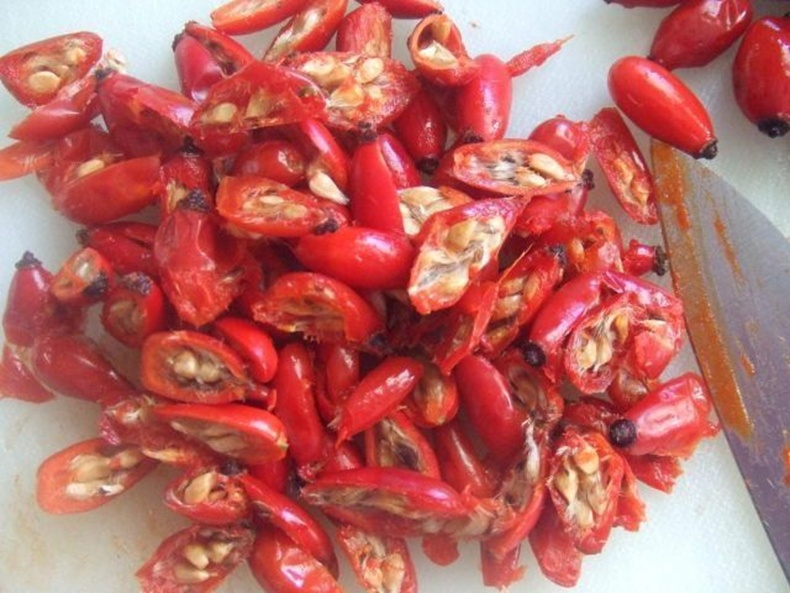
Wild rose hips are typically harvested in the fall. After collecting a good quantity, we will proceed to wash them and put them to dry for a couple of days. When they are clean and dry, we will cut them in half so that their seeds are exposed.
That’s the best way in order to extract all the vitamins and properties for the skin that they possess.
Always choose a cold-pressed virgin oil that you can have in a certain quantity since the rose hips must be completely covered with the oil and reserved in a glass jar with a lid, away from direct light for 30- 40 days. It is convenient to shake it from time to time.
After 40 days, the properties of the rose hips will have remained in the oil and we can now remove them and strain the oil.
We will add some capsules of vitamin E to avoid rancidity and to extend the useful life of our infused oil.
And that’s it, it’s that simple to make homemade rosehip oil.
We hope you find it very useful and that you can make numerous cosmetic preparations with this oil!






 Naturamatters blog