Formulating Biocompatible Homemade Cosmetics

In previous articles, we discussed the importance of formulating biocompatible homemade cosmetic products. In Ayurvedic medicine, the rule is even stricter: “Don’t put anything on your skin that you can’t ingest.” Therefore, in our homemade cosmetic formulations, we avoid synthetic ingredients derived from petroleum and broad-spectrum preservatives, as they are not necessary if we are not going to put our products on the market.
Formulating homemade cosmetics with natural butters and oils, without the need to add synthetic preservatives (although organic preservatives are fine, of course), is a luxury that those of us who make natural homemade cosmetics allow ourselves.
In this article, and on our blog in general, we try to demystify the scientific jargon so beloved by the beauty industry. Our homemade product recipes really make a difference and are free from retinols, acids, and peptides synthesized in a laboratory. If you prefer not to use 35 different products on your face every morning or watch tutorial videos on TikTok, or if you’ve ever looked in the mirror and thought, “Who is that?”, then this blog on natural homemade cosmetics is for you. Because women shouldn’t aspire to look younger, but to look better. Makeup or BB cream that hides our wrinkles under a thick layer of preservatives is not the best choice in the long run. All these touch-ups and aggressive treatments tend to leave our skin looking dull over time. What we want is for our skin to look fresher, without the need for so much makeup.

An example that illustrates these principles of natural cosmetics that we are trying to explain is the difference between treatments with Bakuchiol*, which is considered a substitute for commercial retinol*, and the use of more aggressive retinoids.

*RETINOL is a form of vitamin A belonging to the carotenoid group. It stimulates fibroblasts to produce elastin and collagen, improving skin density and firmness. However, retinol has some side effects, including skin irritation and redness, so high concentrations of this substance are not recommended in the initial phase of treatment. In addition, retinol has photosensitizing properties and a teratogenic effect. That’s nothing, and all to achieve fewer wrinkles!

*BAKUCHIOL: Bakuchiol is a natural compound extracted from the seeds and leaves of the Psoralea corylifolia plant, known as babchi. Its action is very similar to that of retinol. It accelerates the keratinization of the epidermis and has antioxidant, anti-inflammatory, and anti-acne properties by inhibiting the growth of Streptococcus aureus bacteria. It normalizes sebum secretion and lightens pigment spots on the skin. Bakuchiol alleviates the negative effects of UV radiation. It normalizes sebum secretion and stimulates the production of elastin and collagen.
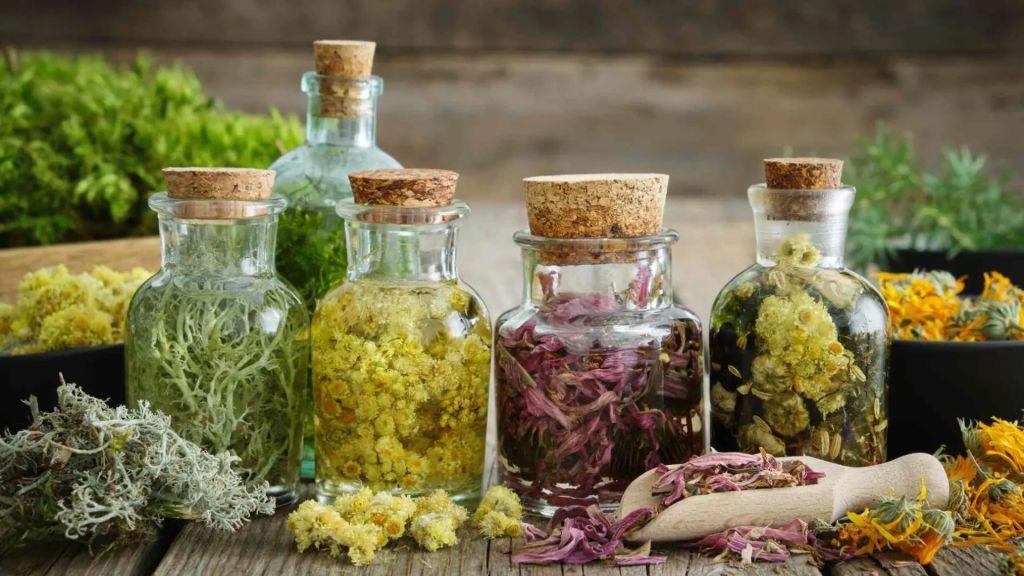
As we said, to keep our face looking good over the years, the best option is natural treatments that are minimally invasive and free from artificial preservatives and synthetic ingredients. A few simple vitamins applied to our skin in a natural vegetable oil base can work wonders.

BIOCOMPATIBLE SKINCARE

For all these reasons, we also want to highlight the difference between antiseptic and bactericidal formulations in the treatments we recommend on this blog. This difference is based on the difference between antiseptic and bactericidal products.

Antiseptics and bactericides aim to reduce the risk of infection, but they differ in their scope and application. Antiseptics are substances applied to living tissue, such as skin, to prevent or inhibit the growth of microorganisms, including bacteria, fungi, and viruses. Bactericidal agents, on the other hand, are substances that kill bacteria. Although some antiseptics may be bactericidal, their primary function is to inhibit microbial growth rather than actively kill all bacteria.

In the context of creams and natural cosmetic products, biocompatibility means that the product is designed to work in harmony with the body’s natural systems, minimizing the risk of adverse reactions and promoting skin health. Basically, it means that the product is well tolerated by the skin and does not cause irritation, allergic reactions, or other harmful effects. In other words, biocompatible products are formulated to avoid disrupting the skin’s natural processes and barrier function, and are therefore less likely to cause redness, itching, or other forms of irritation that can occur with harsh chemicals or allergens.

Broad-spectrum preservatives (panacea), so widespread in homemade cosmetic recipes, are very effective bactericides that not only kill bacteria but also molds and yeasts, completely sterilizing our product. You can deduce from this that, when applied, they also sterilize the skin surface, destroying its natural microbiota.

And for this reason, the above distinction is so important. In this blog, we create antiseptic synergies that keep our creams and products in good condition for as long as they need to be used. We therefore do not use commercial broad-spectrum preservatives designed to kill all bacteria, fungi, and molds that may develop. In other words, we do not create sterile products, but products that respect the natural microbiome of our skin.

This is possible because homemade natural cosmetics are not intended to be sold commercially. Logically, if we needed to create a product that would remain in good condition for months on the shelves of a drugstore or perfume shop, then we would undoubtedly have to comply with ISO standards and legal requirements.

But since this is not our case, we can afford to create homemade natural cosmetics that are completely biocompatible and respectful of our skin’s microbiome.

Difference from “commercial” cosmetics: Regular commercial cosmetics sometimes contain substances that are not always well tolerated by the skin, such as synthetic fragrances, colorants, or preservatives. These substances can cause irritation or allergic reactions in some people.

Biocompatible cosmetics try to avoid these substances by respecting the biology of the skin and formulating with ingredients that are compatible with the skin’s natural composition and function to promote a healthy skin barrier. Choosing biocompatible cosmetics can contribute to healthy, radiant skin, as it reduces the likelihood of skin problems and allows the skin to function naturally. In this sense, products from some brands aimed at the treatment and biocompatibility of sensitive and atopic skin, which today corresponds to a large percentage of the population, or products from brands that have traditionally produced “organic” cosmetics such as Welleda or Dr. Hauschka, or any other that you may know, are more respectful of the skin microbiome and, therefore, “more biocompatible,” if we can put it that way.

A tip for choosing well is to look at the labels detailing the composition and whether the product or brand is advertised as environmentally friendly.

The shorter the list of ingredients and the higher the content of certified organic components, the more natural and better the product will undoubtedly be.

As we always say, what is good for the environment and animal life is generally also better for us.

Or, as the ancient emperor and Stoic philosopher Marcus Aurelius said: “Everything that is good for the bee is good for the honeycomb, and everything that is good for the honeycomb is good for the bee.”

And we are “absolute fans of bees.” Bee products are the basis of natural homemade cosmetics. We use beeswax as the best known natural emulsifier, honey as a moisturizer, propolis tincture as an antiseptic, etc.

BIOCOMPATIBILITY IN NATURAL HOME-MADE COSMETICS

This involves various strategies:

1. Avoid preservatives by formulating creams and products without an aqueous phase. It is perfectly possible to use water-based products such as hydrosols, toners, and facial serums before applying a 100% oil-based cream. This way, we also moisturize our skin intelligently, without having to come up with complex homemade cosmetic formulations to which we would inevitably have to add broad-spectrum preservatives to keep them from spoiling on our bathroom shelves.

And it is always possible to formulate a fatty cream using only oils or butters, beeswax, and a teaspoon of honey. The percentages would be 90% oils/butters and 10% beeswax emulsifier.
Honey is optional, but certainly very interesting because the synergy of honey with the emulsifier in beeswax creates a much creamier and more moisturizing texture than without this addition. Honey is moisturizing and combines very well with beeswax and oil, which is not the case if we use a synthetic emulsifier.

In addition, when mixed with coconut betaine, it becomes the most gentle cleansing gel (for the body, vagina, etc.) for atopic and sensitive skin. And don’t think that using honey makes it sticky—not at all! Coconut betaine, which is a natural surfactant, the most natural one that exists, takes care of that. *We will talk about it in a future article.

2. Formulate creams using self-preserving synergies. For example, it is known that a cream with a small percentage of water, if emulsified with beeswax and borax, preserves its ly, as the synergy between borax and beeswax chemically emulsifies the mixture, as well as preserving it.

3. We will avoid the use of synthetic self-emulsifying waxes because they are less likely to create self-preserving synergies, as is the case with beeswax, borax, and propolis tincture. Furthermore, due to the low affinity of synthetic self-emulsifying waxes with the skin, a “wash-off effect” may occur, which refers to the ability of the wax to be easily removed from the skin by water or sweat, dragging away the protective surface layer of the skin, resulting in a greater feeling of dryness and lack of hydration. If we need to use a synthetic self-emulsifying wax, it is important to use a biocompatible and biodegradable wax, such as “lamecreme” (glycerin stearate citrate) or “emulsan” or emulcare (methyl glucose sesquistearate).

4. If preservatives must be used, only organic and biocompatible preservatives should be used. To this end, it is generally advisable to treat the water that will be used in the preparation beforehand. Therefore, when formulating homemade cosmetics, it is also very important to bear in mind these concepts of biocompatibility and to use only organic and biocompatible preservatives, if necessary.

THE IDEA OF TREATING THE WATER

With this idea in mind, we have started to create creams with an aqueous phase in which we pre-treat the liquid component of the formulation.

We start with a distilled water base that we can treat in various ways:

1. By pre-ozonating (both water and oils) the distilled water or oil that we will use in the preparation of our homemade cream. In this way, we can emulsify our cream with beeswax, ozonated water, and borax, with the assurance that we will obtain a highly biocompatible product that will not spoil.

2. By treating our distilled water with borax* and a few drops of propolis tincture*, which reinforce the incorruptibility of our formulation as well as providing properties for the skin. Propolis acts synergistically with beeswax and borax and helps to reinforce and preserve the emulsion of water and oils.

3. It is possible to emulsify a cream with beeswax and borax by adding other biocompatible preservatives, such as: medicinal grapefruit seed extract (GSE), the natural cosmetic preservative Leucidal simple*, whose INCI is Leuconostoc Kimchii, propolis tincture, or colloidal silver.

*Leucidal simple is a preservative derived from radishes fermented with Leuconostoc Kimchii, which provides antimicrobial benefits. It is best to avoid Leucidal complete, as it is too strong.

4. In the case of serums and facial toners with a higher water content, it is important to use combined synergistic strategies to preserve our product, such as using a base of distilled salt water*, an ozonated distilled water or ozonated sea water base, adding a few drops of colloidal silver to the distilled water in the formulation, or propolis tincture, using distilled water in which we have dissolved 0.5 grams of borax, adding some essential oils to the distilled water, or using hydrosols as the base for our facial toner, etc.

*Salt is already a good natural preservative for organic substances. Let’s not forget the curing process of ham or some cheeses such as Parmesan, which remain in good condition for a very long time without the need for additional synthetic preservatives. Or, similarly, pickles fermented in brine, which have many probiotic properties when eaten.

5. Freeze natural aloe vera gel by dissolving half a teaspoon of citric acid per 100 grams/ml of fresh aloe vera gel. This will keep it in good condition until you defrost it. For example, you can defrost an aloe cube to prepare a serum base, and the rest of the aloe will remain frozen in good condition. If you do not freeze it, keep it in an airtight bowl in the refrigerator or in a cool place. In any case, store it in a glass bowl and protect it from sunlight.
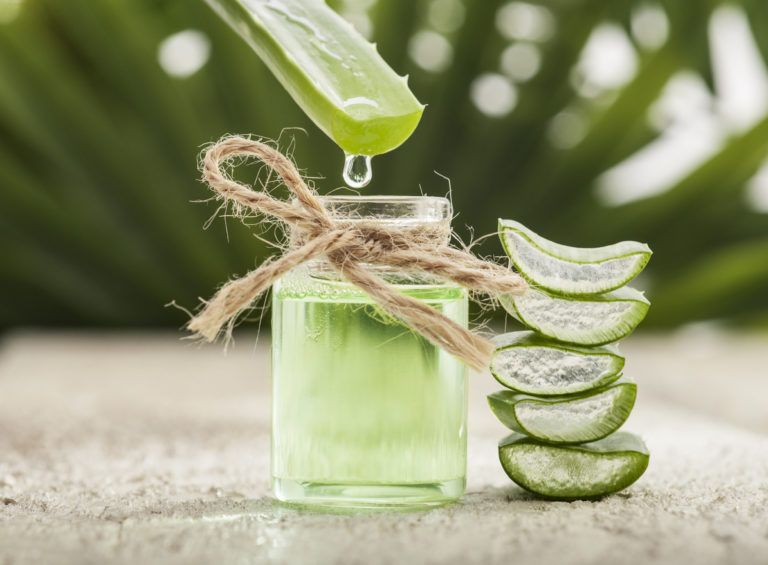
In principle, this aloe serum base will keep well because it has been frozen with citric acid, which is a very mild preservative. If in doubt, you can always add a few drops of another mild preservative such as medicinal grapefruit seed extract or simple Leucidal. You can even add a few drops of essential oils, such as lemon essential oil, or a preservative tincture such as myrrh tincture, which is a natural preservative, or even benzoin tincture. All of these will give the aloe serum a very pleasant aroma, as well as helping to preserve it.

In this way, we use a synergy of several mild preservatives that reinforce each other without harming the whole. Our serum will continue to have a low biocide level, so when applied to the skin, it will not harm our skin flora. This way, we will be able to benefit from the properties of aloe vera with complete assurance.
6. It is also possible to use natural aloe vera juice without preservatives as a base for serums and facial toners. In this case, it will not be necessary to freeze it, and we can use it directly in our toners and serums as a base, with the addition of glycerin and xanthan gum to thicken it, (ratio 2:1; i.e., 2 parts glycerin to 1 part xanthan gum, normally) and a biocompatible preservative such as 1% borax or any of the biocompatible preservatives listed in the following section.

7. In the case of herbal infusions, adding a minimum of 20% ethanol will preserve them for several days in the refrigerator without any problems, and we will be able to enjoy natural infused lavender tonics, or other herbs, until they run out.
BIOCOMPATIBLE PRESERVATIVES

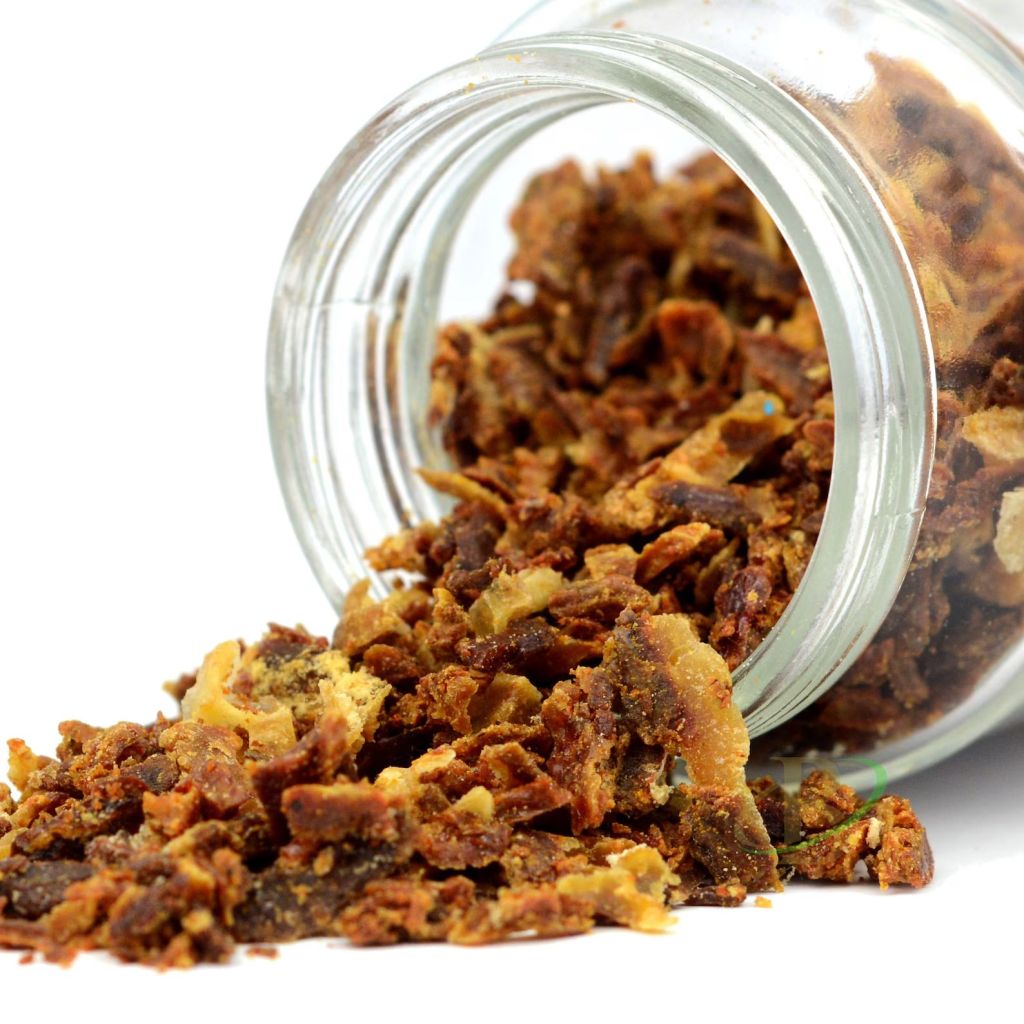
Propolis tincture: Propolis extract or tincture is a natural healing ingredient that has antioxidant, anti-inflammatory, and antifungal properties. Although produced by bees, propolis extract is not the same as honey, but rather the glue that bees use to hold the hive together and repair damage. In skin care, propolis extract offers great benefits in healing acne scars, hyperpigmentation, and inflammation. It also firms the surface and rejuvenates the skin. This extract is commonly found in commercial cosmetics in products such as moisturizers and toners.
Borax: Since ancient times, considerable amounts of this element have been mined on the shores of salt lakes in Asia Minor. The deposits in Tibet were the first to be exploited. Borax is also found as efflorescence in desert soils, hence its name “white gold of the desert.” Borax acts as a very mild preservative when emulsified with beeswax, yet it is widely compatible with the nature of our skin. In fact, boron has been used as a medicine in the natural medicine market.
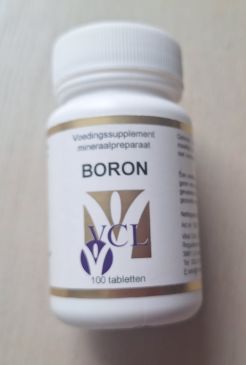
Despite its recent demonization, it is used as a food additive under the code E285, as it acts as an antimicrobial preservative. This same property, combined with its pH-regulating and emulsifying effect, makes it very useful in cosmetics. In Eastern cuisine, its texturizing effect is used to make foods firm and chewy. At an industrial level, it is used in detergents, cosmetics, soaps, insecticides, pesticides, and enamels.

Sea celtic salt: This is another great natural preservative, used since ancient times to preserve a wide variety of foods. Its ability to extract moisture from food hinders the growth of bacteria and other microorganisms that cause decomposition, helping to preserve food for longer. In addition, salt affects the structure and function of microbial cells, inhibiting their growth and reproduction, which helps prevent spoilage. We recommend using gray Celtic salt with a moist texture, as it is the only type that retains all the mineral richness of seawater.

Ozone: It is possible to ozonize both the water in our preparation and the oil. Never both in the same preparation because it is too much. Ozonizing water is more interesting in aqueous products such as tonics and facial serums.

If we want to create a cream, it is better to ozonate the oil, which emulsifies better than ozonated water and helps our cream acquire the right thickness.

If you have a cheap ozonator (you can find them on Amazon for $40 to $50), it will be enough to keep your water or oil immersed in ozone for about 30 minutes. Any longer is too much, and both the water and oil will take on a strong ozone smell.

If you want to buy ozonated oil from a cosmetics store, always remember to choose a food-grade product so that the aroma is not too strong and can be pleasantly incorporated into your homemade cosmetic preparations. Stronger oils are best used as treatment oils for joint and rheumatic pain and, above all, in treatments for hemorrhoids and vascular problems.

Colloidal silver: We know it in naturopathy as a very useful medicine, but colloidal silver can also act as a preservative, especially in cosmetic and personal hygiene products. Its antimicrobial capacity helps prevent the growth of bacteria, fungi, and mold, which in turn prolongs the product’s shelf life.

As with ozonated water, anyone with the right equipment can make it themselves at home. These devices are usually a little more expensive than ozonizers, as they require silver rods. However, nowadays, they can also be found in many online stores, as can ozonizers, which are not only used to ozonize water, but also to obtain ozonized oils that are very useful for treating skin problems.

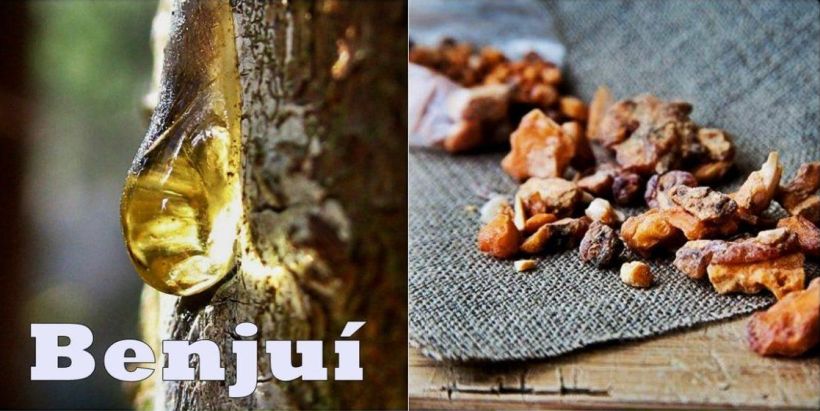
Benzoin tincture: Benzoin tincture is used as a natural preservative and antiseptic in cosmetics, as well as a fragrance fixative. It is obtained from the resin of the Styrax tree and dissolved in alcohol, forming a liquid extract that helps preserve cosmetic products, especially those containing natural ingredients or essential oils, by preventing the growth of bacteria and fungi.

Myrrh tincture: Thanks to its antiseptic and soothing properties, it is widely used in skin creams, leaving the skin smooth and soft. It has great preservative power, making it an ideal substitute for commercial chemical preservatives. It is an excellent disinfectant and has healing and regenerative properties for the skin.

You can find an online store selling natural myrrh tincture at this link:

https://maeselab.com/extracto-de-mirra-tintura

Ethanol: It is not a preservative in itself but acts as one when added to our product in proportions of 30% or more. This is why it is not used frequently, as a high percentage of ethanol is required to benefit from its preservative properties. However, in some cases it can be a very interesting additive, such as in facial tonics made from herbal infusions, where it adds freshness to the mixture.

Or in some cases of spray deodorants, perfumes, or even in its isopropyl alcohol form, it can be used in rosemary distillations for topical rubs, such as rubs to activate circulation in tired legs, etc.

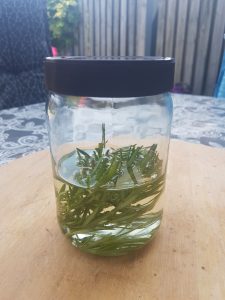
Isopropyl alcohol: Also known as isopropanol or 2-propanol, it is a colorless, flammable liquid with a characteristic odor. It is widely used as a solvent, antiseptic, and cleaning agent in various applications. It is a key ingredient in rubbing alcohol and hand sanitizer , and is also used in industrial and pharmaceutical settings, such as the “rosemary alcohol” sold in pharmacies. As mentioned above, it does not pose any problems when used topically, as it acts as a base for the active ingredient rosemary and evaporates on contact with the skin. If we infuse natural rosemary in this type of alcohol, we obtain a maceration that does not require any other type of preservative and can be applied topically for rubbing.

Potassium sorbate or sodium benzoate salts: With great caution and never both at the same time in the same product, we can use minimal doses of edible preservative salts (widely used in the food industry) such as potassium sorbate salts or sodium benzoate salt.

These synthetic powdered salts are widely used in the food industry. Both are mainly used as preservatives to extend the shelf life of various products, especially in food and cosmetics. They work by inhibiting the growth of fungi, yeast, and bacteria, which helps prevent spoilage and decomposition.

Potassium sorbate is more useful in creamy textures and sodium benzoate in tonics, serums, and more acidic aqueous textures. In any case, it is best to use them only when absolutely necessary, and always separately, as together they become what is called a broad-spectrum preservative and their biocidal effects are enhanced.

Taking all these ideas into consideration, we have formulated a moisturizing base cream that can be used perfectly as a body milk for the entire body, given its light and fresh texture.
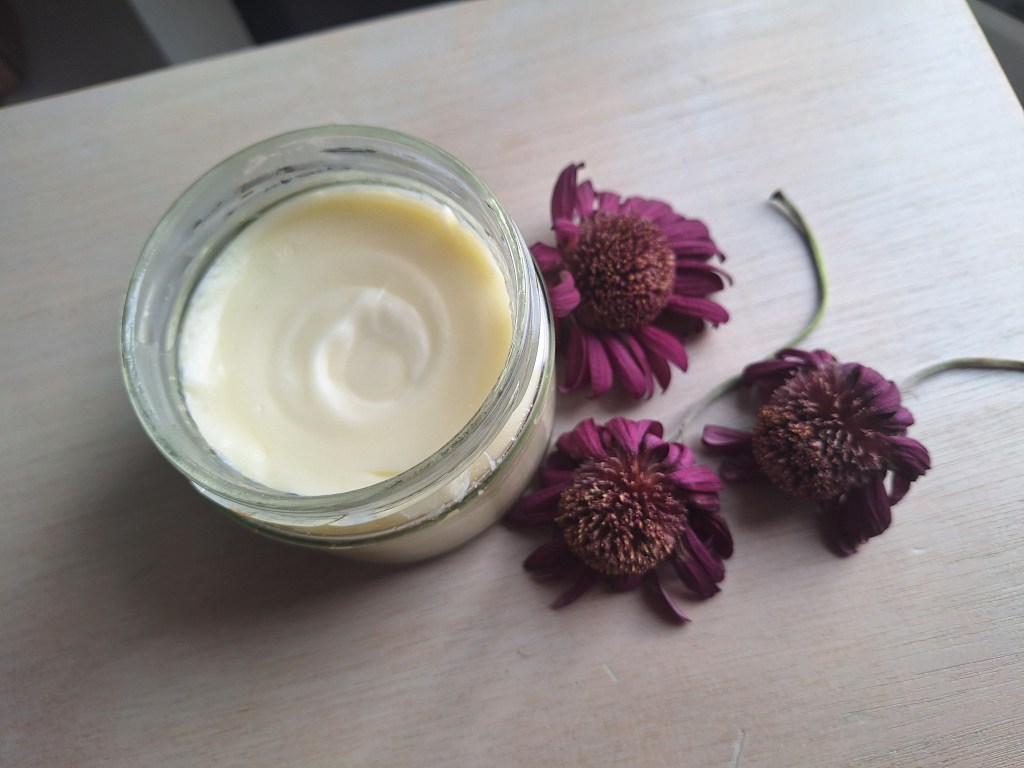
RECTIFICATION OF THE CREAM RECIPE with wax and ozonated water

PROPORTIONS WITH BEESWAX AND OIL

The amount of beeswax should be 15% of the oil, and the proportion of borax should be 5% of the amount of water used in the recipe.

THE BASIC CREAM RECIPE WITH GENERAL PERCENTAGES

Percentages for 100 g of base cream:

40% water … approx. 5% of the amount of water in borax

60% oil … 15% of the amount of oil in natural unbleached beeswax

Optional: One tablespoon of glycerin (between 10-15 g).

Preservative: 1 ml natural propolis tincture preservative per 100 g. The preservative is not necessary in principle if the borax is completely amalgamated with the beeswax.

For this, two conditions are necessary:

– A sufficient percentage of borax in relation to the total product.

– The beeswax must be natural (yellow) and not bleached, at least part of it, since bleached wax cannot chemically amalgamate efficiently with borax.

Some people use proportions of 50% water and 50% oils or fats to make the cream more moisturizing. However, in this case, to produce the emulsion of beeswax with water and oils, it is necessary to use a larger amount of borax, and, as always with preservatives, our maxim is “the minimum necessary” to obtain the product we want.

This is the recipe for EMULSIFIED BASE CREAM WITH BEESWAX

40 ml of ozonated distilled water … and about 2 g of borax

60 ml of virgin olive oil … and about 10 g of natural beeswax

10 g of glycerin, and nothing else because we have ozonated the water.

PREPARATION PROCEDURE:

The preparation system is “one pot.”

Previously, we ozonated the water for approximately 30 minutes in a homemade ozonator and then dissolved the 2 grams of borax in it.

We start by placing the beeswax in a heat-resistant container in a double boiler. Once melted, we add the oil to the same container and, when it is fully incorporated and the mixture is melted, we add the mixture of ozonated distilled water and borax.

When we see that it has been incorporated, we can start beating with an electric whisk. A chemical emulsion of beeswax with borax-treated water is produced, but in this case, our water is also ozonated, so the emulsion is very light.

In this case, after removing from the heat, we will see that we have obtained an emulsion in which the water sometimes seems to float a little. This is not a problem because the water has been treated, and the mixture does not spoil. We can therefore take advantage of this light and fresh texture to use it as a moisturizing body milk all over the body.

A totally natural BASE CREAM

We would also like to show you a base cream that can be enriched with natural active ingredients. The best “active ingredients” we can add to our products are of plant or even animal origin, such as silk proteins from silkworms or allantoin from snail slime… But don’t worry, although they are based on natural molecules, these components are now obtained synthetically in a laboratory. No one squeezes silkworms or snails to obtain them. However, they are still very interesting because they are molecules of organic origin. And nature knows what it’s doing.

ACTIVE INGREDIENTS OF ORGANIC ORIGIN

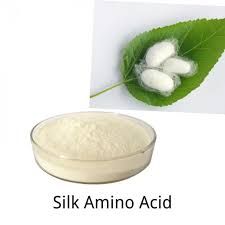
Silk proteins: Formed by naturally occurring macromolecular filaments consisting of silk proteins, which, although they break down (hydrolysis), give rise to amino acids very similar to those found in the collagen and elastin proteins of the skin. They have a much greater softening power than other products, promoting the formation of young, healthy skin cells and a silky, youthful complexion.
Allantoin: Allantoin is a chemical compound with healing, soothing, and anti-inflammatory properties. It is also moisturizing as it helps the skin retain moisture, leaving it soft and smooth. It is a crystalline, colorless powder, soluble in water and alcohol, derived from uric acid. It is found naturally in some plants such as comfrey, aloe vera, and snail slime, and can also be synthesized artificially.
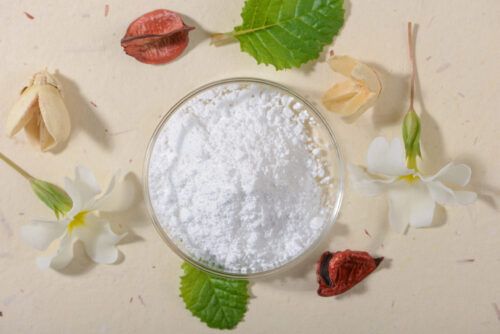
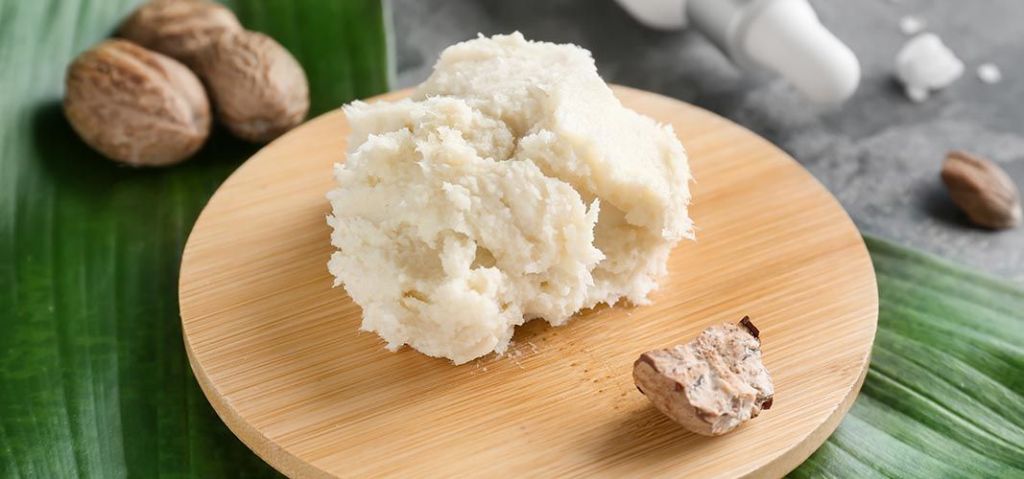
Natural aloe vera gel, vegetable butters such as shea or cocoa butter, honey, and even zinc oxide, which, in addition to providing sun protection to our products, gives them emollient properties and protection against external aggressions such as humidity or friction. Hence its use in diaper creams.
And, of course, the active ingredients provided by cold-pressed virgin oils, loaded with fat-soluble vitamins, or oleates of balsamic resins and plant extracts such as oat, calendula, or chamomile.

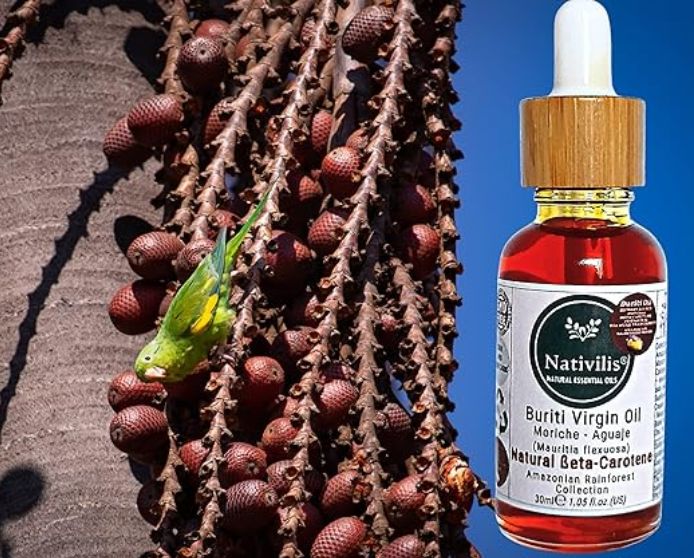
Simply a high-quality oil, such as buriti oil, will provide you with carotenoids (vitamin A), as will an extract of urucum (achiote) seeds in powder form or macerated in glycerin. Or, for example, bakuchiol oil, which is said to be a natural substitute for retinol, but unlike retinol, it alleviates the negative effects of UV radiation and does not cause photosensitivity. In fact, it mitigates the harmful effects of the sun and makes the skin more resistant to sunlight.
RECIPE FOR EMULSIFIED CREAM BASE WITH BEESWAX

In this recipe, we have played with the proportions of beeswax, combining natural wax and bleached wax with the intention of obtaining a lighter and more pleasant colored product. Certainly, this cream is less yellow than the previous one. As you know, it is not possible to use only bleached wax because it does not chemically blend with borax as well as natural wax.

40 ml of distilled water … and 2 g of borax

60 ml of virgin olive oil …

and about 6 g of natural beeswax, combined with 4 g of bleached beeswax.

10 g of glycerin and 1 ml of propolis tincture.

PRODUCTION PROCESS:

The production system is “one pot.”

Previously, we have treated the distilled water by dissolving about 20 drops of propolis tincture in it.

We start by placing the beeswax in a heat-resistant container in a double boiler. Once melted, we add the oil to the same container and, when it is fully incorporated and the mixture is melted, we add the mixture of distilled water with the preservative tincture and borax to produce a chemical amalgam with the beeswax.

When everything is incorporated, we can start beating with an electric whisk. This produces a chemical emulsion of beeswax, borax, and water treated with propolis tincture, resulting in a very pleasant, creamy emulsion.

USE: This cream can be used as is, or you can add any other natural active ingredient from among those mentioned.

Some of these can simply be added at the end of the process, such as zinc oxide to provide sun protection…

Others, such as vitamin-rich oils or natural aloe gel, are best added during the mixing of the oil and water phases.

For example, SUN CREAM with SPF 20 made from this base cream

Take 50 g of the base cream and add a mixture of 2 tablespoons of zinc oxide (10 g), previously sifted, and, optionally, a tablespoon of cocoa powder to prevent a white film from forming on the skin.

In this simple way, we obtain a cream with sun protection factor. With 10 grams of zinc oxide, protection of 20 is guaranteed, but if you add a little more, you will surely obtain greater protection.
KNOW HOW TO CHOOSE THE INGREDIENTS FOR OUR FORMULATIONS WITH CRITERIA

Everything we put on our skin is absorbed—creams, shampoos, colognes—and does not remain on the surface.

Many everyday products contain parabens, phthalates, phenoxyethanol, and other compounds that act as endocrine disruptors. As you know, endocrine disruptors alter the hormonal system, interfere with neurological development, and may be linked to long-term health problems such as early puberty or brain development deficits.

There is little we can do about this, but there is something we can do: reduce our exposure to these types of products and choose less toxic products wisely, which also tend to be the most eco-friendly and least harmful to the environment.

If we can’t make them ourselves.

Because it’s not about living in fear, but with awareness.

Therefore, don’t let yourself be fooled by products invented by cosmetic supply stores to sell us “expensive active ingredients” that are actually cheap for them because they are not natural, but synthesized in a laboratory.

We are not going to mention specific online stores, just a few examples of “cosmetic active ingredients,” theoretically natural, that they try to sell to those of us who make homemade natural cosmetics.

For example: “Encapsulated retinol palmitate.” This is supposed to be a form of retinol, which is ultimately nothing more than vitamin A, that sensitive skin can tolerate better.

And its INCI is: Aqua, Polycaprolactone, Xanthan gum, Retinyl palmitate, Polyvinyl alcohol, Sorbitan stearate, Propanediol, 1,2-Hexanediol, Caprylyl glycol

Does this INCI sound like natural vitamin A to you?

Or, for example, this anti-wrinkle peptide compound with INCI: Dimethyl Isosorbide (and) Polysorbate 20 (and) Aqua (and) Acetyl Tetrapeptide-11 (and) Acetyl Tetrapeptide-9.

However, the same supply store may sell you very good oils and active ingredients, such as food-grade ozonated oils, vegetable oils loaded with fat-soluble vitamins (which our skin absorbs completely) such as the buriti oil we mentioned earlier, natural cupuaçu butter, or unprocessed shea butter, which are real treasures for the skin.

It’s all about knowing how to choose.
HOW TO PREPARE A HOMEMADE LINIMENT

The use of liniments dates back to the time of the Renaissance physician Paracelsus. Liniments became popular in the mid-1800s and early 1900s as “cure-alls”. Although they do not cure everything, today’s liniments are easily made at home with safe ingredients and can be very effective in treating some ailments.

Depending on the ingredients, liniments can be used to: disinfect cuts, minimise the appearance of varicose veins, rubbed on bruises to heal them more quickly, or for what they are best known for: helping to relieve arthritis, aches and pains and associated discomfort.

A liniment is a natural preparation that is less thick than an ointment and is based on oils or balsams and alcohols. It is usually applied externally as a treatment for rheumatism and bruises in combination with massages and frictions.

A wide variety of other uses are possible. In France, for example, a liniment traditionally used to cleanse and protect babies’ skin from nappy rashes has become very popular. It is as easy to prepare as combining olive oil and lime water, sometimes with a little beeswax. And it works very well because the liniment, which has a basic or alkaline pH (the opposite of acidic), when it comes into contact with acidic faeces and urine, neutralises them, thus preventing skin irritation.

THE OIL-LIMESTONE LINIMENT IN DETAIL

Liniment oleo-calcareous is an ancient liquid that was originally intended to combat superficial burns. Little by little, it has been used more and more for babies’ bottoms.

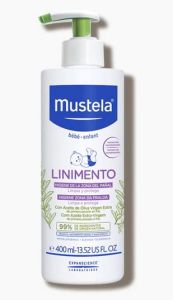
The brand mustela, for example, has a commercial version of this liniment. Of course, it is best to choose one without additives, so if you prepare it yourself, you can be sure of its composition.

The homemade oleo-lime liniment in our recipe is an oily, greenish-yellow mixture made from olive oil (or other vegetable oil) and lime water. The word comes from the Latin “linimentum”, which means “to anoint”, i.e. to rub with an oily substance.

This liniment, among other virtues, is super-fatty and leaves a protective film on baby’s skin, preventing skin irritation caused by wetness or rubbing from nappies. Therefore, there is no need to rinse it on the baby’s bottom, as its basic pH neutralises the acidity of urine. In short, the liniment cleanses the baby’s bottom (thanks to the action of the lime water) while nourishing, moisturising and protecting against future aggressions by leaving a protective film on the skin.

On a general level, as a skin care product, it has a great associated value because, as you know, the level of absorption and hydration of a cream in the skin depends on how natural its components are. This is what happens with this liniment made up of 3 totally natural ingredients: beeswax, oil and lime water. Such a simple product, but which turns out to be enormously emollient due to its great absorption capacity in the skin.

This is why it is not only ideal for treating babies’ sore bottoms in a natural way, but also has many other possible uses:

-It can help prevent the appearance of stretch marks, so it should be used on affected areas, especially for expectant mothers during pregnancy.

-It also soothes and softens episiotomy scars and sensitive nipples during the first days of breastfeeding.

It can also be used to treat baby cradle cap or even as a make-up remover as long as we take into account its basic pH and then rinse with water or a hydrosol adapted to our skin type.

-In personal care, if we use a little borax and ozonised oil, as we will see below, it can be very useful in the treatment of sensitive or itchy skin.

In fact, if you are looking for a multi-purpose skin care product, this liniment is what you need to prepare, because despite the mismatch of beeswax and lime water (we are talking about the original recipe) it is preserved for a long time due to the intrinsic antiseptic properties of this combination. As it avoids the use of chemical preservatives, it is an ideal product to spread on the skin of the whole body, and even on the face it is very moisturising.

AN ORGANIC HOMEMADE LINIMENT

In addition to being an ideal alternative for changing the baby, we must bear in mind that industrial baby cosmetics still too often contain toxic substances. In addition, sanitary towels generate a considerable amount of waste…

The recipe for this homemade liniment could not be simpler. Simply add 50% lime water and 50% olive oil, which are mixed vigorously in a bottle. The only drawback of this product is that the two phases of the solution tend to separate. You will need to shake the bottle before each use.

If you prefer to avoid this process of shaking the bottle before each use, you can add a cosmetic emulsifier such as lanette wax.

If you use beeswax, which as you know is not suitable for emulsifying oils and liquids, the phases will also end up separating, although, with a little more beeswax, it becomes quite thick and can be used as it is, as the lime water, after mixing, is also healing.

To prepare about 200 ml of this liniment, we will need:

100 ml of lime water

100 ml olive oil

And about 4 grams of beeswax

However, beeswax is the most natural and ecological alternative that also provides emolliency and innumerable properties to the skin, making our liniment, despite the gap, have a smoothness that is not possible to achieve without this addition.

As we said, the dis phase of the water solution is not really a problem since this combination of oil, wax and lime water has a long durability due to the antibacterial properties of lime water (the solution of sodium hydroxide* in water) which prevents our liniment from spoiling quickly.

*Water hydroxide dissolved in water is also known as slaked lime.

Therefore, here is our favourite recipe for preparing our chalky bio-liniment. It would be, like the previous one, with beeswax, but, instead of simple olive oil, we would prepare it with a marigold oil.

To prepare about 200 ml of this liniment, we will need:

100 ml of lime water

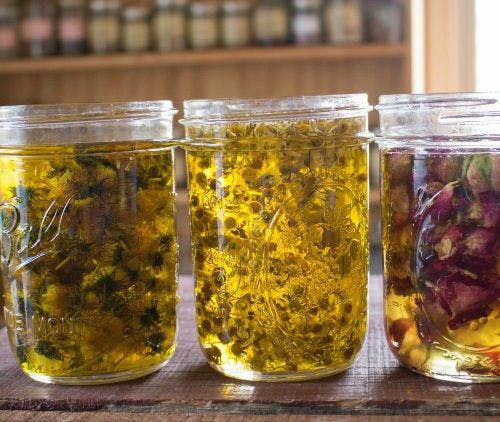
100 ml of marigold oil*, macerated for example in virgin sunflower oil.

And, optionally, about 6 grams of beeswax.

I have to add that if we decide to add borax to our liniment, to emulsify the beeswax, it will not emulsify completely because lime water has intrinsic preservative properties, as well as borax, which do not amalgamate well in this type of synergy.

A very different case is when we only use distilled water with borax, oil and beeswax. In this case, and as long as we respect the proportions (one gram of borax for every 15 grams of beeswax), we will obtain a complete emulsion in which there will be no traces of water left without emulsifying because there will be no dis phase.

In this blog we would also like to propose an alternative recipe with a slightly ozonised, edible-grade olive oil, which not only prolongs the shelf life of the recipe, but also provides extra care for babies with nappy rash or, if used for personal care, is particularly suitable for dermatitis with associated itching or pruritus.

Our recipe for about 200 ml of liniment would be:

100 ml of lime water

100 ml lightly ozonised olive oil (food grade)

And about 6 grams of beeswax.

INSTRUCTIONS:

Lime water must first be prepared. Lime water is a calcium hydroxide solution obtained by mixing air lime (slaked lime) and water. It has antiseptic and cleansing properties. It cleanses the skin and balances its pH, which tends to acidify with urine.

Although it is possible to replace olive oil with other vegetable oils, it is not possible to replace lime water.

To do this, we will need:

Half a litre of demineralised water and

About 5 grams of calcium hydroxide.

Preparation lime-water instructions: If you do not have demineralised water, you can boil drinking water and let it cool.

Once cold, you can add the tablespoon of calcium hydroxide, stirring well. After a short time you will see that the lime will sink to the bottom of the bottle.

Let it stand for an hour and then transfer the mixture with a funnel and a paper filter into a glass container. This lime water can be stored for several months in a cool place. A part of it (100 ml) is used to prepare our homemade liniment.

Avoid leaving the lime water in the water for more than an hour because then the water will take on too much of the lime smell, which is not unpleasant, but it is better for our preparation to have a good aroma.

Our lime water is now ready. There may be small, whitish calcium carbonate crystals that form in contact with the carbon dioxide (CO2) in the lime water. They are harmless and do not affect the water quality. If they really bother us, we can always filter the lime water again.

PROCEDURE TO MAKE THE LINIMENT:

Melt the beeswax in the olive oil in a bain-marie.

Remove from the heat and add the lime water, stirring constantly with an electric whisk. Leave to cool and then we can use our homemade liniment.

As always, it is best to have a glass container with a dispenser to ensure longer shelf life.

APPLICATION: Apply with cotton wool or a washable wipe, and do not rinse, it is not necessary. As a precaution, we always recommend testing the elbow crease before application to check for allergic reactions. Lime water has a high pH. It should therefore not be applied directly to the skin. However, mixed with an emulsified fatty substance, it is harmless.

PREPARATION OF A TRADITIONAL LINIMENT: BASIC RECIPE

We have taken as a reference to write this section of homemade liniment base recipe the blog of: “thenerdyfarmwife.com”.

Unlike herbal oil macerates (known as oleates or oleates), traditional liniments, in the American herbalist tradition, are made with water-based ingredients that evaporate quickly from the skin.

According to the Central European herbalist tradition, as we will see below, herbal oils and tinctures infused in equal parts in alcohol are used. And, optionally, essential oils are added.

The following list details possible combinations based on natural components:

We have included a list of the most suitable substances as “vehicles” for the preparation of our homemade liniments.

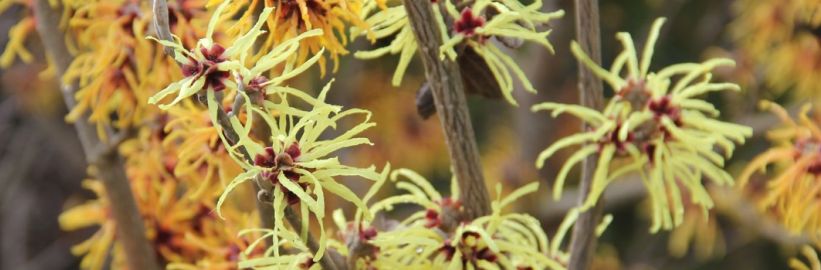
Witch Hazel Decoction: Calms and soothes redness and inflammation, helps reduce swelling, useful for bruises, insect bites, sunburn, varicose veins; the disadvantage is that witch hazel extracts herbs somewhat less effectively than stronger alcohol preparations; witch hazel is a good balancer that softens the drying effect of vodka/alcohol.

Vodka, whisky or high proof rum: Extracts most herbs very effectively, especially the resins; the drawback is that pure vodka/liquor dries out the skin; using a large proportion of witch hazel decoction (50 to 60%) combined with alcohol can give us the best of both ingredients.

Ethanol: Also known as ethyl alcohol or grain alcohol, ethanol is a clear, colourless liquid that serves as the main ingredient in alcoholic beverages such as beer, wine or brandy. It is a renewable product of organic origin. Because it can be easily dissolved in water and other organic compounds, ethanol is also an ingredient in a variety of products, including as a fuel substitute, hence it is also called burn alcohol. But be careful, because not all burning alcohols are natural like ethanol.

Isopropyl alcohol (rubbing alcohol): This is a classic liniment base, fast-acting and very effective, but also the least natural option on the list. In this case, many herbalists skip the “only natural ingredients” rules and use isopropyl alcohol for liniments because of its high level of efficacy. While it is not a natural option, as it volatilises quickly, it is hardly absorbed by our skin, making it an ideal vehicle for the herbal active ingredients that we actually absorb.

However, it is best to avoid using this alcohol, or even vodka, if you are sensitive to them. The safest bet in that case is apple cider vinegar or apple cider vinegar.

Apple cider vinegar: Liniments can be made with vinegar if alcohol is to be avoided; the main drawback is the strong vinegar smell, but this can be softened by diluting it with witch hazel.

Vegetable glycerine: Vegetable glycerine can also be added to some of the mixtures to soften them. If we feel that our homemade liniment dries out the skin too much, we can add a few drops of glycerine. Too much glycerine will make the texture too sticky, so it is best to try a few drops and add more, gradually, if necessary.

It is possible to mix and match ingredients; for example, it is possible to use half witch hazel and half vinegar. Or 75% witch hazel and 25% organic alcohol.

HERBS AND RESINS FOR HOMEMADE LINIMENTS

When preparing our liniments, as with almost any other homemade preparation, it is best to use dried herbs that will provide a longer shelf life for our ointments and liniments.

Many of the herbs listed below are warming, which means they stimulate circulation and reduce stiffness.

Cooling herbs can be useful when there is redness and swelling and we are looking for a cooling/warming effect.

Antimicrobial or antiseptic herbs are used in some liniment recipes to heal cuts and sores. The resins should be crushed or pulverised and are best extracted with some form of alcohol.


HERBS AND THEIR PROPERTIES

Arnica (Arnica montana) for bruises, swelling, pain, arthritis, aches, pains, do not use arnica on broken skin or cuts.

Juniper berries (Juniperus communis) to warm, stimulates circulation

Wild bergamot (Monarda fistulosa, M. spp.) Anti-inflammatory, antimicrobial, helps rheumatic joints

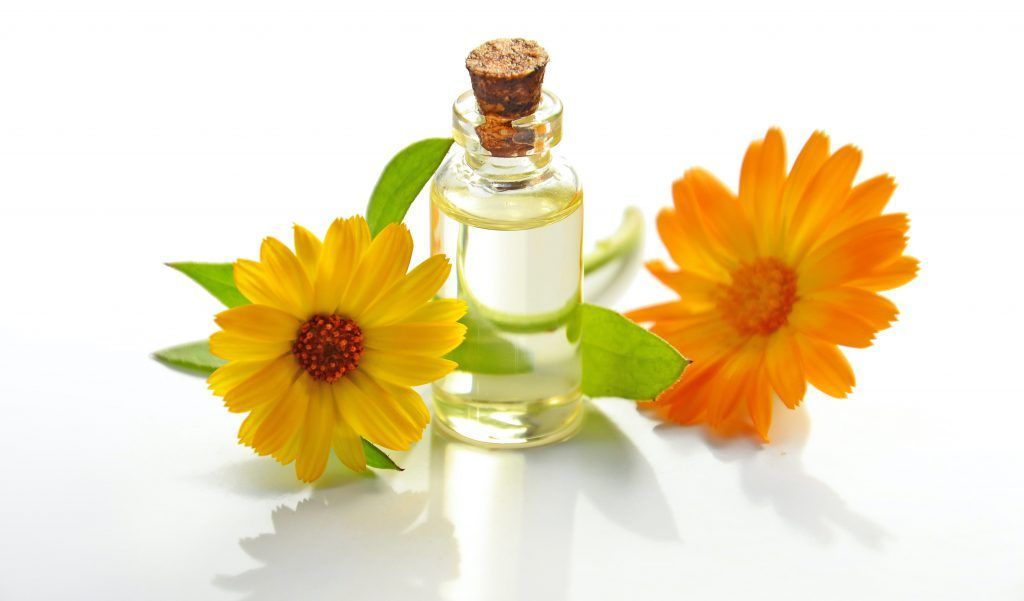
Calendula (Calendula officinalis) antimicrobial, repairs damaged skin, for varicose veins

Cayenne (Capsicum annuum) reduces the sensation of pain, gives warmth, use very little to avoid burning the skin.

Comfrey (Symphytum officinale) for bruises, sprains, relieves pain, useful for bone injuries, do not use on open wounds.

Willow bark (Salix alba) anti-inflammatory, rich in the analgesic salicin (a compound similar to aspirin), for persons over 16 years of age, not suitable for pregnant women, nursing mothers, consult a doctor if taking anticoagulants.

St. John’s wort (Hypericum perforatum) especially useful for nerve pains, varicose veins, swelling

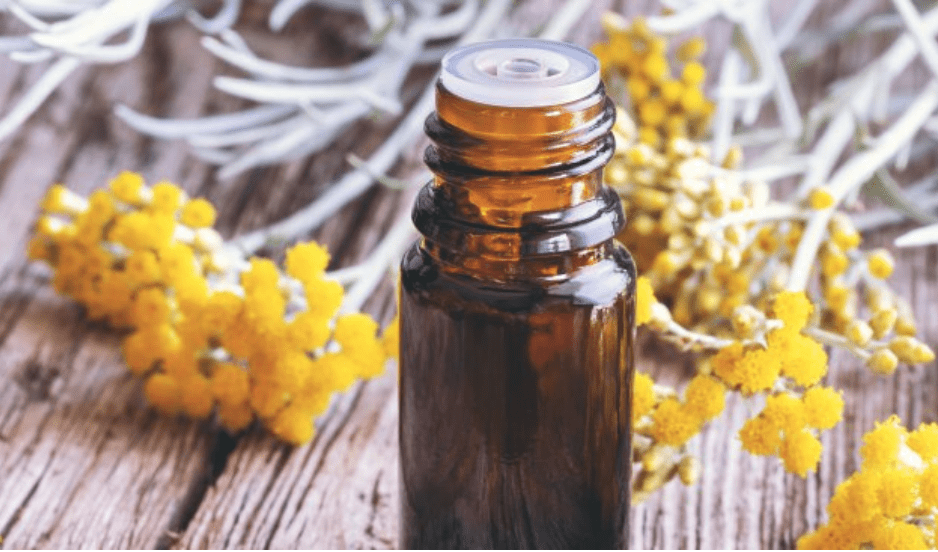
Helichrysum flowers (Helichrysum italicum) for pain, bruises, sprains and varicose veins.

Ginger (Zingiber officinale), warming, increases circulation

Lavender (Lavandula angustifolia) leaves and flowers, refreshing, for all skin types.

Chamomile (Matricaria chamomilla) reduces inflammation, soothes irritated skin

Peppermint (Mentha x piperita) refreshing, pain relieving (although the herb is very mild, the menthol crystals will be much stronger)

Yarrow (Achillea millefolium) anti-inflammatory, helps with cramps, pain, varicose veins and irritated skin

Meadowsweet (Filipendula ulmaria) rich in pain-relieving salicylic acid; avoid or seek medical advice in advance if allergic to aspirin

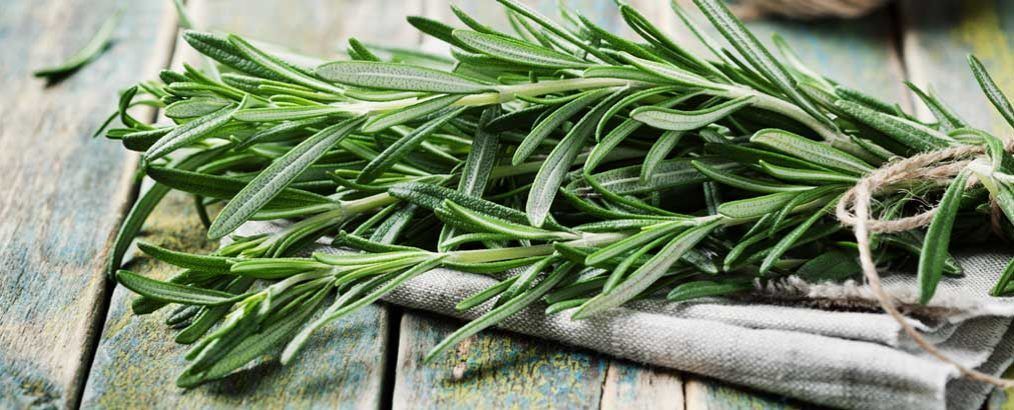
Rosemary (Rosmarinus officinalis) stimulates circulation, helps with sore joints

Marshmallow root (Althaea officinalis) very soothing, refreshing

Valerian root (Valeriana officinalis) can be used externally as a mild relaxant and for sore muscles.

Goldenseal (Hydrastis canadensis) potent antiseptic, use small amounts (1/4 tsp at a time), slow-growing endangered woodland herb, use Oregon grape (Berberis nervosa) as a substitute if necessary.

Goldenrod (Solidago spp) for general aches and pains

Violets (Viola odorata, V. spp.) refreshing, soothing, helpful for lymphatic inflammation.


USEFUL RESINS

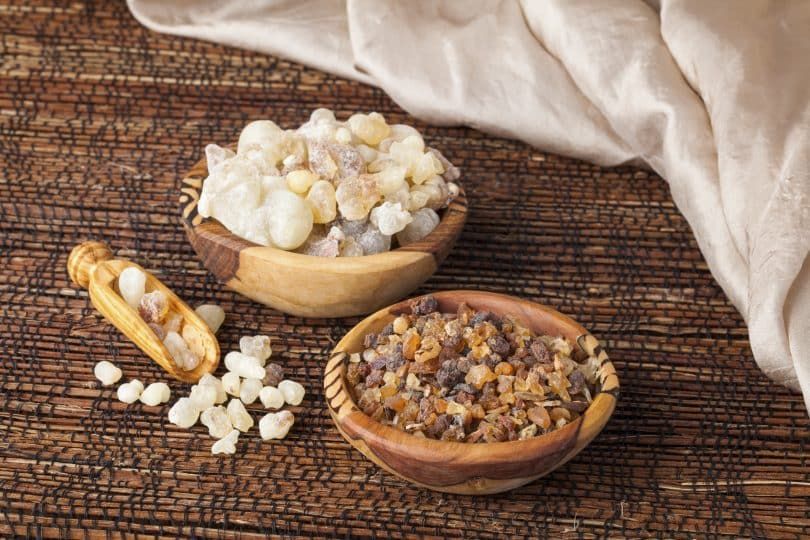
Frankincense resin (Boswellia sacra) anti-inflammatory, relieves pain

Myrrh resin (Commiphora myrrha) anti-inflammatory, antiseptic,…

Pine resin (Pinus strobus, P. spp.), warming, used for arthritis, joint stiffness and rheumatism; pine needles can also be used in infusion.

Dragon’s blood resin (Daemonorops draco, Croton spp., etc.) for wound healing, inflammations and rheumatism

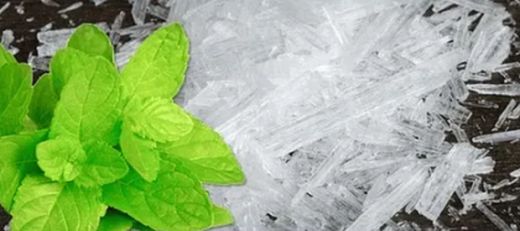
Menthol crystals: Menthol crystals add a cooling and analgesic sensation to homemade liniments.

HOW TO ADD MENTHOL CRYSTALS TO OUR HOMEMADE LINIMENT

Menthol crystals are strongly scented solid crystals that have been extracted from the essential oil of peppermint or spearmint. Menthol is a common ingredient in commercial pain preparations because it produces a cooling and analgesic sensation when applied to the skin.

Before adding to the liniment, the crystals should be dissolved in a small glass or glass bowl with a tablespoon of natural alcohol (ethanol) or vodka.

Once stirred and completely melted in the alcohol, we can add the menthol mixture to the finished liniment.

Menthol is used in small quantities, usually between 1 and 2% of the recipe. That is, between 0.6 and 1.2 ml of the mixture is added to the liniment. Higher amounts are usually too strong for sensitive skin.

THE TRADITIONAL BASIC FORMULA

Fill a jar with herbs, preferably dried, to 1/3 or 1/2 of its capacity.

Next, cover the herbs with alcohol, witch hazel and/or vinegar. Whatever combination you prefer, but make sure that the herbs are covered by at least several centimetres of liquid.

Stir well, cover and leave to infuse for 3 to 4 weeks, or even 6 weeks if desired.

Strain and you have your homemade liniment. It is best to label it with the date to avoid confusion.

Caution: If we have used vinegar in our recipe we will make sure that the lid is not made of metal, or the acid will start to form corrosion, which we do not want in our product.


HOW TO MAKE OUR OWN WITCH HAZEL EXTRACT

You will need about 20 grams (a couple of tablespoons) of witch hazel bark, but a mixture that includes the bark is better, and about 500 ml of water.

To make the decoction:

In a saucepan, bring the water to the boil with the 2 tablespoons of witch hazel bark. Keep it on a low heat, without boiling, for about 20-30 minutes.

The volume will be reduced by about half, and you will get about one cup of witch hazel extract, after filtering (paper filter) the remains of the plant.

While simmering, our house will smell a bit like a hospital.  The aroma is not unpleasant, but it smells strongly antiseptic, like an operating theatre after sterilisation.

The witch hazel water is now ready for use.  As it is not preserved with alcohol, it will spoil quickly. It should therefore be kept in the refrigerator and used within a week.

However, if we want our extract to remain stable, it is possible to add alcohol to it. In this case, instead of calling it witch hazel water, we will call it stable witch hazel extract.

How to prepare a long-lasting witch hazel extract.

If we want to make a stable witch hazel extract, we need to add an alcohol of organic origin. Vodka, whisky or high-proof rum work well (isopropyl alcohol also works, but then it is not suitable for internal use).

For good preservation, the mixture needs the addition of at least 20% alcohol.  Some sources suggest 25% to make the extract really stable.

In this case, assuming that we have about 250 ml of witch hazel water left after the decoction, we will need to add about 60-65 ml of vodka.


SOME TRADITIONAL RECIPES FOR HOMEMADE LINIMENTS

Well, we have found some interesting recipes in the alternative natural literature that have probably become famous for their effectiveness.

 KLOSS liniment

Available in Rosemary Gladstar’s book “Medicinal Herbs: A Beginners Guide”, this very old and effective recipe was first published by the famous herbalist Dr. Jethro Kloss in his classic book “Back to Eden” in 1939. Kloss’ liniment is very useful for relieving occasional muscle aches and pains. Instead of goldenseal, chaparral or Oregon grape root can also be substituted.

Ingredients:

Approx. 20 g of organically grown echinacea powder

about 20 g goldenseal powder (chaparral or Oregon grape root can be substituted)

about 20 grams of powdered myrrh resin

about 5 g cayenne pepper powder

Half a litre (500ml) rubbing alcohol.

INSTRUCTIONS:

Place the powder in a jar and cover it with rubbing alcohol (food alcohol can be used, but rubbing alcohol seems to work best), leaving a good 2 inches above the herbs.

Cover with an airtight lid and leave to stand for 4 weeks.

Strain it and re-bottle it and label it “For external use only” and you are ready to use it.

How to use: Remember that it is best to rub gently into the skin and allow it to evaporate. Always be careful not to rub too hard or vigorously, as this may cause irritation.


AN ARNICA AND MENTHOL LINIMENT TO TREAT MUSCLE ACHES AND PAINS

To prepare it, you will need:

20 grams of dried arnica flowers, can be replaced by goldenrod

1/3 cup vodka or ethanol

1/2 cup witch hazel water, or enough to fill the jar

Half a teaspoon of menthol crystals, dissolved in 1 tablespoon of vodka or ethanol.

PROCEDURE:

Place the herbs in the jar and cover them with the vodka or alcohol. Stir well and fill the jar to the bottom with witch hazel, leaving a space of a few centimetres at the top to allow the herbs to expand.

Cover and leave to infuse for 3-4 weeks, stirring frequently.

After the infusion time has elapsed, strain it through a paper filter into a clean jar.

In a small bowl, dissolve the menthol crystals in 1 tablespoon of vodka or alcohol until completely melted.

Add the menthol-alcohol mixture to the strained liniment and stir well.

USE: Test the finished liniment on the inside of the arm to prevent possible allergic reactions before spreading it on sore areas of the body. Menthol can sometimes cause slight irritation. This liniment should therefore never be applied to wounded or irritated skin. The sore areas are usually rubbed a couple of times a day to relieve the pain.

ANOTHER SOOTHING MUSCLE LINIMENT

Author: Agatha Noveille from the website https://scratchmommy.com/what-are-herbal-liniments-and-a-soothing-muscle-liniment-recipe/

Ingredients:

Witch hazel extract. If possible with the following percentages: 86% witch hazel extract and 14% organic alcohol or ethanol.

Dried herbs of your choice, such as: arnica, comfrey, goldenrod, mugwort, and/or St. John’s wort. Peppermint leaf is also great for cooling, and calendula is always a wonderful addition to liniments.

INSTRUCTIONS:

Fill a clean glass jar halfway with the herb or herbs of your choice and add enough witch hazel extract to completely cover the herbs, with alcohol about an inch or two above them.

Let the liniment infuse for at least two weeks (4-8 is optimal) in a cool, dark place. Every day or two, check the liniment and add more witch hazel if the herbs have absorbed it.

After the desired infusion time has elapsed, strain the liniment and pack it in a small spray bottle for easy application.

Notes: A good idea is to take note of the herbs we have used and the proportions. This way, we can prepare more easily when we find a mixture that works really well.


A LINIMENT TO TREAT VARICOSE VEINS AND IMPROVE BLOOD FLOW

We will need:

1 part yarrow

1 part marigold flowers

1 part St. John’s wort (fresh is ideal, but dried can be used)

1 part willow bark, optional.

1/4 part cayenne pepper or ginger pepper

PROCEDURE:

Put roughly equal amounts of yarrow, calendula and St. John’s wort in a glass jar and then add a smaller amount of cayenne pepper or ginger.

If willow bark is available, it would also be interesting to add some willow bark for its salicylic acid content.

As you know, it is usually better to use dried herbs in our cosmetic products and preparations because this avoids moulds. However, with hypericum we can make an exception if we have it fresh because it provides better properties.

Pour “stable witch hazel water” (i.e. one part alcohol) over the herbs until covered and leave to infuse for 2 to 3 weeks. Strain and re-bottle, this time in a permanent glass container.

USE: Apply it a couple of times a day to activate circulation and prevent tired legs, as well as muscular pains, strains and stiffness.

If it is to treat varicose veins, it should always be rubbed in the direction of the heart to help tighten and tone varicose veins and improve blood flow.


THE CENTRAL EUROPEAN HERBALIST TRADITION

As we mentioned earlier, in Europe, we have traditionally used tinctures and macerated oils (oleates) in the preparation of our homemade herbal liniments. We have taken this last section from the blog of naturopath Fátima Solé.

Our preparations have also been traditionally used to relieve all kinds of pain and discomfort, such as muscular pain, menstrual pain, arthritis, lumbago, sciatica, tendinitis…

They are also applied in the form of external frictions as they are absorbed quickly, like Anglo-Saxon liniments, facilitating the action of their components.

The plants used are usually more closely connected to our European and Mediterranean environment, and include dried plants such as rosemary, hypericum, as well as the exotic ginger, cayenne, arnica, comfrey root, juniper berries and marigold. A “hot” spice such as cayenne, ginger or cinnamon is also often included in the preparation to enhance its action.

And in the preparation, the alcohol macerate and the oil macerate are mixed in equal parts. In other words, for one part tincture, one part oil.

They can be simple macerates of a single plant, such as rosemary alcohol and arnica oil; or macerates composed of several plants, for example, mixing cayenne tincture and rosemary tincture together with hypericum oil and arnica oil. The important thing is that at the end half of the preparation is alcohol and half is oil.

These preparations are also left to infuse in closed, dark glass containers away from heat sources for a few weeks before they can be used.

Optionally, essential oils can be added, but in this case we must be more careful when using our liniment on children or pregnant women because they may find it excessively aggressive. In any case, in order for the addition of essential oils to be effective, only use 100% pure essential oils, preferably organic and extracted by steam distillation, always avoiding dermocaustic EOs such as cinnamon, oregano, savory, some species of thyme and eucalyptus, etc., and they should always be added with caution and in very low doses.

Among the essential oils that can be used in our homemade liniments, we have those of : clove, cinnamon, mint, rosemary, eucalyptus, lavender, basil, tarragon, helichrysum, pine, balsam fir, laurel, wintergreen, katafray…

USE: Shake the liniment well before use. Apply with a gentle massage, never on areas where the skin is irritated or there are wounds. Temporary reddening of the skin may occur, this is normal due to the action of the ingredients. Special care should be taken with liniments containing cayenne or strong essential oils such as cinnamon, and do not touch the eyes after handling.

Reference bibliography:

Nature’s Medicine Chest, Reader’s Digest, 1997.

Aromatherapy, The Art of Healing with Essential Oils, Dominique Baudoux, Editions Amyris, 2008.

STONEWASHING: GLOBAL TREATMENT FOR SENSITIVE SKIN

Dermatological diseases are now one of the main reasons for consultation in primary care, which is indicative of the prevalence of these conditions among the population in developed countries.

Some of the most common skin diseases are:

Acne: A common disease that causes pimples.

Psoriasis: This condition causes itchy or painful patches of red, inflamed skin with silvery scales.

Dermatitis: also called eczema, encompasses several different types of skin rash. Most types cause dry, itchy skin.

Anything that inflames, clogs, or irritates the skin can cause symptoms such as redness, swelling, burning or itching.

https://www.ncbi.nlm.nih.gov/pmc/articles/PMC3535073/

Our skin is a kind of ecosystem made up of living biological and physical components that occupy diverse habitats. Disturbances in the balance on either side of the equation can lead to skin disorders or infections. In the past, poor hygiene has led to a number of skin diseases such as leprosy, smallpox, plague, and even today in Latin America, Chagas disease. And sometimes still some forms of herpes, pool fungus or molluscs.

Nowadays, however, the equation is shifting more towards excessive hygiene or the use of overly aggressive soaps and cosmetic products that disrupt the natural balance of our skin’s bacterial barrier. This is leading to a completely different type of skin ailments.

Interestingly, the common element in most skin diseases in industrialised countries has to do with the regulation of the skin’s sebum. In the case of acne, there is an overproduction of sebum coupled with poor detoxification by the body or insufficient elimination of toxic waste through the body’s natural pathways. In these cases, the skin would not be adequately fulfilling its function of eliminating waste in the form of salts through sweat or through the sebum secreted by the sweat and sebaceous glands, although deficient elimination through the kidneys (urine) or liver (bile) could also be involved. In the case of dermatitis, the problem of sebum regulation is often rather the opposite, with deficient elimination of toxic substances. And this internal problem of purification and regulation of the skin’s sebum is dramatically aggravated by inflammation, swelling and scaling in the case of psoriasis.

Therefore, to return to the subject at hand, atopic skin or skin affected by eczema generally has a problem of skin sebum regulation combined with deficient internal detoxification.

For this reason, in order to treat them, it is very important to intervene on three different fronts:

  1. Daily hygiene with “soap-free soaps”, i.e. with products that do not alter the skin’s natural bacterial barrier and, therefore, its protective lipid layer.
  2. The application of emollient cosmetic products and regulators of the skin’s natural skin barrier.
  3. And internal supplementation that contributes to detoxification and regulation of the skin’s natural sebum.


STONEWASHING: GLOBAL TREATMENT FOR SENSITIVE, ATOPIC OR DERMATITIS-AFFECTED SKINS

If you suffer from dermatitis or, more complicated still, psoriasis, have you thought about the option of stonewashing like jeans?


No, we’re not kidding. We want you to know that recipes for mild soaps and gels may be necessary when we come back from the gym after working up a sweat. But, let’s face it, are we really that dirty when we shower every morning?

Hasn’t it occurred to you that a little hot water and a couple of “hygienic” stones, which I’ll tell you about next, might be enough to keep you clean during a 20-degree spring day?

And, best of all, without the need to use harsh soaps that alter our natural skin barrier and aggravate our dermatitis problems.

These stones are:

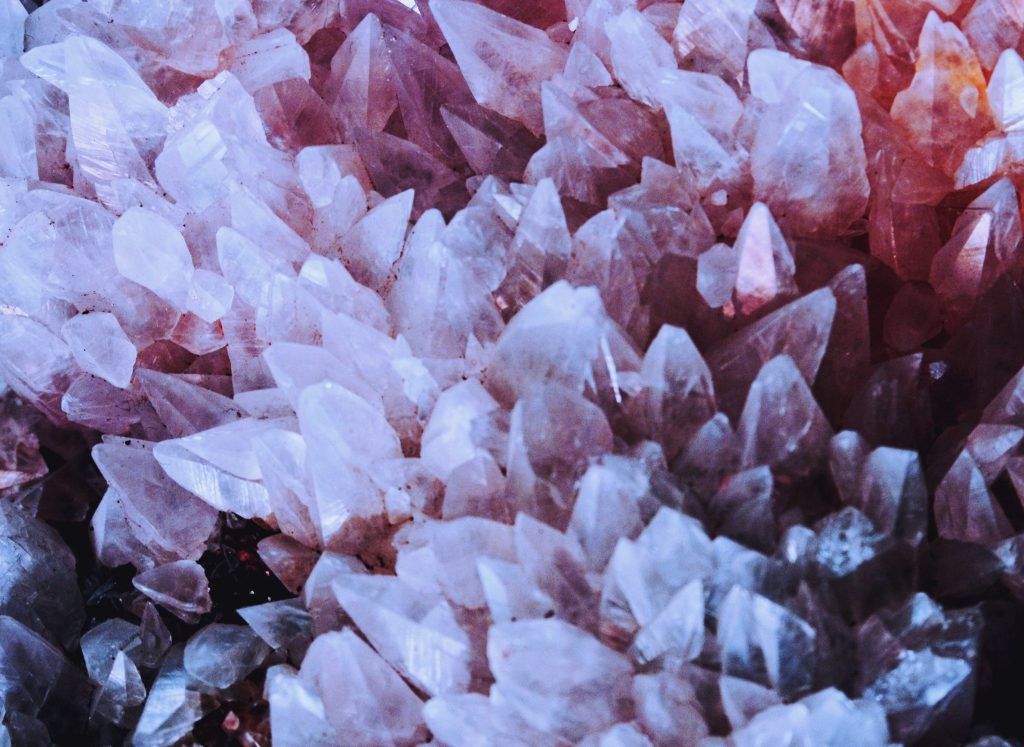
Himalayan salt stone: We recommend it especially between the toes to avoid fungal problems and blisters as this salt stone has the ability to purify and harden the skin of the feet. It can also be used on any other area we feel we need to cleanse.

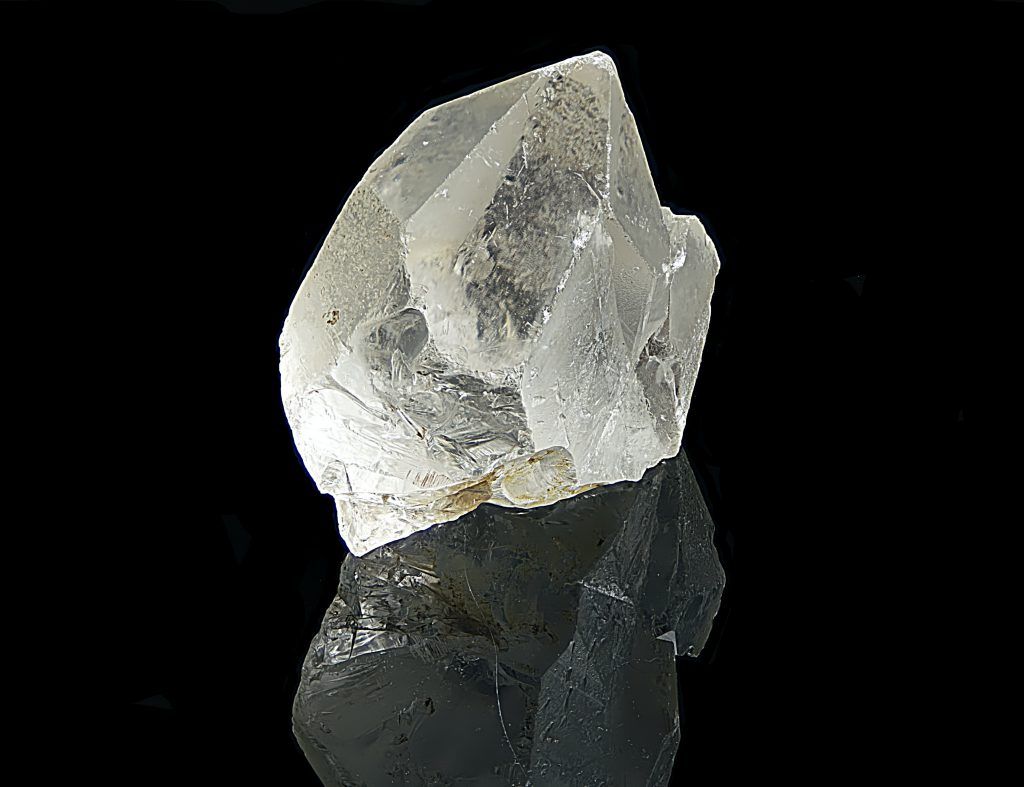
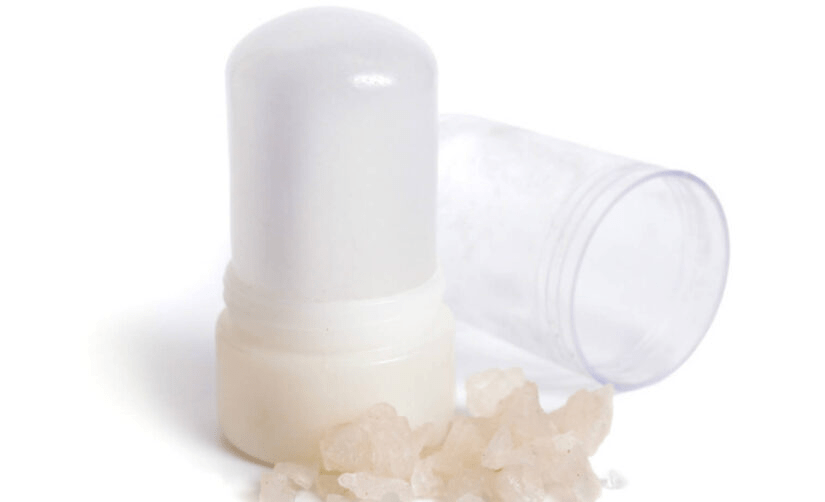
Natural alum stone: It is especially recommended to use it every morning in the shower in the underarm area. If you follow this ritual, you will probably not need any other type of external deodorant, unless you go on a trip to the African savannah and sweat like a bull.


And after your daily shower, there is nothing better than using a moisturising body oil in a spray bottle.

Immediately after getting out of the shower, and before drying off, we apply the oil which, as we are still wet, spreads very easily. In addition, the oils do not need preservatives, just a few drops of vitamin E to prevent them from going rancid. And if we use jojoba oil, not even that, because this oil practically does not go rancid.


Making a homemade after-shower body lotion is much more complicated because, due to the high-water content of a body lotion, it is necessary to use strong preservatives, and this always complicates tolerance in the case of atopic skin.

If you want to make a body lotion, it is advisable to use only hypoallergenic preservatives such as Leucidal, GSE (grapefruit seed extract) or potassium sorbate. There is talk of a new broad-spectrum hypoallergenic preservative, as the ones mentioned above are not as effective as Cosgard, Geogard, Rokonsal, etc., but personally we have not yet tried it.

It would be DERMOSOFT 1388 eco, whose INCI: Glycerine, Aqua, Sodium Levulinate, Sodium Anisate… details a natural origin as the mixture of levulinic acid and anisic acid is obtained by fermentation.

In any case, it is possible to make very good light creams that can be applied indiscriminately all over the body and that can be preserved without the use of extra synthetic preservation agents. This subject will be developed at length in a future article dedicated to recipes for hypoallergenic creams and soaps. In this post we did not want to include them because we considered that we would exceed the normal length of an article in this category. Therefore, we recommend that you read our next article on hypoallergenic recipes for sensitive skin in which we discuss in depth the topic of smart homemade formulations to treat this skin type.


RULES FOR MAKING HYPOALLERGENIC HOMEMADE COSMETICS

Arguably, today, with the urgency of climate change and the importance of implementing eco-friendly and environmentally sustainable solutions, natural cosmetics is becoming an increasingly desirable trend for a wider audience.


In the case of problem skin, as well as being fashionable, it is an absolute necessity. Atopic skins or skins affected by dermatitis are skins with an internal problem of repairing the natural skin barrier and it is important not only to treat them topically with the appropriate creams and products but also the internal use of supplements that contribute to this repair, which we will discuss in the following section.

As far as topical products are concerned, it is very important that we minimise the use of products containing aggressive preservatives or a large amount of essential oils, whose biocidal capacity should not be disregarded. We should also avoid perfumed cosmetics, i.e. fragrances, or the use of active ingredients of chemical origin. With sensitive skin, we can apply the maxim “the more natural the better” one hundred percent.

Avoiding the use of commercial antiperspirant deodorants is also especially important because these skins have a problem of toxic elimination and if we use a deodorant that prevents the natural perspiration of our skin, we will logically find an aggravation of the problems and, probably, greater skin itching and dryness.

In practical terms, simple creams with butters and oils are particularly favourable as they do not contain preservatives or chemical active ingredients.


HYPOALLERGENIC RECIPES WITHOUT AQUEOUS PHASE

A universal recipe that will never give you any problems consists of taking 50 grams of shea butter to which we add a little almond oil (about a third) and working it in a bowl with a wooden spoon until both ingredients amalgamate perfectly and we are left with a light paste that we can apply to the driest areas of our face and body.


Another idea, perhaps easier to keep out of the fridge, is to melt beeswax and oil and add a little shea butter. In this case, we would take three parts of a cold pressed oil of our choice and a third of the amount of oil in the form of beeswax and shea butter. We would start by melting the wax in a bain-marie, to which we would add the oil and, finally, the third part of shea butter.


As you will see, shea butter appears in almost every recipe for treating this type of skin, as it is probably the best treatment butter for dry and sensitive skin that we know of.


And for body lotion you can use solid cosmetics and make these solid body lotion sticks, which do not need synthetic preservatives and are 100% moisturising.

Ingredients:

For a batch of about 100 grams, we will need:

80 g cocoa butter

20 g cold-pressed sunflower oil (or any other quality oil)

A few drops of vitamin E

And, optionally, if you add a couple of drops of orange EO, they will smell great.

Preparation procedure: Start by melting the cocoa butter in a bain-marie and, when it is melted, add the sunflower oil and integrate it with the butter. Remove from the heat and add the vitamin E and then you can mould it. Remember that you will need silicone moulds to pour the mixture once it has melted.


And if we want to make a cream with an aqueous phase, given that they are especially moisturising, we will try to prepare small quantities to avoid the use of preservatives or we will make intelligent cosmetic formulations with minimally aggressive preservatives such as natural Leucidal or Grapefruit Seed Extract. As mentioned above, we will expand on these recipes in our next post on hypoallergenic cosmetic recipes.

If we are going to include an essential oil for treatment, we should always remember to use, preferably, a hydrolat that contains the qualities of this essential oil, but in a milder form.

And only a very small amount of the essential oil (a couple of drops are usually enough) because, as we know, essential oils are highly concentrated, and their rule of use can be summed up as follows: “less is more”.

For example, four drops of EO would be more than enough in a 100-gram cream, and in a 50-gram cream, two drops of essential oil would also be enough. It would be more important, for example, to use a desensitising hydrolat such as German chamomile or a regenerating one such as rose geranium in our preparation. Patchouli, cedar or frankincense may also be of interest depending on the type of eczema and skin type.

Neutral, nourishing oils, such as sweet almond oil, tend to work well for all skin types, especially sensitive or atopic skin. And natural, non-deodorised shea butter is possibly the best treatment butter for these skins.

Apricot kernel oil, jojoba oil, evening primrose oil, borage oil or even coconut oil may also be of interest, as well as, of course, hemp oil. Some people claim that black seed oil (nigella sativa) has worked very well for them in treating this type of problem.

In the case of psoriasis, olive, safflower, tamanu or avocado oils seem to be among the preferred oils.


And the additive par excellence for treating this type of skin is cannabidiol for its excellent antioxidant, moisturising and anti-inflammatory benefits. This cannabidiol, extracted from hemp (sometimes grown organically), is suitable for treating dry, oily and problematic skin, as it helps to eliminate skin disorders such as pimples or rashes caused by herpes, repairing and restoring the skin more quickly.

Hemp oil is particularly suitable for oily or acne-prone skin (hemp seed oil is an excellent sebum regulator), according to expert Nuria Tenas Marín, Biotechnological Development Manager at PFC Cosmetics. But it is also recommended for dry and devitalised skin as it strengthens the skin barrier, says the expert:


CBD cosmetics can be suitable for both dry and oily skin, as they contain beneficial properties for both. And in the case of sensitive skin, cosmetics based on cannabis sativa seed extract, being rich in fatty acids (Omega3) and antioxidants such as vitamin E, are able to soothe skin irritations, eczema problems, reduce trans-epidermal water loss, increase hydration and elasticity, and reduce flaking and roughness”.


INTERNAL SUPPLEMENTATION: NUTRACEUTICALS. VITAMINS FOR THE SKIN

You will tell me that using natural emollient creams and washing with non-aggressive products is enough to keep the problems at bay. But this is not always the case, sometimes the problem can be quite serious. If this is your case, do not hesitate to inform yourself and implement the necessary supplements to improve your quality of life.


Supplementation begins with eating a diet that is appropriate to our needs. This means that if we have acne, we will avoid saturated fats, and if, on the other hand, as is the subject of this article, our skin is rather dry or sensitive, we will try to provide it with the healthy fats it needs. And, in this sense, when the daily diet is not enough, we can provide ourselves with supplements according to our deficiencies. For example, a very useful supplement for this type of skin is evening primrose and borage capsules which, taken daily, contribute to the internal regulation of our skin’s lipid barrier.

Another problem that dermatitis and atopic skin sufferers often have is the problem of itching and irritation, as this same problem of elimination of toxins and impurities that they suffer from contributes to their hypersensitive reaction to numerous stimuli called allergens. In these cases, we are talking about chronic allergies or an allergic background, as we like to call it, which is the case with eczema, allergic asthma or autoimmune diseases.

These allergens can be anything from plant pollen to pet hair, insect bites, dust or certain types of food. Under normal circumstances, your body would not react to these basically harmless stimuli, but if you have an allergic background, your immune system regards allergens as a threat. The allergic condition revolves around the body’s hypersensitivity to these types of stimuli which, when they occur, trigger the immune system to start acting accordingly and, as a result, the following symptoms may appear: watery eyes, itching, difficulty breathing, skin rashes, sneezing and even nasal congestion…

Conventional treatment of allergy usually consists of antihistamines often combined with corticosteroids. Unfortunately, this type of medication produces high side effects. This explains why science is turning to more natural substances such as cannabidiols (CBD or hemp oil) to treat allergies naturally. The natural support provided by cannabidiol contributes to the quality of life and well-being of people affected by dermatological problems, which is why thousands of patients use various CBD products to support the daily care of their skin conditions.

In addition, internal cannabinoid supplementation has been shown to have not only an anti-allergic effect but also an anti-inflammatory and skin sebum-regulating effect that has alleviated skin problems for many people.


Cannabidiol-based products are offered by a variety of shops and brands. In general, when purchasing a product, it is worth knowing that CBD supplements can be found in the form of the isolated CBD cannabinoid, which tends to be the least interesting; or in the form of full-spectrum CBD, which contains different cannabinoids in small amounts in addition to CBD, making it the most similar type to the cannabis plant. This type of supplement may contain THC, although it will not cause the psychotropic effects of THC (the effect of being high) because it will not exceed 0.3% of the total.

For example: https://nordicoil.es/collections/suplementos-cbd

From the list of supplements offered by this shop, we have found the supplementation of CBD oil, together with a small part of melatonin to improve night-time sleep, to be particularly effective. This type of drops, or suckable tablets, are available in different formats and brands.

Simply put, the use of a lightly ozonated (edible grade) hemp oil has enormous benefits in treating atopic skin and psoriasis.

Healtline reviews the best supplements: https://www.healthline.com/health/best-cbd-capsule

Personally, I also find the daily use of evening primrose and borage capsules, as well as drinking oat milk, which contains mucilage that is very valuable in preventing skin irritation and inflammation, very interesting for the regulation of fatty acids and sebum in the skin. Colloidal oatmeal, apart from being a very interesting complement to our topical creams and masks, in its vegetable milk form, also has a very favourable internal emollient effect on the intestinal mucosa.


References:

Healthline. September 2020. Full-Spectrum vs. Broad-Spectrum CBD: Which One Is Right for You? https://www.healthline.com/health/full-spectrum-vs-broad-spectrum-cbd

MedlinePlus. December 2020. Skin diseases. https://medlineplus.gov/spanish/skinconditions.html

National Library of Medicine. 2006. Cannabinoids inhibit human keratinocyte proliferation through a non-CB1/CB2 mechanism and have a potential therapeutic value in the treatment of psoriasis https://pubmed.ncbi.nlm.nih.gov/17157480/

Canna Foundation. Cannabinoids and Inflammatory Skin Diseases. Eduardo Muñoz, PhD in Medicine and Surgery, Professor of Immunology at the Department of Cell Biology, Physiology and Immunology of the University of Cordoba https://www.fundacion-canna.es/cannabinoides-y-enfermedades-inflamatorias-de-la-piel


We hope this article has been of interest to you.


HOMEMADE TOOTHPASTE

It is curious to observe how many people buy only organic and non-toxic mineral sunscreens, yet do not think that using a “bright blue” toothpaste every day might also be a problem.

There are many good reasons to make your own toothpaste, but the main one is that commercial brands of toothpaste contain toxic ingredients that are harmful to your health, such as fluoride, which is more than proven to be poisonous.

THIS ARTICLE IS THEREFORE BASED ON THE ADVICE OF DENTAL EXPERTS

“Don’t let toothpaste be an afterthought. The toothpaste you use can have a tremendous effect not only on your teeth, but also on your overall health.” Mark Burhenne, DDS. Source: https://askthedentist.com/diy-toothpaste/

Dr. Burhenne has been a practicing dentist for 35 years. He graduated from the Dugoni School of Dentistry in San Francisco, CA in 1987 and is a member of the American Academy of Dental Sleep Medicine (AADSM), the Academy of General Dentistry (Chicago, IL), the American Academy of Oral Systemic Health (AAOSH), and the Dental Board of California.

This same dentist, Dr. Burhenne, talks in his blog about the best ingredients to use when making your own toothpaste and the ingredients to avoid. Because, just because we make our own homemade toothpaste doesn’t mean that we will automatically get a perfect recipe that won’t harm our teeth. We know a lot of blogs with recipes that are harmful to tooth enamel and even damage our microbiome.

So what is the point of avoiding fluoride toothpastes that damage our oral microbiome if we then make our own homemade toothpaste that has the same effects?

It is therefore important to know which ingredients to avoid and, on the contrary, which ingredients should be used in our homemade toothpaste.

WHY MAKE DIY TOOTHPASTE?

According to the same US dentist: “Many conventional brands of toothpaste contain harmful or even toxic ingredients, including:

-Triclosan. A pesticide and hormone disruptor.

-Sodium lauryl sulphate (SLS). Causes canker sores in many people.

-Artificial colours. Linked to ADHD and hyperactivity in children. Toothpaste does not have to be blue.

-Fluorine*. Toxic if ingested and not even effective in toothpaste.

-Highly abrasive ingredients that damage enamel making teeth sensitive and more prone to gum recession and tooth decay.

Toothpaste should be only slightly abrasive: this graininess helps the brushing movement to remove biofilm from the tooth. In this case, glycerin, without being toxic, acts as a soap that strips the body’s natural oral mucosa of its healthy components, thereby altering the natural microbiome or biofilm of the mouth and gums. Unfortunately, there are almost no commercial toothpaste brands that do not contain glycerin and, even more seriously, many homemade toothpaste recipes also include glycerin.

*Today, the benefits of fluoride are strongly questioned even though it has long been proposed to prevent tooth decay. Fluoride has now been found to be a dangerous substance above a certain dose, with children being particularly vulnerable to it. Among other adverse effects, it may cause brain damage and hypothyroidism and the development of bone cancers in young boys. In 2010, the WHO also ranked fluoride among the top 10 most toxic products for the environment.

In itself, the composition of a toothpaste is not as important as the method of brushing, avoiding refined foods, highly vinegary foods, white sugar and alcohol. Furthermore, if we take a look at the ingredients of a toothpaste we will see that most of them contain some of the toxic ingredients listed above: sodium lauryl sulphate, triclosan, fluoride, petroleum derivatives or parabens, which have a proven long-term toxicity from chronic use.

BEST INGREDIENTS TO USE IN A HOMEMADE TOOTHPASTE

Coconut oil. Coconut oil has a depurative effect, mainly due to the lauric acid component. This oil respects and improves the gut microbiome (remember that the gut starts in the mouth) and naturally prevents candida in the oral cavity. It has been shown to help heal sore and bleeding gums and reduce oral fungal infections. Therefore, this component prevents tooth decay and bad breath and reduces gum inflammation.

Bay laurel berry oil. Like coconut oil, this oil has a high percentage of lauric acid, which makes it ideal for oral hygiene. However, it has the advantage that it hardens less than coconut oil in cold temperatures, which makes it easier to use in the preparation of our homemade toothpastes.

Sesame oil. The main advantage of sesame oil is that it does not harden like the previous ones, which greatly favours the preparation and packaging of our homemade toothpaste recipes. Sesame oil has also been widely used in the Ayurvedic tradition for its oral hygiene properties. Sesame oil is an excellent tool for neutralising acid and improving dental health. Sesame seeds are known to reduce plaque and help remineralise tooth enamel. Sesame oil forms a kind of soap in the mouth that helps to wash away plaque while polishing tooth enamel and preventing tooth decay, thus preventing bad breath and bleeding gums.

Partially ozonised oil. In principle, any quality cold-pressed oil will do. The most important thing in this case would be that the oil we use is partially ozonised, i.e. one that is safe to ingest. If you are going to prepare it yourself at home because you have the ozoniser device and a quality first cold-pressed oil, personally, we would not leave it in contact with the ozone for more than half an hour. A virgin olive oil, or linseed oil, for its richness in omegas, would probably be a good choice. Or, as we said, sesame oil, which is also widely used in the “oil pulling” technique to remove toxins from the oral cavity.

Cocoa powder. The theobromine in cocoa appears to promote remineralisation of tooth enamel rather than attacking it as fluoride does. A research team at the Massachusetts Institute of Technology (MIT) found that one of the tannins in cocoa, theobromine, inhibits the activity of the oral enzyme dextransucrase, a key element in the formation of dental plaque, without which tooth decay would not occur.

https://pubmed.ncbi.nlm.nih.gov/19397954/

Bentonite clay. A natural polish rich in minerals and not too abrasive. It is also alkaline, so it helps to reduce acidity in the mouth. Don’t be afraid to put “dirt” in your mouth: we’ve been brainwashed into thinking we have to sterilise our mouths with mouthwashes that kill “99% of germs”, but optimal dental health is actually about achieving a balanced ecosystem of bacteria in the mouth that protects us from disease and promotes remineralisation of our teeth. Clay contributes to the detoxification of heavy metals and toxins present in the mouth. On its own, bentonite clay has a negative charge, so it easily binds to toxins and carries them away. In industry, it is used to clean and polish exotic cars without damaging the finish.

Hydroxyapatite. Hydroxyapatite is a form of calcium that is part of the composition of our tooth enamel and dentine. The remaining enamel is composed of water, collagen and other proteins. It is considered an effective component for remineralisation of teeth, which can help heal cavities and prevent new ones. Furthermore, in a 2019 study published in BDJ Open, researchers found that hydroxyapatite was as effective as fluoride in preventing and reversing tooth decay in children.

Activated charcoal. Activated charcoal binds to the coating on our tooth enamel, which is usually bacterial plaque, let’s not kid ourselves, and extracts the toxins and chemicals that have adhered to it just as it does in hospitals where it is used to treat patients who have been poisoned. However, do not expect miracles, as it does not “whiten” the teeth and does not address the deeper damage and stains that occur inside the tooth.

Xylitol. Xylitol reduces bacteria in the oral cavity and makes it harder for them to adhere to tooth enamel. But you don’t want to add too much, as it is a sweetener: too much can reprogramme our taste buds to crave too much sweetness.

Erythritol. It belongs to the group of so-called polyalcohols, a group of chemical molecules that have the property of sweetening foods and beverages. Like xylitol, it is of completely natural origin as it comes from fruits and fermented foods. It has the property of inhibiting the proliferation of bacterial plaque and also prevents the formation of the fungus Candida Albicans. Stevia is another plant-based sweetener with similar properties to the above.

Sea salt. A pinch of salt rich in minerals and trace elements such as sea salts or Himalayan salts that provide us with the necessary minerals that are good for our teeth.

Food grade diatomaceous earth. For the same reason as sea salt, diatomaceous earth provides a large amount of minerals such as silica which are very important for remineralising teeth.

Sodium bicarbonate. Our teeth and mouth are constantly attacked by acids from the foods we eat. Neutralising these acids with vegetables and water is essential to maintain a proper pH in the mouth to support the right bacteria, as well as to protect the enamel from decay. Baking soda has a pH of 9 to 11 (alkaline), so it alkalises and helps neutralise acids without being too abrasive to teeth.

Vitamin E oil. Helps protect the body from free radicals with its antioxidant and anti-inflammatory properties.

Herbal extracts and active ingredients of plant origin. Each one with its different properties, personally, we think it may be interesting to include some of them, either in powder form or in the form of an oleate made with a base of vitamin E oil.

For example, extracts of parsley, mint, coriander, sage and even propolis powder have a mild antiseptic activity that fights harmful bacteria without disturbing the good bacteria.


ALTHOUGH, WITHOUT DOUBT, THE ONES WE WOULD CLASSIFY AS STAR HERBAL ACTIVES WOULD BE THE FOLLOWING:

Turmeric extract. Recent research suggests that turmeric promotes good oral health. For example, if we suffer from a gum infection, turmeric can be an effective remedy for our periodontal problems. According to an article published by Mejor con Salud, turmeric gum gel is effective in treating gingival inflammation because the action of curcumin is comparable to that of chlorhexidine.

Studies also suggest that turmeric can be used to fight plaque, which may explain turmeric’s reputation as an effective tooth whitening ingredient.

Ginger extract. This extract reduces gum inflammation and its antioxidant properties fight harmful oral bacteria and preserve the healthy oral microbiome.

Miswak extract. This extract is extracted from the Arak tree (Salvadora persica) and several scientific studies have shown that it has antibacterial, antifungal, antiviral, cariogenic and anti-plaque properties. They have also claimed that miswak has antioxidant, analgesic and anti-inflammatory effects. The use of a miswak has an immediate effect on the composition of saliva. And finally, they have confirmed that the chemical and mechanical cleaning efficacy of miswak chewing sticks are equal to and sometimes greater than that of a toothbrush.

Neem extract. Traditionally in India, Neem extract has been used for its extraordinary virtues in preventing periodontal diseases. Hindus chew Neem twigs as a toothbrush. The sap from the twigs helps to clean the teeth while protecting the mouth from disease. Neem oil has astringent and antiseptic properties to prevent bad breath, destroy micro-organisms on the teeth and fight tooth decay. Neem is a powerful antioxidant that neutralises free radicals that can influence the development of infections and is a potent anti-inflammatory agent. It has antimicrobial effects and can be effective against various types of bacteria, viruses and fungi.

And the combination of clove and cinnamon extracts works to cleanse the liver and intestines from the inside, thus preventing dental plaque and halitosis. Cinnamon contains cinnamaldehyde, which according to an article in the National Center for Medical Science Information has been proven to have an antimicrobial effect in the field of dentistry.

https://www.redalyc.org/journal/3786/378663205009/html/

As mentioned above, naturopathic medicine has traditionally used a whitening toothpaste recipe with equal amounts of calcium powder, cinnamon powder, bentonite clay and cloves.

RECIPE FOR HOMEMADE HERBAL TOOTHPASTE ACCORDING TO NATUROPATHIC TRADITION

The ingredients needed for this recipe are:

Two tablespoons of bentonite clay

Half a teaspoon of calcium powder (hydroxyapatite is the best option, but if you can’t find it, calcium carbonate is readily available).

Half a teaspoon of ground cinnamon and half a teaspoon of ground cloves.

And coconut oil.

PROCEDURE:

Grind the herbs in equal parts to a fine powder. Add the coconut oil and clay and mix in a glass bowl to the desired consistency. The herbal mixture alone can be stored in a jar by adding coconut oil to the toothbrush each time it is used. This unique paste is very beneficial for teeth, gums and mouth. It smells great and freshens breath.

The paste will only keep for a week at room temperature if the coconut oil and herbs are mixed together. It will last much longer if mixed with the oil on the spot.

INGREDIENTS TO AVOID IN OUR HOMEMADE TOOTHPASTE

Anything acidic. This American dentist recommends getting pH strips from Amazon to test the acidity of any homemade toothpaste. Ideally, anything we make should have a pH of 7 (neutral) or higher. Tooth enamel is made to resist acids, but teeth are often under constant acid due to the junk foods we eat on a regular basis. We know that tooth enamel is mainly made up of hydroxyapatite (calcium phosphate), so a diet rich in this mineral and in vitamin D, so that calcium is well absorbed, is essential for healthy teeth. Foods rich in calcium are green leafy vegetables, such as chard, kale, or nuts, such as almonds or sesame seeds.

Hydrogen peroxide. Yes, it is the same ingredient used in whitening products and it works, but not in the form of toothpaste and not as a mouthwash. For hydrogen peroxide to whiten teeth, it needs to be held against the tooth for a long time and it is also very important that hydrogen peroxide is only applied to the tooth enamel; ideally it should not come into contact with the gums, tongue and soft tissues of the mouth, where it creates ageing free radicals.

In itself, it is not a very healthy tooth whitening solution and its effects are short term. A few weeks after hydrogen peroxide teeth whitening, the teeth become stained again due to drinks such as tea or coffee, red wine or even berries. A safer and more effective way to remove these surface stains from teeth caused by food or drink would be to use a toothpaste based on activated charcoal*, which is used in natural medicine for its ability to remove toxins.

Glycerine. We know that most commercial toothpastes contain glycerine, but if we are going to make our own homemade toothpaste, we should avoid it. Glycerine is not at all advisable as its use leaves a slippery coating that becomes a magnet for plaque. Instead of cleaning and protecting teeth, it makes our mouths more prone to cavities and other oral health problems. It is much better to replace it with bentonite clay, which not only remineralises our tooth enamel, but also cleans it very gently.

Essential oils should be avoided. This may come as a surprise, but essential oils have antibacterial properties that attack the delicate balance of bacteria in our mouth. We aim to restore the healthy oral microbiome, not kill it. Killing the good bacteria can set the stage for poor oral health, bad breath and other imbalances. Good bacteria are very important. There are exceptions to this rule, such as anise or fennel essential oils.

And for this same reason, to respect the skin microbiome, this blog does not encourage the indiscriminate use of EOs in cosmetic products as other bloggers do on their pages. Only in deodorants and some shampoos and tonics in very small quantities so that the benefits of using them outweigh the disadvantages of their biocidal effect on our natural skin barrier.


WHAT ARE THE BASIC INGREDIENTS FOR A HOMEMADE TOOTHPASTE?

Green clay or bentonite because it remineralises our tooth enamel by dragging bacteria and toxins without harming the natural bacterial plaque on our teeth.

A teaspoon of bicarbonate to help clean our teeth by combating the acids that attack the enamel.

And a little oil to combine both ingredients (the clay and the bicarbonate) for easy packaging and subsequent use.

As we have been saying, coconut oil, due to its high lauric acid content, which promotes dental health, is the ideal oil for making homemade toothpaste. In case we do not want to use coconut oil because of its hardening problems, laurel berry oil also has a high lauric acid content and sesame oil is also frequently used in Ayurvedic medicine to care for oral health.

Babassu oil also has a high lauric acid content, but precisely because of this high lauric acid content, it also hardens like coconut oil and has the same problems. It is better to use laurel berry oil, which remains semi-solid and is more malleable for our recipes, or even cold-pressed sesame oil.

Another key ingredient when making homemade toothpaste is baking soda, which has become the main component of commercial fluoride-free toothpastes such as Parodontax brand toothpaste.

Sodium bicarbonate is a natural and gentle cleaning agent with a very low abrasion coefficient. Secondly, it is alkaline and therefore neutralises the acids in the mouth that are often the cause of tooth decay. Baking soda also helps to keep breath fresh. In Germany it is widely sold under the name natron and, as in England, is often used as baking powder. For toothpaste, it is best to take a baking soda with a very fine grain structure.

In principle, the use of essential oils should be avoided unless it is a couple of drops, for example of anise or fennel EO, which, as we said, fight harmful bacteria without altering the healthy microbiota. Or, in our opinion, it is even possible to add a couple of drops of lemon EO, which is very refreshing and hardly affects the final result. Of course, it is advisable to use pure organic essential oils of therapeutic quality.

*And, although tea tree oil is widely advertised for oral hygiene, personally, we would never use it because it is considered too strong, as our American dentist rightly points out.

Optionally, it is also possible to add a little xylitol. Xylitol helps to prevent caries and is particularly interesting in children’s toothpastes because of its pleasant sweetness. Its action is based on the fact that the bacteria responsible for tooth decay, Streptococcus Mutans, cannot digest xylitol and therefore dies. In addition, xylitol prevents bacteria from adhering to tooth enamel in the form of plaque. In addition, xylitol promotes the production of saliva (which is antibacterial).

Stevia or erythritol would have similar properties. *However, if we are going to add one of these sweeteners it would probably be better to replace the oil in our recipe with a more suitable base (e.g. aloe vera) as sugar (xylitol, etc.) tends to degrade the composition of our toothpaste more quickly and we would therefore not be able to keep it out of the fridge.

As you will see below, it is possible to add all the extras you consider most interesting to a basic pasta and thus complete the recipe to your liking.


POSSIBLE EXTRAS:

A teaspoon of bentonite clay to remineralise tooth enamel. This is the extra we like best because of the green clay’s ability to carry away oral toxins while remineralising the tooth enamel and alkalising the oral cavity to protect it from future infections.

A teaspoon of food grade diatomaceous earth, which provides silica and other interesting minerals but also gives our toothpaste a spongy consistency that makes it easier to use.

One or two teaspoons of aloe vera gel, which makes the toothpaste a little more liquid and helps to care for the gums.

A teaspoon of cocoa powder, which, as mentioned above, inhibits the formation of dental plaque, preventing tooth decay more effectively than fluoride.

A teaspoon of activated charcoal, which helps to remove toxins from dental plaque.

A teaspoon of calcium carbonate or, better, hydroxyapatite. Obviously, to add calcium to the tooth enamel.

Half a teaspoon of xylitol, erythritol or stevia. These sugars have been shown not to be fermented by the bacteria in the oral cavity that cause tooth decay. As they are not fermented, they prevent the demineralisation of enamel and the proliferation of bacteria that produce dental plaque.

Half a teaspoon of any of the active plant ingredients mentioned above, e.g. half a teaspoon of turmeric powder, ginger, neem, miswak, etc…

LET’S GO WITH THE MOST BASIC AND EFFECTIVE RECIPE

The homemade toothpastes proposed by this American dentist in his blog include water, we don’t know if this is to make the incorporation of coconut oil easier as we have doubts that two teaspoons of water would be enough to soften the oil. In any case, the addition of water forces us to use preservatives in our homemade toothpaste.

If we live in a tropical paradise with a constant temperature above 20 degrees Celsius, it is advisable to prepare our usual toothpaste with coconut oil. But if this is not our case, we advise you to reconsider using bay berry oil as a substitute. This way you can easily pack your toothpaste, take it with you on trips and extend its shelf life by avoiding the daily unhygienic scratching in the glass jar as with coconut oil-based toothpastes.

BASIC RECIPE WITH BAY BERRY OIL

Our alternative recipe with bay berry oil forms a much more malleable paste than coconut oil and avoids the addition of the ever problematic preservatives.

Ingredients:

3 tablespoons bentonite clay

Half a tablespoon of bicarbonate of soda

Half a teaspoon of hydroxyapatite, if available.

Bay berry oil (usually 1/3 of the mixture) to make a malleable paste.

It is that simple to prepare a basic, effective and easy-to-apply homemade paste that can also be packaged for hygienic application, prolonged viability and travel.

PROCEDURE:

Put the clay, the bicarbonate and the hydroxyapatite in a small ceramic mortar and pestle, stirring well so that it all becomes a very fine powder and when the bay berry oil is added, it all becomes a mass that is easy to apply and pack.

We have packaged it in this little plastic dosing tube that they sell in the aroma-zone online shop.

But if you don’t have a small tube like this one, it is also possible to pack it very conveniently in an aluminium one of those that are sold for home-made sauces.

These tubes are relatively easy to close with universal pliers by folding them at the back.

EXAMPLES OF HOMEMADE TOOTHPASTE RECIPES

It is important to understand that all these homemade pastes that we propose below do not contain preservatives and that it is therefore important to preserve them in measuring jars or glass containers to keep them in good condition. In some cases, depending on the composition of the recipe, it may be necessary to keep them in the refrigerator to prevent the proliferation of bacteria.

It is also interesting to know that toothpaste powders (based, for example, on active plant ingredients such as turmeric, miswak, etc.), as they do not contain water, remain in perfect condition indefinitely. And, in many cases, they can also be used, with the addition of water, as base mixtures for mouthwashes and mouthwashes.

HOMEMADE SEA SALT WHITENING TOOTHPASTE RECIPE

Ingredients:                           

Two tablespoons of coconut oil.

A spoonful of clay.

One teaspoon of bicarbonate of soda.

Half a teaspoon of fine sea salt.

A few drops of aniseed essential oil, optionally.

This is a very basic recipe but it works very well as a whitener due to the sea salt that has this effect on our tooth enamel. And you can use any type of quality salt. Also, if we want to whiten, we can add half a teaspoon of turmeric powder which reinforces the whitening effect and cleans deeply.

PROCEDURE:

The easiest way to work is when the coconut oil is at room temperature and soft. If it is hard, put it in a bain-marie. Then add the clay, baking soda and sea salt, and finally the essential oil droplets. Continue stirring well until the coconut oil has thickened.

When the mixture has a creamy consistency, put it in a clean glass jar and let it cool. To use the toothpaste, use a spoon or spatula to scoop some out of the jar.

We do not advise you to pack this coconut oil mixture in a measuring tube, because when the coconut oil hardens it is impossible to extract. However, you can leave the glass jar in your sink without refrigerating it, because the coconut oil keeps the mixture very well.

RECIPE FOR HOMEMADE PASTE BASED ON MISWAK EXTRACT AND ACTIVATED CHARCOAL

Ingredients for about 50 grams of product:

Half a teaspoon of calcium carbonate or hydroxyapatite.

Two tablespoons of bentonite clay.

1 tablespoon miswak extract powder.

Half a teaspoon of powdered activated charcoal.

Neem oleate in cold pressed olive oil.

*In this recipe we wanted to use neem oil instead of coconut oil because of the properties of neem for the gums, as well as the fact that neem oil does not rancidity and remains in good condition indefinitely. But you could also use, for example, jojoba oil, which does not rancid either, or even ozonated oil.


PROCEDURE:

Previously, we have crushed all the extracts and powders in a ceramic mortar to ensure that they are well integrated and to avoid the formation of lumps.

We then added the Neem macerate to our powders until a paste was formed. The ratio is usually 3/1. In other words, for every three parts of powder, there is more or less one part of oil, so that the mixture does not become too fluid. It is best to add the oil a little at a time and see how it thickens.

HOMEMADE TOOTHPASTE POWDER

It is also possible to use powder instead of paste, and in this case, by avoiding the addition of oil, the shelf life of our product is extended indefinitely. In this case, we will need a container like this one to be able to use the powder properly.

This toothpaste powder recipe does not contain coconut oil because it is a powder recipe. However, when brushing, we can mix our powder with coconut oil if it is melted or, if not, with any other oil with the properties mentioned at the beginning of our article.

Basic ingredients:

70 g of white clay or bentonite powder

30 g xylitol (= birch sugar, prevents tooth decay)

3 g bicarbonate of soda

PROCEDURE: Grind the xylitol to a fine powder in a mortar and pestle, add the white clay and bicarbonate and mix well. And pack in a glass jar if you do not have a powder dosing container.

ADDED: In a toothpaste powder recipe it is very easy to add herbal extracts. We will choose one or two herbal extracts to make our mixture more effective.

Turmeric, for example, is highly effective in addition to whitening teeth, combined with ginger powder even more so.

But adding miswak powder is also a very good idea because it contains natural fluorides. Or neem powder, which protects the gums and reduces inflammation. Etc…

NATURAL MOUTHWASH RECIPES FOR MOUTHWASHES

Mouth rinses can be used before or after brushing your teeth. They can also be used between brushings when it is not possible to brush easily during the day. They are also used as a gargle for a sore throat.

INGREDIENTS:

1 teaspoon sea salt

1 teaspoon baking soda

2 drops of fennel or anise essential oil (optional)

One cup of distilled water or ozonated water

*This rinse can be kept indefinitely if we set the powders aside and add the water to them at the time of use. Even if we do not do this, it is also unlikely to spoil due to the alkalinity of the salt and baking soda.

INSTRUCTIONS:

Add all ingredients to a glass bottle with a lid and mix well. Shake the mouthwash well before each use, as the baking soda and salt settle to the bottom when not in use.

HERBAL MOUTHWASH FOR THE THROAT

Ingredients:

200 ml of water boiled in thyme or any other herb of your choice.

1 tbsp bicarbonate

1 tbsp salt

PROCEDURE:

Boil the water with the thyme. Add the bicarbonate and leave to cool. When it is cold, add 2 or 3 drops of lemon essential oil. Keep it in a glass bottle in the fridge between uses.

USES:

Mouthwashes can be used before or after brushing teeth. Also, in this case, to gargle if you have a sore throat, as one of the properties of thyme is to relieve this type of symptom.

Alternatively, it is also possible to use other types of herbs and extracts depending on the properties we are looking for in our mouthwash.

For example, thyme is known to have antiseptic properties, rosemary and chamomile are anti-inflammatory and ginger is analgesic. It is also possible to use hydroglycerine extracts or herbs infused in ethanol, vinegar or glycerine.

CONSERVATION:

While the salt and alkalinity of baking soda help to preserve this type of mouthwash, it is better to make small batches more frequently rather than keeping a large supply for a longer period of time.


SELECTIVE PRESERVATIVES IN NATURAL COSMETICS

Microbial deterioration (growth of mould, yeast, and bacteria) is an important aspect to consider when homemade cosmetics contain water. This deterioration occurs especially in cosmetics and personal hygiene products that have been made with an aqueous phase.

Creams and products that only contain oils need just an antioxidant to prevent their ranting and prolong their shelf life. As you know, most of us use a few drops of vitamin E to preserve them.


Choosing the right packaging also affects the shelf life of the product. For creams and fine liquids, it is convenient to use a dispenser instead of a jar of cream to avoid frequently touching it with your fingers. It is advisable to use glass containers, if possible dark, that avoid sunlight and sudden changes in temperature. If we use a jar to pack our cream, we can also use a spatula to avoid touching it with our fingers.

And, in any case, if we are not going to dedicate ourselves to selling our products, surely, we can keep them in the fridge for a few weeks or prepare a minimum amount that we can use in a few days. When we make homemade natural cosmetics, in many cases, it is not necessary that we use preservatives of any kind.


THE DELICATE ISSUE OF PRESERVATIVES

In a previous post (homemade-natural-cosmetics-and-organic-cosmetics) we talked about the importance of using emulsifiers as natural as possible so that our creams have the maximum properties for the skin and are as assimilable as possible, even in the case of atopic skin.

The second pillar that makes a homemade cream a stable high-end cosmetic is the use of suitable preservatives as natural as possible.

Keep in mind that the best brands of natural cosmetics such as Weleda or Dra Hauschka do not use synthetic preservatives and produce mostly products that are biodegradable.

According to Weleda: “More than 80% of all natural substances used by Weleda in cosmetics come from controlled organic crops. Weleda strives to increase this percentage each year by partnering with certified organic producers or implementing new organic and biodynamic farming projects. We consciously refrain from using synthetic dyes, fragrances and preservatives.”

https://www.weleda.es/preguntas-frecuentes/seguridad

We have to think that all preservatives, both those used in cosmetics, as well as those used in processed food, as well as those used to preserve our personal hygiene products, are biocides* by nature. *Biocides are substances that due to their physical, chemical or biological properties with antimicrobial effect can neutralize, control and / or reduce the pathogenic bacterial load.

Preservatives have to fulfil the specific function for which they have been designed, which is to preserve our creams from fungi, moulds and bacteria that reproduce over time in all creams and personal hygiene products that contain water.

For these same reasons, preservatives are always a controversial ingredient in any natural health approach. They give problems with processed food, and also with processed cosmetics, since they are the first substances, along with synthetic perfumes, susceptible to causing allergies and intolerances.

People with intolerance to processed food have digestion problems, flatulence or even irritable bowel, and people with intolerance to industrial cosmetics get eczema, redness and their skin is left cardboard after the use of this type of creams.

A luxury that those of us who make natural cosmetics enjoy is being able to prepare creams without preservatives or with selective preservatives*. *Next, we will try to explain what a selective biocidal substance is.

And, without a doubt, that, and the quality of the natural ingredients, is what makes the difference between homemade natural cosmetics and industrial cosmetics.

Even herbalist cosmetics are not always reliable, because, although some brands are saved more than others since they use selective preservatives and natural ingredients (Weleda, Dra Hauschka, etc … this is not always the case.


BIOCIDAL SUBSTANCES ARE NECESSARY TO PRESERVE LIFE

Life expectancy worldwide jumped during the second half of the nineteenth century, coinciding with Louis Pasteur’s germ theory of infections. Thanks to it, it was shown that there were infectious diseases that were caused by microorganisms and, with this knowledge, our ability to fight them increased. We have improved our hygiene habits and developed medicines and biocidal products that help us fight bacteria, viruses, fungi and other pathogens.

Therefore, nowadays, biocidal products are part of our daily lives. When we enter a pool or use tap water, we want it to be clean and free of harmful microorganisms. For that it is necessary to use biocides and, in these cases, the most common and widely used biocide is none other than chlorine.

Other types of biocides in everyday use are hydroalcoholic gels, insect repellents, water purification tablets or even more innovative products such as textiles that reduce the smell of sweat.

Biocidal products are necessary to control organisms dangerous to our health, but that does not mean that they are products that, used without control, entail serious risks. In many cases, it will not be necessary to use biocides and we may even have more recommended alternatives. This is something that we must take into account, for example, in the case of hydroalcoholic gel. If we get used to disinfecting our hands continuously with this gel, we will end up wearing down the barrier function of the skin. For this reason, it is recommended to wash your hands with soap and water whenever you have the possibility, instead of always using hydroalcoholic gel.

And it is that the safe use of biocides goes through not making excessive use since using them indeterminately and in large quantities can cause bacteria to develop resistance to them, which would lose their effectiveness.

https://www.zschimmer-schwarz.es/noticias/que-es-un-producto-biocida-y-que-tiene-que-ver-con-el-gel-hidroalcoholico/

This thing that the zschimmer-schwarz page explains with the hydroalcoholic gel, is something similar to what is happening and happening with antibiotics, which are the biocidal substances that are used in medicine to fight infections. That’s why doctors too, lately, always advise us not to use them indiscriminately.

In short, as all experts explain today, when using a biocide, you must always make sure that it is used correctly.

 This also applies, therefore, to preservative biocidal substances used to preserve natural cosmetics. And at this point it would be important to understand, therefore, the difference between selective biocidal products and less selective biocidal products.


SELECTIVE BIOCIDAL PRODUCTS VERSUS NON-SELECTIVE BIOCIDAL PRODUCTS

Although this concept is applied in agronomy to differentiate between biocidal substances that fight different pests, in medicine the term makes use of the ability of a biocidal substance to respect good bacteria by exterminating only bad or pathogenic bacteria.

And this is what today has led to the rise of herbalism, aromatherapy and natural cosmetics. Whether we like it more or we like it less, it seems that biocidal substances capable of discriminating between good bacteria in an organism against bad bacteria, usually are of natural origin.

It is for this reason that many experiments are being done lately with essential oils for their ability to selectively fight infections that conventional antibiotics have stopped fighting since bacteria have become resistant to them.

https://pubmed.ncbi.nlm.nih.gov/28296357/

And, apparently, conventional antibiotics wipe out all kinds of bacteria leaving the body unprotected, on the other hand, the antibiotic of natural origin (plant, essential oil, etc.) since it is formed by a synergy of multiple different organic compounds that are usually more difficult to identify by bacteria, provides greater effectiveness, as well as a greater degree of respect for the treated organism.

It has been seen that ginger fights some harmful stomach and intestinal bacteria, but respects good bacteria, favouring digestion. The same happens with raw garlic or onion. Or Neem oil, which fights harmful pests of crops respecting plants, and which, when used in a medicinal context, respects, for example, the good bacteria in our oral cavity or our skin if used as a treatment oil against psoriasis.

Therefore, a selective biocidal agent, by definition, would be that substance with the capacity to fight pathogens while respecting the healthy bacterial environment of an organism.

That is why a selective biocidal substance, for example, a preservative that we sometimes need to use in natural cosmetics, can preserve the shelf life of our product without destroying the natural protective layer of our skin that acts as a barrier against pathogenic organisms.


THE BIOAVAILABILITY OF THE INGREDIENTS USED IN A FORMULATION

Another very important issue to consider is the bioavailability of a substance. It happens with the substances synthesized in a laboratory that, many times, the body can not recognize and assimilate them with which they become a toxic that the body has to eliminate with effort.

This was the case I raised in a previous article about fluoride being artificially added to toothpastes. When fluoride is of natural origin, it does not usually present a bioavailability problem, which can be beneficial in the prevention and treatment of caries.


It is the same reason why we protest against the “natural” cosmetics loaded with synthetic substances that some pages advertise.

Example of psoriasis treatment cream recipe found on the internet:

15% calendula oleate

5% shea butter

9% Cayenne Pepper Oleate

8% Black Cumin Oil (which works as a simile of cortisone)

2% Beeswax

4% of Olivem 1000

7% Glyceryl Monostearate

1% Cetyl Alcohol

14% Sandalwood Hydrolate which is anti-inflammatory

14% Roman Chamomile Hydrolate

5% Aloe vera

0.5% Allantoin, which is also anti-inflammatory

6% Urea, which is keratolytic

1% Retinol Palmitate (vit. A)

5% willow bark extract, which is antimicrobial and keratolytic.

Plus 1% vitamin E and 1% of COSGARD preservative

0.1% blue chamomile C02 extract

And the following essential oils in the proportion of 0.75% each:

Black spruce (cortisone simile, dermatitis), katafray (antipruritus, antihistamine), incense, and peppermint (anaesthetic, antipruritic) …

Replaceable by lavender, carrot, blue chamomile, manuka, copaiba…


This recipe that at first glance looks very good and very complete, if you look closely, you will appreciate that it can be a bomb for a skin affected by psoriasis.

First, because of the huge number of different components it carries that are likely to cause incompatibilities between them when, what is sought, precisely more in a treatment cream, is to create synergies.

Then, to be able to control all this water that they have put in, of course, you have to add 1% of Cosgard. Then think of all the synthetic active ingredients such as urea, glyceryl monostearate, synthetic allantoin, when the comfrey plant contains it naturally …

And the pinnacle, the amount and variety of essential oils that the recipe carries. Yes, they are all very good at treating psoriasis, but in a harmonic synergy of a few and in a much lower dose. Experts even recommend not using essential oils in products for this type of delicate skin. As we always say, essential oils are very powerful.
Remember that the soaps designed for delicate skin (with dermatitis, psoriasis, etc.) are made even without surfactants to be softer. They are known as “soap-free soaps”.

Don’t get carried away by this kind of misleading advertising, a “paella-recipe” is not better because we put more ingredients in it, but because we know how to combine a few, the traditional ones, in a harmonious way. And a cosmetic recipe is something like that.

A cream for a person affected by psoriasis can be a simple quality vegetable oil, which does not need any preservative, combined with a few drops of myrrh essential oil.

And I’m not saying that, but John O.A. Pagano, author of the book: “Healing Psoriasis” from Turner Publishing Company.

The most important thing in this type of skin is that it is hydrated and nourished in order to avoid inflammation and flaking and this, always, in a very gentle way so that it does not irritate anymore. Rubbing, simply with natural Neem oil, already usually provides great relief to this type of skin.


CONTINUING WITH THE THREAD OF OUR SPEECH

However, a substance or compound does not have to be harmful in itself simply because it has been synthesized in a laboratory. This is not always the case. We have the example of GSE (grapefruit seed extract) that we have also seen in a previous post.
What it is about is that, although it has been synthesized in a laboratory, the result is bioavailable, that is, that our body does not recognize it as a toxic that cannot metabolize.
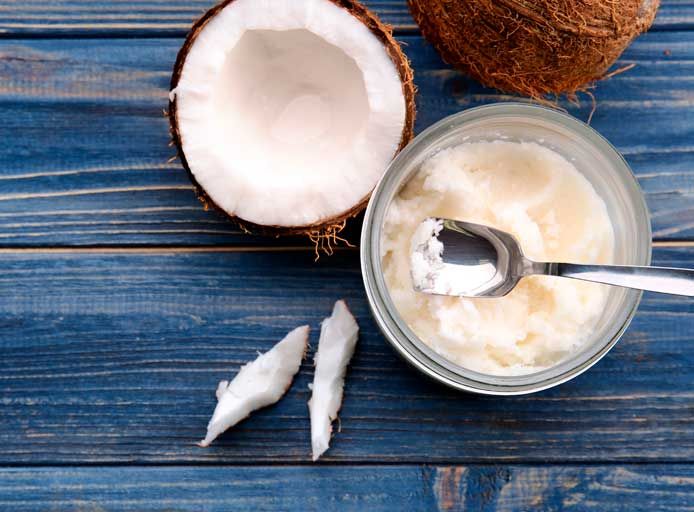
Naturally, this is why, on the pages of cosmetic ingredients for sensitive skin, it can often be read that their products are based on natural or naturally identical ingredients: “Based on natural and nature-identical ingredients”. Zinc oxide, for example, which most of us use to provide our natural creams with a photoprotection factor is usually a product synthesized in a laboratory by copying the natural substance.

https://www.woohoobody.com.au/blogs/news/what-are-nature-identical-ingredients-and-what-is-natural-anyway

Logically, cosmetic manufacturers are not stupid and know very well that natural products have greater bioavailability, greater assimilation and better tolerance in all skin types, including the most sensitive, what happens is that “manufacturing natural” is very expensive and difficult to carry to term, and that is the reason why they try to sell us the product with green camouflage strategies or “greenwashing”.


OUR BIOAVAILABLE AND ANTI-TOXIC PROPOSAL

As we mentioned before, if you are going to make homemade natural cosmetics do not use preservatives (use the fridge and prepare small doses of product). And if it is not possible, try always to use preservatives for your homemade preparations as naturals as possible, or, at least, naturally bioavailable that cause less irritation in sensitive skin, which allows the whole of your product to be absorbed and better assimilated.

For example, in front of the famous COSGARD or Geogard (both are the same) that everyone uses happily; why not use LEUCIDAL?

An expert website on ingredients for natural cosmetics

https://www.jojoli.nl/leucidal-sf-complete.html

compares Leucidal SF Compleet with Cosgard and Rokonsal and Leucidal, the truth is, the comparison comes to the fore.


LEUCIDAL SF Compleet: Preservative of natural origin produced by biotechnology and certified as organic by BDIH and Natrue. Whose INCI is: Lactobacillus ferment, Lactobacillus, Cocos Nucifera (coconut) fruit extract.

Description: Leucidal SF Complete stands out for its good compatibility with the skin in cosmetics. It is a broad-spectrum preservative and protects against yeasts, molds and bacteria. Therefore, no additional preservative is necessary. It is a clear liquid that, unlike Rokonsal and Cosgard, dissolves very easily in water. Used in doses of 2-4%

Leucidal SF Complete combines the antibacterial activity of lactobacillus ferment with the antifungal activity of AMTicide Coconut (derived from Coconut).

Its applicability is comparable to that of Rokonsal and Cosgard, however, Leucidal Compleet is effective in a wider range of pH values; namely 3-8 (rather than a maximum of 5 and 7) and more soluble in water.

If you do not find the LEUCIDAL Compleet, the simple LEUCIDAL is also very interesting and even more appropriate for the most sensitive skin. INCI: Leuconostoc/Radish Root Ferment Filtrate. Of course, its ability to extend the useful life of the product is somewhat less and would be reduced to a maximum of three months. It is a product of 100% natural origin produced by the fermentation of radishes with the bacteria Leuconostoc Kimchii (a genus of lactic acid bacteria). It is a preservative very well tolerated by the skin that contains peptides with antibacterial properties that at the same time have shown moisturizing and conditioning properties on the skin.

Dosage: 2%-4% for a conservation of 2 to 3 months in optimal conditions of elaboration and conservation. One gram of Leucidal corresponds to approximately 22 drops.

Use: With Leucidal Liquid we can preserve all kinds of homemade cosmetics that contain aqueous phase such as gels, emulsions (lotions, creams, milks), shampoos, shower gels, sprays, etc. We add it to the finished product and cooled and mix/stir well to homogenize. Leucidal Liquid acts in the pH range of 3 to 8 and is stable at temperatures up to 70°C.

In the cremascaseras.es shop it is also possible to find a new preservative of vegetable origin, DERMORGANICS 1388, whose INCI is: Glycerine, Aqua, Sodium Levulinate, Sodium Anisate.

This preservative meets the ECOCERT criteria (100% natural and 46% organic/organic) and keeps homemade products for a maximum of three months. In addition, its components are of vegetable origin: star anise, sugar cane, soy / corn and vegetable glycerine.

USES: It can be used both in oil-in-water emulsions (o/w) and in water-in-oil (w/o) or in hydroalcoholic bases. It can be introduced at the beginning of the aqueous phase or at the end (there is no problem with the temperature) although it is recommended that the pH of the formulation is between 4 and 5.5. It is dosed between 2-4% and, like Leucidal, does not usually cause irritations or allergies.

In the same vein, we will avoid synthetic perfumes, as well as the excessive use of essential oils.  The danger with essential oils is not that they are toxic, since they are totally natural products, but their high biocidal potency that can cause irritation to the skin if you do not know how to adjust the dose correctly. As they are very potent, generally, the doses have to be very low.


DIFFERENT COMMERCIALLY AVAILABLE PRESERVATIVES

Along with the well-known Cosgard, we find other commercial preservatives based on different chemical mixtures. Among them, Rokonsal, Sharomix, Potassium Sorbate, which is also used to preserve processed food from fungi and molds and which, normally, requires the addition of another    complementary bactericidal preservative.

Rokonsal and Sharomix consist, like Cosgard, of mixtures in different proportions of benzoic acid and benzyl alcohol. Sometimes with the addition of sorbic or dehydroacetic acid.

GEOGARD or COSGARD: This preservative that we talked about earlier is composed of benzyl alcohol and dihydroacetic acid. Geogard and Cosgard are the trade names for this preservative, so it will be listed on the label as benzyl alcohol and dihydroacetic acid. It is a synergistic mixture of an organic acid and alcohol. The two ingredients are organic compounds accepted for use in natural and organic cosmetics and approved by Ecocert. This preservative system has a wide range of potential uses, is effective in products with a pH of 2-7 and does not include parabens, formaldehyde or isothiazolone. However, benzyl alcohol has been proven to irritate infants and people with atopic skin.

BALSAM OF PERU (Myroxylon balsamum) which is an extraction in alcohol of the resin of this tree with its properties. It is normally used as a perfume fixator, but it can also act as a preservative given its significant amount of acids and phenolic esters: benzyl benzoate (44.85%), benzyl cinnamate (28.25%), cinnamic acid (9.27%), benzoic acid (8.10%) …


BENZOIN RESIN EXTRACT: Normally, it is also an alcohol extraction of the resin of the benzoin tree. Its benzoic acid content is greater than 60% and also contains benzyl benzoate in a percentage not less than 3%. Both preservatives also have a pleasant smell of very characteristic “vanilla”. These two natural preservatives would be something of a natural version of Cosgard due to its high content of natural benzoic acid.


NATICIDE OR PLANTASERV Q: Naticide or Plantaserv Q are the trade names of this natural preservative. You can find it on labels like Fragrance or Parfum. Generally, these terms are red flags, however, Naticide is a safe compound that is used in natural and organic cosmetics. You may be able to identify it by its sweet vanilla and almond aroma. This preservative is plant-based and has a wide range of uses. It is effective in preventing the growth of various yeasts and moulds in products with a pH of 4-9.

GSE, grapefruit seed extract: This product, which was not originally designed as a cosmetic preservative, but as an antibiotic treatment of the flus and colds that many naturopaths use to fight viruses on a general level, has become popular as a cosmetic preservative for its good dermal tolerance and its low probability of producing irritations.

This preservative has good antibacterial efficacy, but is less effective on yeasts and moulds. The truth is that it is a very useful preservative when it comes to preserving all cosmetic preparations that contain an aqueous phase (without xanthan gum) and can be complemented with a few drops of an antifungal EO, such as tea tree, with which its conservation capacity is considerably prolonged. For example, it preserves homemade aloe vera gel very naturally, also homemade water-based lotions and hydrolats. This preservative allows to extend the shelf life of these products for at least a month and something more combined with the EO of tea tree.

However, it is not a very suitable preservative when we want to preserve creams emulsified with Ester de sucre because it tends to destabilize them. Likewise, it destabilizes emulsified creams with the help of xanthan gum and even tends to separate the phases of preparations with Olivem 1000.

COLLOIDAL SILVER: You will find it as an exceptional component in creams for the treatment of atopic skin. However, it is not usually among the preservatives available on the pages of ingredient suppliers for natural cosmetics.


Silver is a broad-spectrum antimicrobial agent whose efficacy has been proven against the microorganisms that surround us today such as E. coli, Legionella, Pseudomonas, Salmonella, S. aureus, A. niger, among others. Colloidal silver prevents the growth of bacteria, moulds and fungi, as well as other microorganisms. The use of silver compounds for skin care has COSMOS and ECOCERT certifications and, for this reason, colloidal, metallic or ionic silver is used in countless cosmetic applications to maintain and protect the good condition of the skin, as well as preservative avoiding the use of parabens.

Why not use it too when we want to preserve our creams?

Dosage: Between 0.5 -1% of the total product if it is colloidal silver. And we would add it in the final phase of the mixture so that it would not be affected by the temperature.


NATURAL ALCOHOL OR ETHANOL: The unnatured alcohol, which is used to make tinctures, is a natural preservative especially suitable for our shampoos and shower gels, as well as for all our lotions and creams taking into account that the degree of protection of this natural preservative is not the same as that of a preservative specifically designed for this purpose such as Leucidal, for example.


However, many people macerate plants such as horsetail or willow bark extract in this alcohol greatly lengthening its usefulness as a preservative. For example, it is possible to macerate dry horsetail for about 2 or 3 weeks in alcohol stirring from time to time. Then, we filter it and obtain this interesting natural preservative.

VEGETABLE SALICYLIC ACID: Macerating willow bark extract in ethanol is even more effective as a preservative because the willow tree (salix alba) contains natural salicins. That is, natural vegetable salicylic acid. This natural preservative is therefore very effective against bacteria, but less against yeasts and moulds, to prolong the shelf life it is recommended to combine it with another preservative, which could be a few drops of an antifungal essential oil such as tea tree or palmarosa.

This preservative based on a natural maceration of willow bark in ethanol is not irritating or sensitizing and improves skin cell renewal.

The willow tree has historically been prized for its analgesic, antiseptic, astringent, antipyretic and anti-inflammatory properties. Current studies have proven that the natural salicylic acid in this willow extract promotes cell renewal much more than the synthetic salicylic acid used separately. The same was demonstrated in the case of antimicrobial properties. Surely is it due to its greater bioavailability?

Salicylic acid has a keratolytic action (“peeling” effect that stimulates cell renewal, soothes and softens the skin and prevents calluses) and, in addition, due to its astringents and antibacterial properties it helps regulate oily skin and is very appropriate for the care of skin with acne and blackhead spots. Therefore, this preservative is especially indicated to make cleansing products for the skin with impurities, anti-acne and anti-aging creams, and shampoos with anti-dandruff effect or for oily hair.


ANALYSIS OF NATURAL PRESERVATIVES WITH THEIR ADVANTAGES AND DISADVANTAGES

The preservative Naticide or Plantaserv Q is very mild and is supposed to be tolerated even by young children. It will keep our preparations for about 3 months. In homemade cosmetics it is dosed at 0.6%.

However, it has the disadvantage that it is scarcely soluble in purely aqueous media, thus causing a risk of irritation when used in aqueous gels or lotions.  Although, if mixed in an emulsion, it is not a problem. It is successfully used in creams, shampoos, lotions…

If you need a more stable preservative to preserve, for example, natural aloe vera gel or aqueous emulsions, then use the GSE as we mentioned before.

ESSENTIAL OILS: Strictly speaking, essential oils are not preservatives. However, some have significant antibacterial or fungicidal power, which can improve the shelf life of our cosmetics. We shouldn’t rely on them as preservatives exclusively because it won’t work, or at least not for long. However, sometimes they can act by enhancing the action of other preservatives as we mentioned in the example of GSE.

FOR EXAMPLE; To enhance the bactericidal action of a preservative, we can resort to a drop of the following essential oils with bactericidal capabilities: lavender, tea tree, noble laurel or even eucalyptus radiata or thyme. To enhance the fungicidal effect, we can resort to fungicidal essential oils such as tea tree, pink geranium, palmarosa or even rosewood or hô.

Remember, as we already know, that all these essential oils should be avoided in children under three years of age and some of them also in pregnant women.


AND, THE BEST SOLUTION OF ALL:

It is to elaborate cosmetic alternatives “without water” that do not need biocides for their maintenance.

For example:

Use cold-saponified soap bars as an alternative to shower gels, which also do not need packaging and are more sustainable than products packaged in plastic bottles.

Toothpastes formulated without water.

Use a hydrolate as a purifying tonic substitute for a micellar water loaded with preservatives.

Make-up removers formulated without water, based on oils.

Use a BB-cream formulated without water like the one we offered in a previous post.

Use oil serums instead of facial creams.

Use solid shampoos that also do not need preservatives.

Many of the products you can self-make (deodorants, gels, soaps) can be kept for weeks with a few drops of powerful essential oils such as lemon, rosemary, lavender … and think that you can also combine them intelligently to enhance their effects. For example, lemon essential oil, which is antibacterial, with clove EO, which is antifungal…

As you can see, many things are replaceable. Do not think that sometimes I do not also fall into the temptation of homemade creams and lotions that contain water, but, in that case, I try to use natural preservatives that do not leave my skin like cardboard.

Think that all the non-biodegradable preservatives that you avoid are also avoided to the aquatic environment that is where all the substances we consume end up.


 CONCLUSION

In short, no preservative is completely harmless to the skin and body. None of them is harmless due to their biocidal capabilities, more or less selective, but we must also not forget that dosing is very important.

It is the dose that produces the poison as has always been said throughout the history of medicine. Many substances that in small doses can be beneficial can be hugely toxic in larger doses.


The many medicinal uses of rosemary

Rosemary (Rosmarinus officinalis) is a very aromatic evergreen shrub. Its leaves are intense green and its flowers are usually pale violet, but we will find them on occasion of intense blue, pink or white.

It grows in arid, rocky and calcareous places, and can flourish throughout the year if the climate is warm. The plant is native to the Mediterranean area, but is mostly found in southern Europe, north Africa and southwest Asia.

Rosemary was highly prized in ancient times. Its use as medicine was not frequent, but was mainly used in religious and purification rites (replacing incense), in public events or intimate celebrations. It was a symbol of love, fidelity, prosperity and immortality.

Rosemary essential oil is obtained from the flowering stems usually. According to the sources consulted, it could have been extracted for the first time in the twelfth century, probably by the Arabs. It is the main ingredient of the famous water of the Queen of Hungary, created around the year 1370. Legend has it that the queen received from an angel or a monk the formula of a rejuvenating liquor at the age of 72. It later became a perfume.


ITS ANTI-AGING EFFECT

This essential oil should be taken into account to prepare simple and effective anti-aging treatments. Its anti-aging effect can not only be used in the care of the skin, but also in the care of joints and muscles and to promote memory.

Although it is also effective when it comes to treating respiratory pathologies, venous congestions and to take care of the liver.


ITS USE IN THE FORM OF A SERUM

In case of pain of contractures and joints we will dilute a couple of drops of the essential oil in a tablespoon of arnica oil that is in itself an excellent anti-inflammatory and we will apply it in the affected area.

In case of hair loss, we can add a few drops to our dose of shampoo by letting it rest for a few minutes before rinsing. It is also possible to add it to the content of the shampoo bottle in greater quantity.

It is also possible to add it to a black cumin oil * hair mask (for example) with which we can massage the scalp once a week.

Rosemary essential oil is also a good liver detoxifier that we can accompany in a cleansing detox diet. For example, adding 2 drops to a little black cumin vegetable oil that we will ingest twice a day for 15 days.

*Black cumin oil stands out for its anti-inflammatory, antioxidant, antifungal and antibacterial properties. Black cumin also has skin benefits and is recommended for the care of sensitive, allergic or itchy skin.


IN THE FORM OF ROSEMARY ALCOHOL to combat tired legs and arthritic pains:

Since it promotes blood circulation, it is of great help with tired and heavy legs, sore muscles and cellulite.  

The grandmothers were rightly the main defenders of the benefits of scrubbing with rosemary alcohol. This type of scrubbing has been carried out since time immemorial. Rheumatic pains (arthritis and osteoarthritis) in the knees, shoulders or hands are usually very limiting. Scrubbing with alcohol in affected areas can help mitigate pain and improve mobility.


For this purpose, it is possible to make a preparation of rosemary alcohol:

HOW TO PREPARE ROSEMARY ALCOHOL FOR EXTERNAL USE

Rosemary macerated in alcohol is usually used to combat cellulite, to rub sore muscles and also to promote blood circulation in tired legs and /or those affected by varicose veins.

Ingredients:

250 ml denatured* (SD alcohol) alcohol of 96º from pharmacy. (Also, perfumery alcohol, or 96º denatured ethyl alcohol like the one we use to make cosmetic grade tinctures).

50 grams of fresh rosemary leaves (it is important that the leaves are fresh to take full advantage of its active ingredients).

An opaque glass bottle.

ELABORATION:

We put the rosemary leaves in the bottle and then we cover them with the alcohol.

We cover the bottle, place it in a dark place and let it macerate for 15 days.

After time, we pass the mixture through a filter or fine strainer to an opaque glass bottle.

We will keep it in a place away from any source of heat, as it is easily flammable.

Optionally, after the 15 days of maceration, we can add a couple of drops of rosemary EO to your alcohol to reinforce its effects.

*Denatured alcohol is ethanol (ethyl alcohol) made unfit for human consumption by adding one or more chemicals (denaturants) to it. Denaturing refers to removing a property from the alcohol (being able to drink it), not to chemically altering or decomposing it, so denatured alcohol contains ordinary ethyl alcohol.


How is rosemary alcohol applied?

A small amount is taken, which fits in the hollow of the palm of the hand, and gently extends over the affected area. Then pass your hands, making frictions from bottom to top (i.e., from the feet up) so that heat is felt in the area. We can repeat the procedure three or four times a day or until we find relief.

This alcohol should not be used by people with psoriasis, dermatitis or eczema problems, because it could make these conditions worse. As we know, alcohol is not generally absorbed, but evaporates very quickly on contact with the skin. However, it tends to dry out the skin, so it’s best to be careful and not use it for other uses than those indicated. It should also not be used by pregnant or lactating women due to the tonic and stimulating properties of rosemary.


ROSEMARY FOR THE SKIN

For the skin it is possible to add it to an anti-aging serum formulation. One proposal would be to put 10 ml of rosemary essential oil in a base of 40 ml of jojoba oil, 20 ml of black cumin vegetable oil and 20 ml of argan vegetable oil to which we will add a few drops of vitamin E.

This combination of vegetable oils is highly emollient and firming. Together with the rosemary essential oil it becomes also a combination with antioxidant and anti-aging skin properties.


ROSEMARY AS A TONIC AND STIMULANT

Rosemary is a typically Mediterranean medicinal plant very energizing that awakens you and promotes concentration and physical and mental resistance to stressful situations, that is why it is defined as Mediterranean ginseng.

If you have difficulty concentrating or poor memory, it may be useful to use rosemary essential oil by olfactory route to optimize its diffusion at the brain level. If we have a diffuser or vaporizer, it is very easy to add about 10 to 15 drops to the container for diffusion.


ROSEMARY SYRUP to fight migraines, the first symptoms of flu and fever:

Instead of fighting headaches and flu with pills that have a long list of side effects (such as acetaminophen or ibuprofen), it’s a good idea to turn to natural herbal medicinal ingredients that help gently. The combination of rosemary, ginger and honey provide relief to many people. In addition, it is a pleasure to take them in the form of syrup both cold and hot.

To extract the healing powers of rosemary and ginger, a concentrated infusion is prepared, which is then mixed with honey and lemon to make a syrup. For this we will need:

Ingredients:

3-4 twigs of fresh rosemary

1 piece of ginger about 4 cm long, the thickness of a thumb

100 ml of water

The juice of a lemon

250 g of natural honey

Preparation:

Remove the rosemary needles from the branches and chop them with a knife.

After peeling it, cut or grate the ginger into very thin slices.

Put the rosemary, ginger and water in a small saucepan, bring to a boil and let it rest for 10 minutes.

Strain through a thin mesh and let it warm.

Put the honey, lemon juice and concentrated infusion in a bottle with a screw cap and shake it until you get a uniform syrup.

Close the bottle tightly and hold it in the fridge. This syrup is preserved without problems for several weeks due to its high sugar content.


How to take rosemary syrup

Dilute three or four tablespoons of the concentrated syrup in a glass of cold water, in an infusion (a mint, for example) or in hot water to relieve headache and fever. To preserve the active ingredients of honey and lemon, it is advisable to let the tea cool to the consumption temperature before adding the syrup. If necessary, we can take several cups of infusion throughout the day.

In addition to its mitigating effect of headaches and fever, this spicy rosemary syrup has a delicious taste, so well-being is achieved on the one hand by its ingredients, and additionally through enjoyment.

Although no side effects have been demonstrated so far or with large amounts of rosemary, it is recommended not to take more than six grams a day. In particular, pregnant women are advised to consume only small amounts of rosemary.

The active ingredients of the syrup act against different types of headaches and the first symptoms of infections because:

Rosemary dilates blood vessels and stimulates circulation. In this way, it quickly eliminates headaches caused by low blood pressure and poor circulation. In addition, it also relieves digestive problems. Ginger also promotes blood circulation and stimulates metabolism so that toxins are eliminated more quickly.

Honey has anti-inflammatory, antibacterial and antispasmodic properties. It mainly helps against headaches associated with colds and fever.

Lemon contains vitamin C, which reduces sensitivity to pain and lowers fever and purifies the blood by eliminating toxins and viruses.


For these same reasons, it is possible to add a few twigs of rosemary to a hot bath if we are cold to help decongest ourselves and eventually lower the fever.

It is also possible to add the bath salts of rosemary and ginger that we elaborated in a previous post:

Let us also remember that rosemary must be stored in an airtight container away from direct light and in a cool place so that it retains its active ingredients. Fresh rosemary must be used quickly, however, the dry one is preserved much longer.


WHY WE NEED TO TAKE CARE OF OUR SKIN

The skin is our most voluminous organ and, at the same time, a double entry barrier. On the one hand, it isolates us from the environment, but, on the other, it is the organ that keeps us in contact with our environment and therefore needs special care.

It is a living organ with the capacity to regenerate, it is waterproof, resistant and flexible, it breathes and remains active 24 hours a day, performing all kinds of fundamental actions for our body. The skin is a vital organ for the human body that works as a protective barrier against the outside thanks to its complex cellular and immunological mechanisms, it takes care of us of diseases, extreme temperatures and injuries such as blows and burns. She selects and filters what is harmful to our body and takes what is beneficial. Regulates our body temperature and synthesizes vitamin D through exposure to sunlight.

As you know, this vitamin, which is so necessary to keep our bones and tissues healthy, is not abundant in food, hence the importance of using adequate sunscreen. We wanted to start on the blog with this topic of sunscreens and therefore we include a recipe for sunscreen cream without chemical filters or endocrine disruptors.

ABOUT SUN PROTECTION

Summer is coming and the sun is shining in all its intensity. However, we all want to go to the beach and the mountains to enjoy life outdoors. So, we have decided to write some tips on sun protection.

The sun creams that we usually find in the market usually contain a high percentage of sun protection filters, mostly chemical filters. These chemical filters have the advantage that our skin absorbs them relatively well and that they are easy to apply, but they also have many drawbacks, as we will see below:

-They damage the skin: There seems to be more and more controversy regarding conventional sunscreen creams. There has been an increase in skin and lip cancers in recent years, which are associated with the use of sunscreen with chemical filters. Apparently, these sunscreens do not form a protective barrier between our skin and the sun as we might think, but that ultraviolet rays penetrate the skin and protection is done thanks to reactions that take place in our skin. The danger is that since we don’t have the sensation of burning, we can stay in the sun for hours, but since ultraviolet rays do penetrate our skin, they end up damaging our cells. And of course, the sun is cumulative and the cells of our skin have a memory effect.

-They work as hormonal disruptors: Many of you already know what endocrine disruptors are, but for those who don’t, we will tell you that they are substances that have the ability to alter our hormones. This is a very serious issue and one that deserves our full attention. For example, there is a study linking a type of sunscreen, called benzophenone, to an increase in women with endometriosis problems. Retinol palmitate and oxybenzone are also apparently disruptive.

-They harm the environment: Chemical filters are not biodegradable, in fact, it is estimated that 4,000 tons of these chemical filters are deposited and accumulate on the seabed every year. According to a study by the EHP (Environmental Health Perpectives) carried out by Professor Donovaro in different parts of the world; It was concluded that sunscreens with chemical filters have a negative impact on coral reefs. Today it is estimated that more than 60% of coral reefs are in poor condition. Many marine animals live and depend on these reefs, so they too would be affected. In some marine reserves, such as the Tulum Biosphere Reserve in Mexico, the use of sunscreens with chemical filters is prohibited. And let’s not lose sight of the fact that these sun creams, apart from sunscreens, contain other substances (parabens, phenoxyethanol, silicones …) that should also be avoided.

In our experience, if we really want to take advantage of the time of solar exposure to synthesize vitamin D, it is best not to wear anything that prevents the synthesis of vitamin D. Of course, you have to take precautions such as avoiding the central hours of the day, wearing clothes cotton and straw hats to protect our face and eyes, maybe use some natural oil to hydrate the skin. The massive use of sunscreens is perhaps the reason why today everyone is deficient in vitamin D and this is not only the case in countries that receive few hours of sunshine per year, by the way. What is clear is that, if we cannot respect these rules and we have to expose ourselves dangerously to solar radiation, it is important, if we want to get away from the dangers of skin cancer, that we use a natural sunscreen cream whose possible formulation we detail below.

And there is an alternative to chemical filters that are physical filters, also called mineral filters. They are zinc and titanium oxides. Unlike chemical filters that interact with the skin to protect us, these filters make a reflective protective layer on the surface of the skin like a mirror or screen. We are only going to use zinc oxide in our formulations because there are also studies carried out on rats in titanium dioxide that the nanoparticles of titanium dioxide are able to cross the skin and reach the nervous system with the risk of damaging the brain. Therefore, we think, it is better to be cautious and use only the protectors based on zinc oxide and, in any case, natural bronzers based on biological filters of vegetable photoprotective oils, which, although they will not be able to protect us for a long time, neither will they do us any harm.

These biological filters, although their level of protection is lower than that of mineral filters, have the advantage of nourishing and hydrating our skin, favoring a soft tan. They are vegetable oils and extracts that protect the skin avoiding cellular oxidative stress and the alteration of our skin immune cells.

Among the biological filters are: vitamins A, C and E, flavonoids, ferulic and caffeic acids, vegetable oils such as carrot, jojoba, argan, coconut, avocado and shea butter, aloe juice, coffee, buriti (which is an oil with a protection factor as high as that of raspberry oil that we will talk about later), pomegranate, known for its high antioxidant power.

SOME RECIPES:

As prevention, the simplest measure that we can implement to protect ourselves from the sun’s rays is a simple water spray spray in which we will dilute the mint and lavender EAs. These essential oils have a sunburn prevention effect and refresh the skin. Peppermint is not only refreshing; it also prevents the skin from itching. Lavender, in synergy with mint, prevents our skin from burning.

We can, for example, dilute 20 drops of each essential oil in a spray spray with a content of about 250 ml of water. Simply, it will be enough to spray ourselves in the exposed areas when we go for a walk in the summer sun, to prevent us from burning ourselves.

And we can make a very simple cream with a mineral filter such as zinc oxide, the protection factor of which will be somewhat higher, thus preventing us from burning ourselves when we go to the beach or the country. Of course, it will be necessary to always avoid the central hours of the day and long exposures, as we already know. With the sun, prudence will be the most appropriate measure to take care of our skin and maintain adequate levels of vitamin D.

Basic sun protection cream with SPF of approximately 30:

A simple sunscreen recipe whose effectiveness is due to the physical mineral protection action of zinc oxide is this that we detail below. When smearing this cream on the skin it will leave it a little white, but that is normal because it is the protective screen effect of zinc oxide. As long as our skin remains white, we will not burn. In addition, this cream is in itself quite waterproofing and does not usually go when bathing in the beach or the pool.

Ingredients:

40 gr of sesame oil

15 grams of beeswax

15 grams of zinc oxide

We will melt the beeswax in a bain-marie and add the oil and zinc oxide. It is important to beat very well with a rod so that the ingredients mix well.

DIETS & HEALTH

We all want to be thin to look better, no doubt, but also for health reasons.


How many people we haven’t heard of who need to lose weight in order to walk better or avoid the pains of their knees. And of how many others who after losing weight manage to regulate their metabolism problems and even control their sugar and cholesterol levels.

As Dr. Josep Mercola, another of the drivers of paleo* diets (high-fat, low-carb diets), states in his books (such as “Heal effortlessly”.  Ed. Grijalbo); losing weight is one of the fundamental pillars to achieve our goal of staying healthy and disease-free. *Below, we will describe this type of diet better.

If you’re one of those people who’s really worried about being overweight, going veg@n is a very interesting option.

In a recent article of “Medium”, according to Margie Zable Fisher, it was noted that:  

According to the American Academy of Nutrition and Dietetics, well-planned vegan diets are healthy for people at all stages of life, including children and pregnant women.

“I recommend vegan or plant-based diets for anyone who wants to prevent or control lifestyle-related diseases or who wants to optimize health,” says Sujatha Rajaram, PhD, a professor at Loma Linda University’s Center for Nutrition, Healthy Lifestyle and Disease Prevention.

Without a doubt, the best way to consume fiber for weight loss is with foods such as fruits, vegetables and whole grains. This does not mean that simply adding more fiber foods to our diet will serve to lose weight. Nothing further from reality.

To lose weight you should also eliminate harmful products such as those that contain an excess of saturated fats (fries, industrial pastries) as well as refined products, and in turn add fitness routines to improve health and thus lose weight.

According to Rajaram and also Dr. Sharon Palmer, dietitian and author of “The Plant Powered Diet”, a plant-based diet can improve health.

The main health benefits of a plant-based diet include:

Weight management: The types of foods vegans eat, including fruits, vegetables, whole grains, nuts, seeds and legumes, are high in fiber and phytonutrients that protect health. Rajaram  says eating nutrient-rich plant foods can help increase satiety or fullness and can even lead to weight loss. A 2013 study found that a group that followed a vegan diet for 18 weeks lost about 9.5 pounds, while the control group lost less than a pound. Research also shows that plant-based diets help prevent and help control type 2 diabetes.

Lower cholesterol and blood pressure: If your cholesterol or blood pressure is too high, you may be at risk for heart disease. Studies show that a vegan diet could help. A 2017 review analyzed 49 studies that compared plant-based diets with omnivorous diets to test their effects on blood cholesterol. While vegetarian diets reduced levels of total cholesterol, LDL and HDL compared to omnivorous diets, those who followed vegan diets saw the greatest reduction in lipid levels. In addition, an analysis of 2020 studies found that plant-based diets lower blood pressure.

Longevity: All the health benefits of a vegan diet, including weight management and cholesterol and blood pressure reduction, also lead to a lower risk of dying from heart disease, according to a 2019 study. Research has also shown that vegan diets can even reduce your risk of cancer.

“If you’re not ready to become vegan, it’s beneficial to take even small steps toward feeding whole-grain plant foods,” Rajaram says. “Even simply deciding not to eat red or processed meat will help you start seeing more health benefits.”


THE DETRACTORS OF THIS DIETETIC MODEL continue to emphasize the issue of vitamin B12 deficiency *Problems associated with this deficiency include: tiredness, exhaustion, tingling, numbness, reduced sensitivity to pain or pressure, cloudy eyesight, poor memory, confusion, depression, hallucinations and personality changes.

Vitamin B12 is not found in a bioavailable form in any plant-based food. All is made by bacteria, including those of the earth and intestinal tract of animals and humans. This might make you think you don’t need to ingest B12 as our bacteria can produce it. However, absorption is in the small intestine and synthesis (if any) occurs in the large intestine. Water and soil contaminated with bacteria often contain B12, which might explain that some low-hygiene vegan rural populations are not lacking in it.

More and more people suffer from this deficiency, regardless of whether they are vegan or not. According to FESNAD (Spanish Federation of Societies of Nutrition, Food and Dietetics. 2010), “non-vegans” can have a deficiency of this vitamin and, in fact, it is very common today when the person does not have good intestinal absorption. Either due to atrophy of the gastric or intestinal mucosa, due to alteration of gastric secretion (gastritis, advanced age, hypochlorhydria …), chronic diarrhea, or habitual use of antacids, alcohol or tobacco.

In January 2019, The Lancet (online medical journal) published an article (Food in the Anthropocene: the EAT – Lancet Commission on healthy diets from sustainable food systems; https://www.thelancet.com/journals/lancet/article/ PIIS0140-6736 (18) 31788-4 / fulltext) on sustainable diet.

This article proposes a sustainable healthy diet for the planet in order to be able to comply with the Paris agreements and the claims of our youngest activist Greta Thunberg.

This article basically concluded that the healthy diet consists mainly of vegetables, fruits, whole grains, legumes, nuts and unsaturated oils, includes a low to moderate amount of seafood and poultry, and includes little or no amount of red meat, processed meat, added sugar, flours and refined grains.

“Using several approaches, we find a high level of certainty that global adoption of the reference dietary pattern would provide important health benefits, including a large reduction in total mortality.  This inextricably links human health and environmental sustainability. Scientific objectives for healthy diets and sustainable food systems are integrated into a common framework, the safe operating space for food systems, so that diets beneficial to all (i.e., healthy and environmentally sustainable) can be identified.”

We estimate that after the impact of the COVID-19 pandemic in 2020 and the enormous impact it is having throughout the different global health systems, new scientific articles will be announced next 2021 and 2022 with even more comprehensive and more focused analyses on dietary and environmental changes needed to prevent new pandemics like this in the future.


And it is that the great variety of “fad diets” that currently exist go by naming the ketogenic diet * or keto diet, intermittent fasting, the Mediterranean diet, the DASH diet, the raw food diet, and we cannot forget the popular Paleolithic diet or, more abbreviated, the “paleo diet”.

–The ketogenic diet is a low-carbohydrate, high-fat eating plan that shares many similarities with the Atkins diets and those low in carbohydrates. This diet involves drastically reducing carbohydrates and replacing them with fat. The objective of this diet is to cause a state of ketogenesis, that is, a state in which our body works in an environment with low blood glucose levels and begins to burn fat for energy.

It is effective, but it can also lead to impaired glucose tolerance. Going to a keto diet will bring us benefits, it is true. We will surely lose weight, improve our energy, lower cholesterol and improve glucose levels. But, although everything seems positive, if we do a broader analysis, we discover that not everything is. Although it is true that people who follow a keto diet see their blood glucose levels lower, a certain glucose intolerance also occurs, which limits their ability to tolerate foods rich in carbohydrates such as fruits, tubers, legumes and whole grains. And, because it is not a very sustainable lifestyle (neither privately nor environmentally), the moment carbohydrate consumption increases – a banana, quinoa or French fries – then the liver loses it. It takes longer to efficiently metabolize glucose for energy, resulting in a spike in blood glucose or insulin. Leading to insulin resistance, which could develop into type 2 diabetes and other chronic conditions like heart or kidney disease.

–Intermittent fasting: Rather than a diet, it is a health guideline that consists of abstaining completely or partially from eating for a certain time, before re-eating on a regular basis.

Some studies suggest that this way of eating may offer benefits such as fat loss, better health and longevity. Its advocates claim that an intermittent fasting program is easier to maintain than traditional calorie-controlled diets. The easiest way to fast for 12 hours is to include sleep time in the fast window. For example, a person might choose to fast between 7:00 p.m and 7:00 a.m. He’d have to finish his dinner before 7:00 p.m. and not have breakfast until 7:00 a.m., but most of this time he’d spend it sleeping. This type of daily fasting can be difficult to maintain in the long run.

That’s why, in many cases, complete fasting has become popular for 1 or 2 days a week, known as eat-stop-eat, which involves not eating food for 24 hours at a time. Many people fast from breakfast to breakfast or lunch to lunch.

People who follow this diet plan can drink water, tea, and other calorie-free drinks during the fasting period, but they should return to their normal eating patterns on non-fast days. Eating in this way reduces a person’s total calorie intake, but does not limit the specific foods they can eat.

–The Mediterranean diet: The Mediterranean diet is a type of diet based on the traditional cuisine of the coastal countries of the Mediterranean Sea. Although there is no single definition of the Mediterranean diet, it is usually rich in vegetables, fruits, whole grains, beans, nuts and seeds, and olive oil. Meals are prepared around these plant-based foods. Moderate amounts of dairy, poultry and eggs are also critical in the Mediterranean diet, as are shellfish. In contrast, red meat is only eaten occasionally.


More than a weight loss diet, it’s a healthy style of eating backed by institutions like who (World Health Organization) or the Dietary Guidelines for Americans. In fact, the “new sustainable diet design” to which the previous Lancet article referred is based on this type of diet.

–The DASH diet, which is a diet designed to prevent cardiovascular disease and is low in saturated fat and processed foods with added salt but allows you to eat meat and dairy.

–The “paleo” diet: According to the creators of the paleo diet, popularized by gastroenterologist Walter L. Voegtlin and by the writings of Loren Cordain, an American scientist expert in nutrition and exercise physiology; the paleo diet would be a type of diet based on the idea of ​​resembling as much as possible the way of eating of our ancestors of the Stone Age, before the development of agriculture. These authors postulate that in the Paleolithic our ancestors obtained 55% of their daily calories from animal protein, 15% from fruits, vegetables and seeds, and the rest from fats, especially saturated ones.

The paleo diet shares with philosophies such as raw veganism the idea that our digestive system and our genetics have not had time to adapt to the changes that have occurred since the generalization of agriculture and, more recently, sedentarism.

Thus, this diet would be based on ingesting “large amounts of protein and fat”, from foods such as meat and fish, and to a lesser extent carbohydrates. According to this dietary philosophy, it is better to avoid dairy, legumes and cereals since the diet of our ancestors was based on meat, fruit, vegetables, fish and shellfish. The main difference between the paleo diet and other healthy diets is the absence of whole grains and legumes, which are considered a good source of fiber, vitamins, and other nutrients. The diet also does not include dairy products, which are good sources of protein and calcium.

This is an example of what you could eat on a typical day if you follow a paleo diet, according to the Mayo Clinic: https://www.mayoclinic.org/healthy-lifestyle/nutrition-and-healthy-eating/in-depth/paleo-diet/art-20111182

Breakfast. Roasted salmon and cantaloupe melon.

Lunch. Roasted lean pork tenderloin and salad (romaine lettuce, carrot, cucumber, tomatoes, walnuts and lemon juice dressing).

Dinner. Baked lean beef tenderloin, steamed broccoli, salad (mixed green leafy vegetables, tomato, avocado, onions, almonds, and lemon juice dressing), and strawberries for dessert.

Snacks An orange, carrot sticks, or celery sticks.

I don’t know about you, but this menu reminds me a lot of the low-calorie diets that doctors prescribed to my mother in the 80s.

On the other hand, the detractors of the paleo diet, affirm that it has its weak points, especially in regard to the consumption of animal protein, since it is recommended to include it in all snacks, between 3 and 5 a day. And this does not agree with the evolutionary logic of the initial proposal since our ancestors could not eat animal protein on a daily basis because they did not have the logistics or the technology to hunt animals so easily. Nor did they have the cooling systems that we have today to preserve it. -Article by Consol Rodríguez in the spanish magazine “Body Mind” –

Other studies suggest that our ancestors, after spending the day collecting and hunting, met at the end of the day to share the food found among all. That is, they practiced prolonged fasts daily during which they made physical effort and only ate once at the end of the day.

–Raw paleo or “pegan”: In the paleo diet, there are trends that defend that food should be eaten raw. It is raw paleo diet, a meeting point with non-vegan raw food.

This trend “pegan”, which comes from paleo + vegan, proposes a much more plant-based paleo diet. For ethical or sustainability reasons, they refuse to consume large amounts of animal protein, although they do include it in small doses, so its name is debatable.

Aside from the fact that these diets may work for weight loss, our question is: Are these diets rich in saturated fat and animal protein the healthiest option?

The big question is: Do these diets really work, being also healthy and ecologically sustainable for the planet?

With regard to the issue of carbohydrates, there are very divergent criteria among research groups.

–There is one sector that argues that they should be avoided.

But if we take into account that in the “Blue Zones” (the areas or countries with the longest population in the world), they do not follow low-carbohydrate diets, perhaps we should increasingly question this sector of researchers.


In fact, long-lived populations with low rates of chronic diseases eat a diet rich in carbohydrates, and low in fat and animal products. -CuerpoMente, article according to dietitian Carla Zaplana.-

In 2017, in a study published in the Lancet, researchers performed coronary calcification tests on more than 750 indigenous Tsimane from South America, in Bolivia. All the subjects were over 40 years old and ate a diet composed of 72% of the calories from carbohydrates, 14% from fat, and 14% from protein (mostly from rice, corn, cassava, and bananas). The results were shocking since 97% of the people studied did not show signs of arteriosclerosis (accumulation of fat and cholesterol in the arterial walls). In addition, they also had extremely low total cholesterol and LDL (bad cholesterol) levels.


Although a single study cannot be conclusive, we do need to pay attention to it. What is certain is that it is consistent with many populations around the world that feed on ingredients of plant origin and have low rates of heart disease, such as the Bantus of Central and South America, the natives of New Guinea, some populations of Ecuador and Native Americans of Mexico, as well as the afore mentioned blue zones.

–Among the other researchers, as confirmed in this Reuters study, there are even important detractors of Atkins-type diets rich in fats and proteins of animal origin (today, better known as paleo diets or ketogenic diets); since, according to these authors, they not only overload the elimination organs such as kidneys and liver, but are not even effective in reducing overweight.

“High protein diets were associated with higher body weight.” A national study involving more than 4,000 men and women between the ages of 40 and 59 produced a surprising conclusion in our Atkins-fed society: the thinnest people on earth consume the most carbohydrates. Even more alarming, the people who ate the most protein in their diet were actually the heaviest.

“Without exception, a diet high in complex carbohydrates and plant protein is associated with low body mass,” study leader Linda Van Horn of Northwestern University reported in a conference.

Of course, this does not mean that donuts, French fries, pasta, and white bread will make us lose weight. These refined carbohydrates do not provide the complex sugars that our body needs as a primary source of energy. Only complex carbohydrates found in grains, fruits, vegetables, nuts, seeds, and beans are adequate to meet the body’s energy needs. Most notable is this finding: the more animal protein a person consumed, the greater their weight.

Obviously, muscles are heavy, but don’t think that on a vegan diet, muscles weaken. On the contrary, they become thinner but also more fibrous and with greater resistance.


As famous oncologist at Beth Israel Medical Center in New York and author of “The Wonder Enzyme,” Hiromi Shinya relates in his book: The German doctor Von Bertz, a student of nutritional science, conducted an experiment in Japan where he found that “rickshaw” drivers who ate the traditional Japanese diet of rice, barley, millet, roots of lilies and hardly any food of animal origin could pull these vehicles for four times longer than drivers fed a diet of beef.

In the end, the interesting thing about this whole matter is that we keep the good of all these dietary contributions that, in any case, affect the importance of choosing the best foods for health.

Many people who have opted for a vegan lifestyle out of ideology neglect such an essential aspect as taking care of yourself. They consume products without animal suffering, but nothing natural or healthy, with colorants, flavorings, preservatives and other highly recommended additives.

These diets defend points that are also important to claim, such as:

-Incorporate a good amount of healthy fats.

-Avoid refined and processed foods.

-Choose organic food, not very altered by the methods of agriculture and, if possible, local.

-Eat legume sprouts, tubers and sprouts, an irreplaceable source of healthy energy.

-Physical exercise, especially on an empty stomach, is also one of the keys.

Beyond all these diets, we must not forget that we are not only what we eat, but also what we think, what we feel, how we act, where we live and with what beings we share it.

The meat intake proposed by the paleo diet, if we all carried it out, is unsustainable worldwide, and no matter how much it insists that it comes from animals raised in the open air and with grass, the ethical position before animal exploitation is irrelevant.


SOME IDEAS FOR A PLANT-BASED DIET

MENU Day 1

Breakfast: natural yogurt with red fruits and nuts.

Lunch: Tofu-kale-quinoa salad with vinaigrette.

Dinner: Vegetable and chickpea stew with whole wheat bread.

Mid-morning snack: fruits and nuts.

Mid-afternoon snack: vegetable-based smoothie, such as pumpkin or cucumber.

MENU Day 2

Breakfast: whole wheat toast with avocado puree and tempeh slices.

Lunch: Greek vegetable salad with white beans and vinaigrette.

Dinner: sautéed vegetables with seitan and brown rice.

Mid-morning snack: Whole wheat bread with nut butter.

Mid-afternoon snack: Fruit slices with nuts.

MENU Day 3

Breakfast: scrambled tofu with spinach, tomato and whole wheat bread

Lunch: Pasta cooked with beans, artichokes, kalamata olives, garlic, tomatoes, olive oil and herbs.

Dinner: brown rice with mushrooms.

Mid-morning snack: yogurt of vegetable origin and fruit.

Mid-afternoon snack: Fruit with nuts

MENU Day 4

Breakfast: whole wheat toast with peanut butter and orange wedges.

Lunch: Green sprout salad with quinoa, vegetables, edamame and almonds.

Dinner: Vegetarian burger with whole wheat bread, lettuce, tomatoes, avocado, condiments.

Mid-morning snack: Hummus with vegetables

Mid-afternoon snack: fruit slices with nuts

MENU Day 5

Breakfast: vegetable yogurt with banana and sliced ​​almonds

Lunch: roast vegetables with whole grain crackers.

Dinner: Vegan paella with chickpeas and vegetables

Mid-morning snack: fruit and nut smoothie

Mid-afternoon snack: apple slices with tahini

MENU Day 6

Breakfast: Breakfast burrito with corn tortilla, black beans and sauteed vegetables.

Lunch: Greek pita with white beans and cucumber and tomato salad.

Dinner: Sauteed vegetables with tofu and brown rice

Mid-morning snack: peanut butter with banana

Mid-afternoon snack: whole wheat bread and pumpkin or sunflower seeds

MENU Day 7

Breakfast: oatmeal cereals with fruits, plant-based milk and nuts

Lunch: black bean tacos with roasted broccoli

Dinner: Polenta topped with roasted eggplant, mushrooms, beans, and red pepper ragout.

Mid-morning snack: fruit smoothie and nut butter

Mid-afternoon snack: mixed nuts


If you liked this article, spread it😊on the networks.


NATURAL REMEDIES AGAINST SKIN CHILBLAINS AND ERYTHEMA

In addition to pain, there are several other symptoms that are characteristic to chilblains. We are referencing these symptoms as follows:

-The affected area usually takes a red and bluish color.

-There is inflammation.

-There is itching of the affected region.

-In addition, it is possible to have stinging.

But sometimes the chilblains can get complicated and can be lengthened over time. In these more severe cases, we may experience blisters and ulcers on the skin of the area where the problem is located. In the event of such complications, it is very important to pay attention to them because these injuries can become infected and cause further damage.

The chilblains usually last approximately 3 to 7 days, as long as some of the complications we mentioned above (blisters and ulcers on the skin or infection) have not appeared. If this occurs, they can last in time about three weeks.

Causes of the chilblains:

As mentioned above, the main cause of a chilblain is prolonged exposure of an area of our body to cold and subsequent abrupt change in temperature in that region of the body. But we must say that there are certain aspects that make a person more sensitive to suffering this type of injury.

These causes to which we are mentioning are, for example:

-When there is a precarious blood circulation. When this happens, the person is more vulnerable to sudden changes in temperature. We have previously mentioned that young women are more sensitive to chilblains, due to their hormonal changes and also because they usually have the lowest blood pressure.

-Another reason you may develop chilblains is continued alcohol intake. But people who smoke are also prone to this pathology. This is because these substances will inhibit or decrease blood supply. El tobacco, for example, produces a vasoconstriction (contraction) effect on blood vessels.

-Also, the fact that many of us lead a sedentary life, it does not improve our blood circulation, but rather causes its stagnation. That’s why it’s so important to do some physical exercise. With physical exercise we will avoid sedentary lifestyle and we will also improve our blood circulation.

-And, although it seems very obvious, plastic shoes or not wearing the right clothes to be able to withstand the low temperatures to which we are going to expose, can also favor the chilblains.

TREATMENT OF CHILBLAINS

Initially, we will try to keep the injured areas, which are usually hands and feet, always dry and warm. For this it is advisable to wear winter gloves and cotton socks, since cotton is a breathable fabric that does not retain moisture from our feet. It is also important to avoid aggressive soaps and also keep our hands and feet always well hydrated with vegetable oils and butters that facilitate blood micro-circulation.

Physical exercise and diet are very important. As the maxim says, “may your food be your medicine.” Eating a healthy diet that activates our circulation will be the first step to implement.

Through the diet it is possible to promote blood circulation. According to Traditional Chinese Medicine, proper blood circulation depends on “chi” or spleen and liver energy. There has to be enough spleen energy for blood to circulate well through the blood vessels, and in turn, if there is accumulated toxicity (removing it is a liver task), the veins may lose elasticity.

Taking care of the lymphatic system is also essential to prevent poor circulation, as lymph collects much of the waste circulating in the blood; then this fluid is transported back into the bloodstream. This is an essential immune process.

Food is decisive. It is advisable to avoid refined sugars and flours, toxic ones, moisturize well and avoid drinks with gas. Hot foods, according to Eastern medicine, such as meat, alcohol or coffee, also promote clogging.

We propose a series of foods rich in substances that will improve your blood circulation.

-It is important to include in the diet species such as cayenne, cinnamon or pepper. Cooking with these seasonings helps improve circulation, as they are vasodilator foods. Garlic is a natural anticoagulant that helps blood circulate better in vessels. Along with the onion, it stimulates blood circulation and decreases blood viscosity.

The “Equisetum arvense” plant improves the condition of the vessels. It is rich in silicon, necessary for collagen formation and, therefore, for the maintenance of vascular walls. Each day you can take two cups in infusion, better with the ground plant. Or toast a little and add it to salads and vegetable creams.

Ginger is known to fluidify blood. Frequent and regular consumption of ginger helps mobilize energy and activates blood circulation by fluidizing it.

Consuming buckwheat reinforces the action of vitamin C. This pseudo-cereal is rich in a flavonoid that acts in synergy with vitamin C protecting the wall of vessels and capillaries. Its usual consumption thus contributes to the protection of blood vessels.

Vitamin C of lemon is essential, because it is involved in the formation of collagen and elastin, proteins that influence the capillary wall and improve its elasticity. Drinking the juice of a lemon in a glass of water in the morning is an ancient remedy to solve a lot of problems, from poor circulation to anemia and overweight.

Vitamin C-rich foods protect and strengthen blood capillaries by also preventing blood clots. Some foods rich in this vitamin that we can propose are kiwi, orange, lemon, strawberries, mango, pumpkin, pepper or broccoli. And vitamin E-rich foods widen the capillaries and dilate them. We find them in: vegetable oils, almonds, nuts, as well as tomatoes, avocados, broccoli or spinach.

Vitamin K-rich foods are vital for blood clotting, as significant bleeding may result in internal bleeding if a major deficiency occurs. In addition, this vitamin prevents arterial calcification, the onset of varicose veins and the development of other diseases related to circulatory problems. Olive oil is one of the most common foods with a high amount of vitamin K, but we can also find it in soybean oil, lettuce or spinach. In general, vitamin K is found in most green leafy vegetables.

But above all, foods that contain vitamin B3, called niacin. This vitamin has been shown to strengthen blood vessels and increase blood flow so it reaches the limbs without problem. In addition, it involves the process of forming blood cells and prevents hardening of the arteries. We can find it in many types of foods: nuts, sunflower seeds, beetroot or lentils, among others.

Nuts generally have vitamins A, B, C and E that exert a protective vessel action, as well as providing antioxidants.

As we always say, it is much better to make sure you eat quality organic food that contains all the necessary vitamins and nutrients than to acquire synthetic vitamin complexes that not only will not exert the same benefit, but in many cases will be an overload for our emunctories organs that will have to get rid of surpluses. Many vitamins, such as vitamin D from the sun or niacin itself, are synthesized by our body from the sun or from food. Its inclusion, therefore, in this sort of vitamin complexes is always a controversial issue that, we personally believe, is counterproductive.

A very different matter is that we provide ourselves with essential fatty acids * that are difficult to obtain from the diet and that our body cannot synthesize by itself.

* Essential fatty acids are those fatty acids that the body cannot synthesize, so they have to be obtained through the diet. There are two families of essential fatty acids: omega-3 and omega-6, which are also called polyunsaturated fatty acids. Most of these fatty acids come from fatty fish and plants.

HERBAL TREATMENT

But if dietary prevention is not enough to prevent and treat chilblains, then we should treat them internally. It is always possible to go to the doctor or podiatrist, and, in any case, it is also possible to use the natural herbalist at our fingertips.

If we want to improve our circulation with herbal remedies, there are a lot of them that we use and that are also very effective:

RED VINE LEAF INFUSIONS

Although it is also possible to make a decoction of red vine leaves and apply it topically, the red vine is also a great internal remedy. If you take it as a tisana internally the red vine will improve circulation, which is finally the problem that causes the chilblains.

Ingredients:

1 teaspoon red vine leaves (5 g)

1 cup water (250 ml)

Preparation: We will heat the water and, when it comes to boil, we will add the teaspoon of red vine leaves. We let the decoction take place for 5 minutes and allow another ten to rest. After the indicated time, we filter the infusion and can take it or apply it topically for 5 minutes.

INFUSIONS OF EQUISETUM ARVENSE PLANT, GINGKO BILOBA, etc…

As with the red vine, we can prepare a tisana of these herbs that activate blood circulation, and take it several times a day in order to improve our circulation.

And we can also perform decoctions of some other plants in order to give us baths in the area to be treated. Topical application of these decoctions is also an effective remedy.

CELERY DECOCTION

In addition to being useful in the treatment of external wounds, celery is one of the best home remedies for chilblains. Externally used minimizes swelling and stimulates circulation by providing rapid relief.

Ingredients:

1 cup celery (250 g)

4 cups water (1 liter)

Preparation: For each liter of water, we will put 250 g of celery. We will bring the water to the boil with the celery and let it boil for an hour.

With the resulting solution we will take baths in the affected areas. Once the decoction is applied, we will leave it on for 10 minutes. After 10 minutes, the affected area will have to dry and protect the affected area from the air. If you do it every day, in a few days the chilblains will be gone.


CALENDULA DECOCTION

Calendula is a great ally in the treatment of chilblains. Applied in the form of decoction, serum or ointment is a very effective remedy to treat them.

Ingredients:

3 tablespoons dried calendula (30 g)

4 cups water (1 liter)

Preparation: Heat the water and, when it boils, add the three tablespoons of the calendula plant. We allow decoction to take place for 10 minutes. Once this time has passed, we remove from the fire.

We add water in a tub and then the resulting infusion. We can give ourselves small baths in the parts affected by the chilblains twice a day.

ROSEMARY OLEATE

Rosemary oil massages are relaxing, anti-inflammatory and activate blood microcirculation. For this reason, many categorize them as one of the most effective home remedies to treat chilblains. While oil can be purchased from herbal shops, it can also be made at home.

Ingredients:

1 handful rosemary

2 cups oil (500 ml)

Preparation: In a glass bowl, we will mix a handful of rosemary with three cups of cooking oil. Cover and let stand for a few days, shaking it daily. It is a quick way to prepare a rosemary oleate, as an herb that is easy to transmit its qualities to a quality vegetable oil.

After a few days, we’ll strain it in a glass jar. After giving us a hot bath, we’ll use some of our oleate to massage our feet.

Hot method: It is possible to put the oil and the rosemary to heat within a minimum temperature and leave it for a couple of hours without the oil ever reaching a temperature above 70 degrees. It is a faster method to get the properties of the rosemary plant transmitted to the carrier oil.

This can be done also very easily by adding a few drops of rosemary essential oil to a carrier vegetable oil. It is what is known as rosemary essential oil serum.

SERUM WITH ESSENTIAL OILS

In a tablespoon of carrier vegetable oil (jojoba, apricot, almonds) we will dilute two drops of the following essential oils:

Niaouli (2 drops), which is disinfectant (replaceable by camphor or ravintsara)

Helichrysum (2 drops), anti-inflammatory

Cypress (2 drops), activates blood microcirculation

With the oil we will rub the injured areas. The combination of these oils will make the chilblains disappear. It is not a good idea to try to apply EO directly to the skin without diluting them in a vegetable carrier oil because some essential oils are dermo caustic.

One of the complications of the chilblains is the appearance of blisters and ulcers on the skin and therefore you may run the risk of infection in them. In the event of this happening, we can use a honey and calendula-based ointment to disinfect them and speed up their healing. There is no better remedy against ulcers and burns than to be applied topically a little honey that will also prevent infection.

Another interesting proposal to alleviate the problem is to perform gentle massages on the feet and legs with an essential oil serum like the one mentioned above. In this way it is possible to activate circulation, minimize the problem, and avoid the appearance of more complications.

If you liked this entry, sign up for notifications on our page to stay informed.

WHY WE SAY YES TO NATURAL ALUMINIUM STONES AS DEODORANTS?

Sweating is an essential physiological need so that our body can eliminate toxins and maintain good levels of hydration, body temperature and PH.

However, finding a good deodorant nowadays that does not contain aluminium or other toxins has become a true epic for most of us.

Both, deodorants and antiperspirants, are designed to camouflage and prevent sweat and odour. The bad smell of sweat is produced when bacteria ferment it, and to avoid this process, deodorants, as well as antiperspirants, contain two types of common substances: bactericidal substances and synthetic perfumes. And antiperspirant deodorants, in addition, aluminium salts.

–Bactericidal substances: They prevent the proliferation of bacteria so that the fermentation of sweat does not occur. This, in principle, seems like a good idea. The problem, as always, when altering the natural mechanisms of life, is that it ends up taking its toll. As we will see later, synthetic substances used for bactericidal purposes also have their effects on health.

–Synthetic perfumes: The perfumes serve, obviously, to camouflage the smell. Again, there is nothing wrong with smelling good, if that fragrance were natural and harmless. The problem is that the synthetic perfumes that are usually used in industrial products (much cheaper to produce than natural essential oils) are suspected of producing allergies of all kinds, dermatitis, eczema and other major ailments.

–Aluminium salts: Aluminium is known to be neurotoxic. Large amounts of aluminium are found in the brain tissue of people with Alzheimer’s. Likewise, numerous studies, such as that of the University of Reading in the United Kingdom, indicate the highest incidence of cancer in the area near the armpit and a much higher concentration (25%) of aluminium in that area.

The aluminium in antiperspirant deodorant is used to clog the pore and prevent sweating. A real aberration! To begin with and as we said before, sweating is a physiological necessity. Clogging the pore causes toxins to be trapped inside the body.

Another common component of commercial deodorants, due to its bactericidal capacity, is triclosan. Triclosan is one of the most commonly used chemicals in deodorants and antiperspirants. A study published by the journal Environmental Health Perspectives and conducted by the University of California Davis, confirms the negative effects of Triclosan on brain development. Another study published by the journal Proceedings of the National Academy of Sciences ensures that its use can cause serious long-term problems and associates it with liver damage and a higher incidence of cancer.

Also, parabens, due to their bactericidal capacity and as preservatives, are another of the common elements used to extend the life of hundreds of cosmetic, hygiene or even food products. The alarm sounded when a study carried out in England and published by the Journal of Applied Toxicology with women affected by breast cancer, revealed traces of parabens from deodorants and antiperspirants in 90% of biopsies. This substance has been linked to all kinds of hormonal dysfunctions.

Phthalates are also used in deodorants and antiperspirants for their role as solvents. They are called “environmental poisons” and their use has been linked to hormonal dysfunctions, damage to male reproductive DNA, and malformations in the foetus.

PEGs are used as emulsifiers, and the American College of Toxicology claims that these ingredients accumulate in the tissues of the heart, liver, kidneys, and brain.

In response to all this, more or less natural alternatives have emerged, as well as countless natural cosmetics blogs (like ours, for example: http://www.naturamatters.com) that try to respond to this need to smell good that we all have without intoxicating ourselves and harming our health.

One of these alternatives, cheap and easy to apply, is the controversial alum stone. And the controversy with this natural deodorant stem from its composition.

Potassium alum or potassium alum (also called Neapolitan Alum or Alum) is a double salt of aluminium and hydrated potassium (with 12 water molecules) whose formula is KAl (SO4) 2. … This salt is presented in the form crystal naturally in nature and corresponds to the category of alums, being the most common of them. It is obtained from a magmatic rock, of volcanic origin, called Trachyte Alunifera. This crystal is the result of alterations in rocks rich in potassium feldspar such as Trachyte, which are usually produced by circulating waters rich in sulphates. Alum crystals, naturally, can have variations in appearance, colour or texture, although they all maintain their properties”. Wikipedia source.

This composition based in aluminium salt has given “alum stone” today a bad reputation. According to some sources and distributors of alum stone as a natural deodorant, Potassium alum is not the same thing as potassium aluminium.

When an antiperspirant claim to be “aluminium-free,” they are saying it does not contain aluminium chloralhydrate, aluminium chloride, aluminium hydroxy bromide or aluminium zirconium — all forms of aluminium commonly used in antiperspirants and deodorants.

To stop the flow of sweat to your skin’s surface, the aluminium plugs sweat ducts in the top layer of your skin stopping the natural flow of sweat to your skin’s surface.

This aluminium can also be absorbed into your body where it can then build up as part of your body burden. Alzheimer’s disease and cancer are two illnesses known to be associated with aluminium exposure.

The aluminium in crystal deodorant stones is a different type of aluminium, called alum. The most common form is potassium alum, also known as potassium aluminium sulphate.

Potassium alum (and other alums) is a natural mineral salt made up of molecules that are too large to be absorbed by your skin. They form a protective layer on your skin that inhibits the growth of odour-causing bacteria.

WHY CANNOT WE INCLUDE THE ALUM STONE WITHIN THE SAME GROUP? WHY IS POTASSIUM ALUM DIFFERENT?

Potassium Alum is a natural mineral salt used as an alternative to Aluminium Chloride and Chloralhydrate. Its antimicrobial properties have been celebrated in traditional Chinese medicine for hundreds of years, used as a topical astringent, an antiseptic for wounds, acne and tonsillitis and a toner to tighten the pores. Potassium Alum (also known more commonly as ‘alum’ or ‘ming fan’ in Chinese medicine) was also taken as a decoction dissolved in water to alleviate stomach problems or in its powder form to remedy bleeding gums and mouth ulcers.

Potassium Alum is comprised of large molecules that sit on the surface of the skin, creating a barrier that prevents the odour-causing underarm bacteria from multiplying. Its alternative, Aluminium Chloride, is comprised of much smaller molecules than Potassium Alum, meaning that it is absorbed by the skin and plugs the sweat glands, preventing the release of unwanted chemicals in the body.

The only precaution that must be taken is that the stone that we buy says in its composition Potassium alum and not Ammonium alum, since it is a synthetic copy and with components that are harmful to health.

DE FACTO; NATURAL ALUMBER (potassium alum) not only has deodorizing properties, it is also an effective bactericide that controls the growth and proliferation of bacteria, both in our body and in our environment, in spaces such as water and on surfaces of all kinds such as floors, fabrics, etc. And that is why the Egyptians used these stones to purify water.

It is also a good healing agent, which helps to rapidly regenerate skin tissue that has been affected by some type of wound or by skin irritation. In the case of wounds, it produces a thin crust that comes off in less time and without the risk of leaving marks on the skin. This is the reason why in the past this stone was known as a barbers’ stone or a shaving stone because it was used to heal minor irritations in the beard of their clients.

Haemostatic: Its composition makes it effective to stop bleeding from external wounds, since it acts directly on the skin pore to close it. This haemostatic action is what helps to avoid the appearance of red rash on the skin after depilatory processes.

Reaffirming: It has the ability to firm the skin and tone it with continuous use.

Antifungal: As with bacteria, Alum also helps fight fungi that appear on the skin or on other types of surfaces. Of course, it is only effective in the initial phase of appearance of these microorganisms.

For all this, the great ancient civilizations such as Chinese, Egyptian, Roman, Indian, Greek and Arab, recognized the benefits of the alum stone and its use for different purposes was common and popular.

The Romans, for example, used it for its healing, antibacterial and deodorant properties. The popular use that confirmed the efficacy of these benefits, even led them to introduce their use in practices with medical effects. Between 77 and 79 BC, the author, naturalist and Roman philosopher Gaius Plinii Secundi (Cayo Plinio Segundo) recorded the characteristics and properties of Alum in a rigorous study on various areas of nature, written as an encyclopaedia, called Naturalis History.

In ancient Greece, around 50 or 70 BC, documentation on this mineral was also produced, in the encyclopaedic work De Materia Medica, written by the physicist, pharmacologist and botanist Pedanius Dioscorides.

In India and China, they have used it since ancient times to respond to organic needs externally and internally. In these two cultures they have commonly used Alum stone in solution for gargling and vaginal baths for antiseptic purposes.

In the Middle East, Alum has been well known and used, since numerous deposits of this mineral have been found in Syria. The Alum stone has been an active part of the ancient beauty rituals in Arab culture for its firming and astringent properties.

In ancient Egypt, women also used Alum as a skin firmer and as a soothing and healing agent after waxing.

At present, this astringent salt is used to clarify cloudy waters by placing it in the filters where the currents pass; also serving as mordant in dry cleaners and caustic in medicine, leather tanning, plaster hardener …

And due to its bactericidal action, it is still used today in some cultures as a preservative, for example, in Morocco they put some crystals of Potassium Alum inside the container where they keep the seeds of Pergamum harmala, and in this way they avoid contamination by bacteria.

Our own argumentation or defence of the use of natural alum stone begins by trying to distinguish between bioavailability and toxicity.

“Bioavailability” is the ability of a food, drug, or other substance to be absorbed and used by the body.

“Toxicity”: A toxic substance is one that produces serious effects, alterations or disorders in the functioning of a living organism, and that can even cause death.

Aluminium is the third most present element in the earth’s crust, along with oxygen and silica. It is a very abundant metal in the earth, which often combines with other elements and forms frequent chemical compounds in soils, rocks or in the composition of minerals. However, this metal can also reach the human body through diet, since, being an element so present in the environment, it is found in vegetables, grasses or running water. Its effects are toxic to health and, therefore, the European Food Safety Authority (EFSA) has studied its intake limit on several occasions to ensure its safety.

According to this study by the (EFSA), this metal is absorbed through the stomach and intestines and is excreted by the kidneys. According to the study, it is estimated that less than 1% of ingested aluminium is absorbed and represents 0.01% in relation to the other constituents present in the global daily food intake. Experts estimate that its consumption through food does not pose any health risk.

Diet is the main aluminium gateway into the human body. Most foods contain it, as it is a ubiquitous metal in the environment. Vegetables, tea or spices have the highest level of aluminium, while meat contains hardly any residues.

What does this mean? Well, surely, as the EFSA affirms, the aluminium that we consume through the ingestion of natural foods is degraded and eliminated from our body through the natural elimination routes of the kidneys and liver (intestines).

The World Health Organization (WHO) adds, for its part, that a high consumption of analgesics and antacids can increase the intake of aluminium up to five grams a day, since they are also a source of this metal.

And here comes the problem. When an element is not found naturally in the food chain its degree of bioavailability, no matter how much they assure us that the medicines are perfect chemical elements, it is not the same and, in many cases, it becomes a toxic that we end up accumulating in our tissues with the consequent injuries and diseases that may derive from it.

For example, large amounts of aluminium have been found in the brain tissue of people with Alzheimer’s. Likewise, numerous studies such as that of the University of Reading in the United Kingdom (among many others), point out the higher incidence of aluminium (25%) in the area near the armpits of patients with breast cancer.

And is that the accumulation of heavy metals in the body can be the cause of several diseases. Among the most dangerous are mercury, arsenic, lead, chromium or cadmium. They are considered toxic because of the concentrations in which they can be found and not because of their essential characteristics, since all living beings need many of these elements to function properly. Of course, in bioavailable concentrations.

The relationship of these heavy metals to some serious health conditions has been extensively studied. Various types of cancer, kidney damage, delays in brain development, alterations in the immune system, or even death can be the result of prolonged exposure to these elements.

According to experts, the metal-disease relationship is not 100% proven, but there is a great probability: Arsenic can trigger bronchitis, cancer of the oesophagus, lung, or vascular diseases. Cadmium is associated with prostate cancer, nephrotoxicity, neurological disorders, or hypertension. Chromium, for its part, is related to lung cancer and liver disorders, and mercury affects mainly the respiratory system. Aluminium is not only suspected, therefore, of producing Alzheimer’s or autism, but also endocrine alterations that can lead to breast or other cancers depending on the area where the toxin accumulates.

On this subject, we want to add that something similar happens with the levels of toxicity / bioavailability of other types of substances such as, for example, fluorine.

It is known to all that in the United States fluoride is added to drinking water, probably as a prevention mechanism for dental cavities. Increased levels of fluoride in drinking water have not only failed to prevent the American population from suffering from cavities, but have also triggered hypothyroidism problems across the country. Anyone who asks you which country has the fattest people in the world will answer you without much hesitation: The United States.

Our suspicion is that fluoride added to drinking water is a synthetic laboratory substance with a low level of bioavailability and that, therefore, it becomes a toxic that affects the functioning of the thyroid gland.

However, it is known to all that green tea is a drink that contains a large amount of bioavailable fluoride and that it prevents the attack of cavities in populations that consume it daily.

We could continue talking about a lot of other examples such as commercial toothpastes whose levels of synthetic fluoride prevent, with their regular use, the synthesis of melatonin and the normal functioning of the pineal gland that regulates sleep / wake cycles.

This altered gland and the toxicity derived from fluoride, is one more reason for the generalized insomnia that we suffer in developed societies. “I was one of those people with a history of insomnia that changed after a few months of using pastes without added synthetic fluoride.”

However, the paste that I use today, and that does not cause me any problem, is a paste with natural fluoride.

Thus, synthetic fluoride in commercial water and toothpaste becomes a disruptive toxic that, when accumulated, alters the functioning of the body’s glands and systems.

However, natural fluoride, given its bioavailability, is a healthy resource that promotes dental hygiene and strengthens enamel. The true cavities preventative we were looking for.

Is not this analogy then the same that could be happening with the alum stone?

If all these arguments do not seem sufficient to support the “non-toxicity” of alum stone (potassium alum, which is not the same as potassium aluminium) as a natural deodorant, I encourage you to visit our natural cosmetics blog and take a look at the wide variety of recipes for natural deodorants that are very easy to prepare, without aluminium, without parabens and without microplastics, and that will avoid you this dilemma.