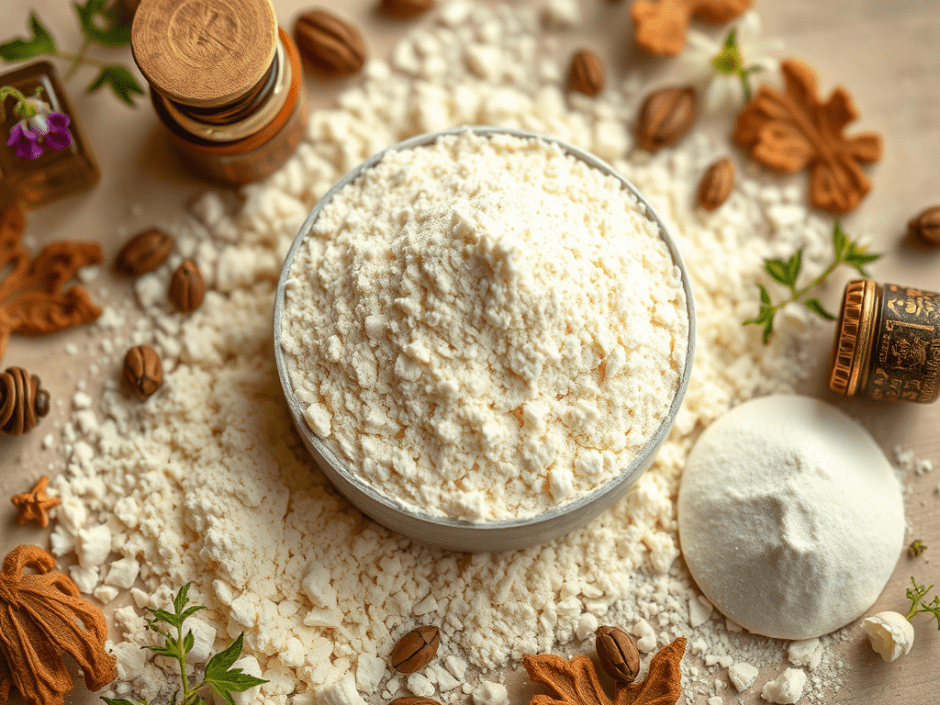
IT IS POSSIBLE TO REGULATE THE EXCESS OF TRANSPIRATION with a natural deodorant based on alum powder.

We have designed this deodorant recipe specially to treat the hyperhidrosis problems of some people because we have known that the alum stone, together with some essential oils that we will detail below, is a treatment for body odour problems (which have not been able to solve with commercial antiperspirants) and in situations of hyperhidrosis or excessive sweating.


The knowledge of the medicinal properties of the natural stone of alum dates back to ancient times: The great ancient civilizations such as the Chinese, Egyptian, Roman, Indian, Greek and Arab, recognized the benefits of the stone of alum and its use for different purposes it was common and popular.

The Romans, for example, used it for its healing, antibacterial, and deodorant properties. The popular use that confirmed the effectiveness of these benefits, even led them to introduce their use in practices with medical effects. Between 77 and 79 BC, the Roman author, naturalist and philosopher Gaius Plinii Secundi (Gaius Pliny Segundo) recorded the characteristics and properties of alum in a rigorous study of various areas of nature, written like an encyclopaedia, called Historia Naturalis.

In ancient Greece, around 50 or 70 BC. C., also produced documentation on this mineral, in the encyclopaedic work De Materia Medica, of the physicist, pharmacologist and botanist Pedanius Dioscorides.

In India and China, it has been used since ancient times to respond to organic needs externally and internally. These two cultures have commonly used Alum in solution for gargling and vaginal baths for antiseptic purposes.

In the Middle East, alum has been widely known and used, as numerous deposits of this mineral have been found in Syria. Alum stone has been an active part of ancient beauty rituals in Arab culture for its firming and astringent properties.

NATURAL ALUMBER (potassium alum) not only has deodorizing properties, it is also an effective bactericide that controls the growth and proliferation of bacteria, both in our body and in our environment, in spaces such as water and on surfaces of all kinds such as floors. , fabrics, etc. And that is why the Egyptians used these stones to purify water.

–It is also a good healing agent, which helps to rapidly regenerate skin tissue that has been affected by some type of wound or skin irritation. In the case of wounds, it produces a thin crust that comes off in less time and without the risk of leaving marks on the skin. This is the reason why in the past this stone was known as a barber’s stone or shaving stone because it was used to heal minor irritations on the beard of its clients.

–Haemostatic: Its composition makes it effective in stopping bleeding from external wounds, since it acts directly on the skin pore to close it. This haemostatic action is what helps prevent the appearance of red rashes on the skin after depilatory processes.

–Firming: It has the ability to firm the skin and tone it with continuous use.

–Antifungal: Like bacteria, alum also helps fight fungi that appear on the skin or on other types of surfaces. Of course, it is only effective in the initial phase of appearance of these microorganisms.

This is what they say about on the page “Better with Health” (https://mejorconsalud.as.com/acabando-con-el-sudor-excesivo/): “The stone of alum is a very effective mineral considered the best natural deodorant. It does not leave any residue and it works even in the most difficult cases. To use it, you must wet the stone and apply it as a roll-on deodorant”.

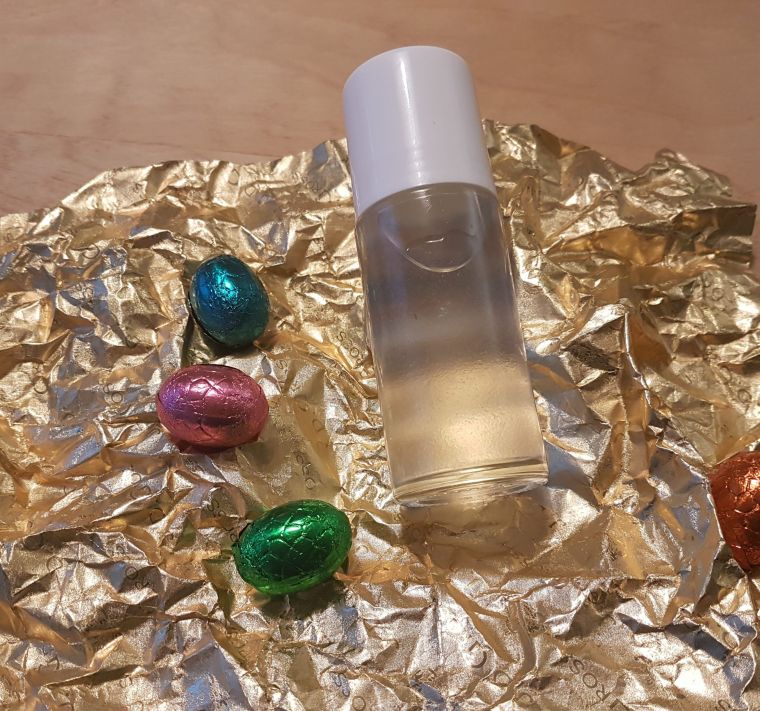
The possibility of wetting the natural stone with water exists, without a doubt, but we wanted to facilitate its application by preparing this convenient roll-on deodorant recipe that also has the added effectiveness of essential oils that regulate sweat.

Basically, you will need 4 ingredients to prepare this recipe:

Distilled water or a hydrolat of your choice. It is also possible to use an herbal infusion, but with an infusion there are more chances that your product will be more easily corrupted and you would have to add some other stronger preservative, which we do not think is appropriate.

Therefore, distilled water

Glycerine,

Transparent xanthan gum

And alum powder, along with the essential oils.


WHAT DOES HYPERHIDROSIS CONSIST OF?

According to the Mayo Clinic, “Hyperhidrosis is abnormal and excessive sweating that is not necessarily related to heat or exercise. You can sweat so much that your clothes get soaked or dripping from your hands. In addition to disrupting normal daily activities, this type of heavy sweating can lead to social anxiety and embarrassment. “

The conventional treatment of hyperhidrosis involves using strong prescription antiperspirants. However, some people find antiperspirants not working for them. In severe cases, the doctor may recommend surgery to remove the sweat glands or disconnect the nerves responsible for the overproduction of sweat.

According to the Mayo Clinic, “The most common type of hyperhidrosis is called ‘primary focal hyperhidrosis’ (essential). In this type of hyperhidrosis, the nerves responsible for sending signals to the sweat glands become hyperactive, despite not having been triggered by physical activity or increased temperature. Being stressed or nervous makes the problem even worse. This type generally affects the palms of the hands, the soles of the feet, and sometimes the face. There is no medical cause for this type of hyperhidrosis. It is possible that it has a hereditary component, since, sometimes, it runs in several members of the family.

Secondary hyperhidrosis occurs when excessive sweating is due to illness. It is the least frequent type. It is more likely to cause sweating all over the body. Disorders that can cause severe sweating include the following: diabetes, hot flashes in menopause, thyroid problems, nervous system disorders” …

https://www.mayoclinic.org/es-es/diseases-conditions/hyperhidrosis/symptoms-causes/syc-20367152

This recipe has worked for some well-known people to improve their situation and that is why we propose it. If you don’t want to prepare the roll-on deodorant recipe, be aware that rubbing the wet alum stone under your armpits also works. Likewise, the deodorant, as well as the stone, also work in other areas of the body where the problem may exist.

And not only that, this deodorant is formulated with a luxurious base that we have thickened with transparent cosmetic-grade xanthan gum * so that no stains are produced when using this deodorant.

Take a good look at acquiring xanthan gum that is transparent and cosmetic grade. And I tell you this from my own experience, because that is how I learned that there was a difference between the xanthan gum that we can use, for example, to thicken our homemade recipes for bread or cakes, and the transparent xanthan that is used in natural cosmetics.

I leave you some links where you can find the xanthan gum:

Tallernatural: https://www.tutallernatural.com/varios/484-goma-xantana.html

Jojoli.nl (Nederland): https://www.jojoli.nl/xanthaan-transparant.html

Cremascaseras.es:https://www.cremas-caseras.es/gelificantes-y-espesantes-naturales/144-xantana-transparente.html#

Naturallythinking: https://naturallythinking.com/xanthan-gum-clear#

Another reason why we especially like this recipe is because of its stability. Once prepared, you can forget about its expiration since it is always kept in the same conditions. Something not always easy to achieve when we talk about cosmetics and we also want to use the minimum preservatives as is our case and the “slow” philosophy that we share with you from this blog.

A very important question when dealing with the issue of the regulation of excess body sweat, or hyperhidrosis, is that we see what EO we can use as regulators and, in this case, adjuvants of the action of powdered alum salts. We are not going to use synthetic preservatives such as Cosgard, Geogard, Sharomix, etc., therefore, it is important that we carefully choose the essential oils that will act as preservatives in this recipe.

The essential oils known for their ability to control excess sweating are, above all, those of sage, cypress and palmarosa. Also, rosemary, tea tree and rockrose are a good help. If you do not have Palma Rosa EO you can, perhaps, use some of the above combined essential oils. If you have a Palma Rosa EO, it will be enough by itself to solve the problem. In addition, this oil is suitable to combat body odour in all skin types.

Sweat-regulating essential oils:

Sage: Sage Sclarea fights stress, often a trigger for excessive sweating, and also limits sweating.

Cypress: Like Palma Rosa, it is very effective against excessive perspiration.

Rockrose: This oil is strongly astringent and has the ability to close the sweat pores of the eccrine glands, mainly present on the palms of the hands, the soles of the feet and the forehead. Thanks to this, the amount of sweat secreted will decrease, since the eccrine glands are connected to these pores by an excretory channel.

Palma Rosa: This essential oil is effective against excessive perspiration and fights bacteria and bad odours, leaving us a pleasant and floral aroma that reminds us of the rose.
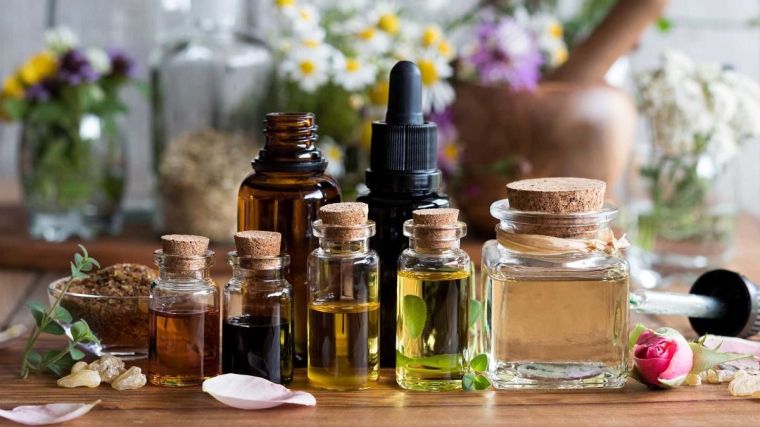
 

LET’S GO WITH THE RECIPE

Ingredients for about 50 ml:

50 ml of hydrolat or distilled water

4 grs alum powder

10 ml of vegetable glycerine or glycerinated extract

0.4 g of clear xanthan gum.

And a few drops (a maximum of 20 drops) of essential oil of sage, palmarosa, cypress, rockrose or rosemary (a combination of all of them is also possible) since we want the deodorant to regulate hyper-perspiration.

As you know from other posts, we are not very fond of using essential oils in daily use products such as deodorants. In this case, the EOs that we have used would rather fulfil a “treatment” function given their effectiveness in regulating the problem of hyper-sweating that we want to treat.

In the event that you do not suffer from hyper-perspiration, and you want to prepare this deodorant recipe, it would also be possible to use less amount of softer EO such as ylang ylang, lavender, palmarosa, or bergamot, without furocoumarins, to avoid the effect of photosensitization …

Or, better yet, substituting the 10 ml of vegetable glycerine for 10 ml of glycerinated rosemary extract, for example.
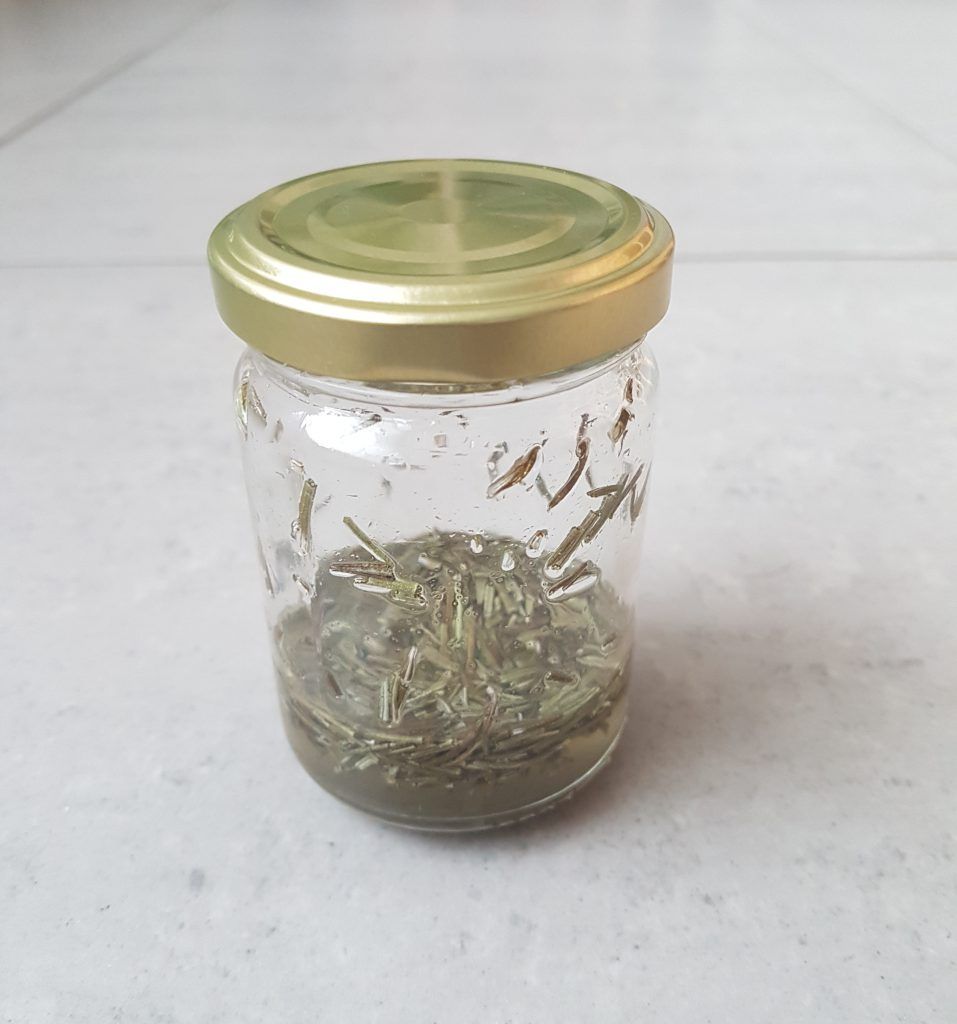


The glycerinated extract of rosemary is also a good way to add aroma to your deodorant and preservative and deodorizing qualities.

In a future article we will explain better how to prepare the hydro glycerol extracts.

PROCEDURE:

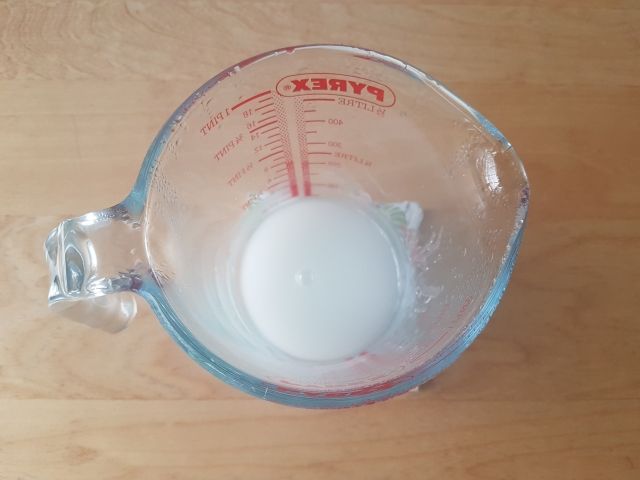
The base of our deodorant will be the mixture of water, xanthan and glycerine that will make up a kind of gel. In this gel base that will facilitate the application of our deodorant in roll-on format, we will introduce the salts of alum that will be our main active principle.

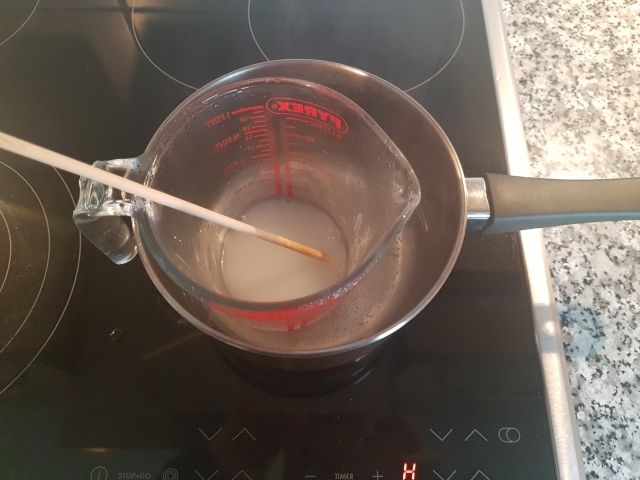
Previously, we will undo the xanthan gum in the glycerine and the alum salts in the distilled water until they are perfectly dissolved.

Now we will gradually incorporate the mixture of alum salts and water to the mixture of glycerine and xanthan gum.

This is necessary to do so because xanthan gum does not dissolve well directly in water and lumps will form.

Finally, we will add our essential oil, or a combination of them with a maximum of 15 drops of oil.

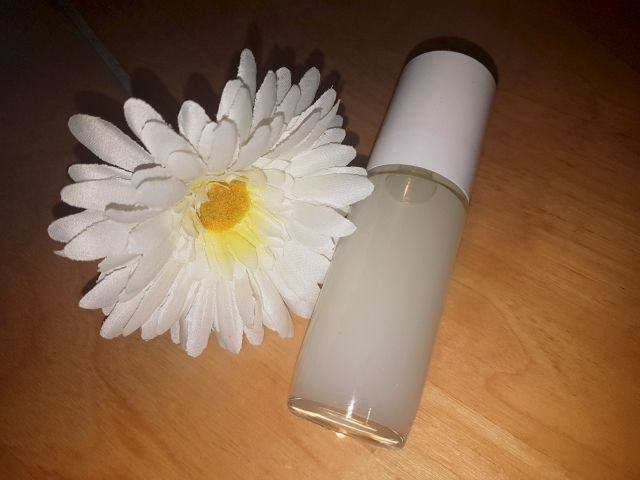
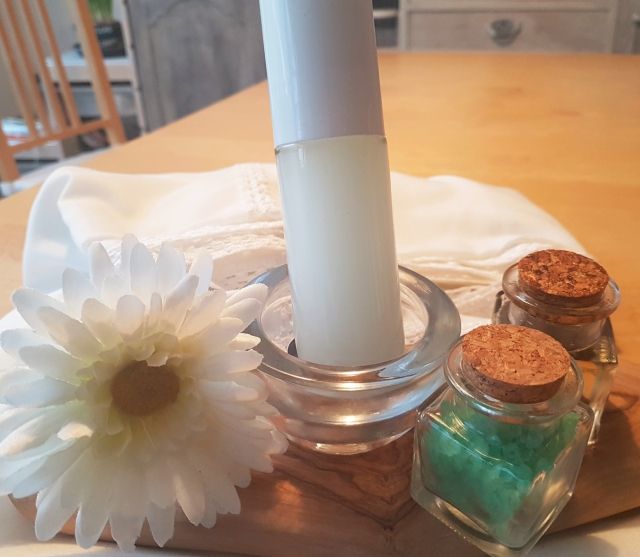
We have our deodorant ready!


We hope you liked this post, if so, leave us your comments 🙂
 

WHY IS IT IMPORTANT TO MAKE OUR OWN NATURAL DEODORANT?

The report acknowledges the fact that certain substances (parabens, phthalates, aquiphenols, nonylphenols, perfluorinated…) act as endocrine disruptors and that combined intervene in chronic diseases affecting not only humans but animals, in particular reproductive abnormalities. * The EU itself ensures through the REACH report (a list of 138 suspicious substances) that 99% of chemicals barely have data on their uses, characteristics and how they should be managed to be safe. So we don’t understand why they put them into circulation. Or do you understand it?

However, it happens that it is very difficult to establish a causal relationship between exposure to these substances and a hormonal alteration that poses a health risk.

That is, a person can be all his life putting on creams with parabens, painting his nails (and eating the enamel because he also bites them), eating heated food in bad quality plastic tuppers and being in contact with endless more toxics and reaching 90 so richly. And Gwyneth Paltrow (known as eco celebrity) may develop a disease linked to these endocrine disruptors tomorrow when at home everything comes from certified and sustainable organic products. Yes, life is that unfair. No, it’s not that. It’s got an explanation.

My grandfather was one of those men of an ancient era when the only existing contamination was the smoke of cigarettes that he smoked and, of course, he reached 91.

This is possible because the human body has a system of emuntorial or excretion organs such as the kidneys, liver, skin or lungs that are responsible for ridding us of toxic substances that end up in our bloodstream; either through the diet, either through the air we breathe, or through the substances (deodorants, creams, nail polishes, hair dyes, etc.) that we get on the skin.

All this makes it difficult to establish a relationship between these diseases and certain chemical compounds, as it is not a cause-and-effect relationship.

The EU also introduces in this text something that scientists, and in particular Dr Olea, have long denounced and is the so-called “cocktail effect“, since humans are exposed to these combined substances in our day-to-day life.

To find out more: book by Professor Nicolas Olea, Free yourself from toxics. Guide to avoid endocrine disruptors.

And that is also what we from this blog have insisted on highlighting and we have called a “toxic crisis” because we consider that the amount of chemicals susceptible of toxicity that surround us today everywhere is not comparable with the environmental situation that could have been in the past century in which my grandfather lived.

And that is why we wanted to dedicate this post to deodorants, since within the infinite range of toxic products that surround us everywhere, deodorants and antiperspirants are particularly undesirable because of the suspicions that, for years, have been had on their influence on breast cancer and Alzheimer’s, among other ailments.

In principle, it is important that we understand that “sweating” is an essential physiological need for our body to eliminate toxins and maintain good levels of hydration, body temperature and PH.

WHAT’S IN CONVENTIONAL DEODORANT?

Commercial antiperspirants and deodorants contain substances such as parabens, triclosan and artificial fragrances that can be endocrine disruptors, alter our metabolism, affect brain development, weaken muscles, decrease sperm count and act as allergens, among other things.

If we take a closer look at the labelsof our commercial deodorant, we will find the following type of harmful chemicals:

Parabens: Parabens are preservatives that are included in hygiene and cosmetic products, which have micro plastic balls. They are so small and common that they spread through water and end up directly at sea.

At first it seems to be a small amount, but if we think of all the people who use cosmetic products on a daily basis, it is a lot of pollution. On this page you can find more information about it and identify the parabens and silicones hidden in conventional creams and hygiene products.

https://www.ewg.org/

Some of them are already beginning to be banned in the legislation of some countries and that is why new substitutes such as phenoxyethanol, which, unfortunately, are not much more benign, are being used.

We need to analyze what we consume and investigate to know what we eat and use, because we are the result of what we consume.

Fragrances: Of course, we all want to smell good, something fresh and / or floral, for example. But this term is nothing more and nothing less than a whole cover-up for a cocktail of up to 3,000 chemicals that are related to numerous serious health problems. These synthetic aromas are some of the most toxic ingredients included in skin care products (even in the many options disguised as “natural”!) And the American FDA (but also European laws) allow companies to keep these formulations secret. Smell good after a shower thanks to fake fragrances that cause damage to our skin and to aquatic life? No, thank you.

Phthalates: They are fixators of synthetic fragrances that guarantee that we smell good for longer. These substances have been found to be endocrine disruptors that also cause teratogeny, i.e., birth defects and that is why the EU banned in 2004 some of the most aggressive in toys and baby products: Diethyl Hexyl Phthalate (DEHP), Dibutyl Phthalate (DBT) and Benzyl Buthyl Phthalate (BBP).

These substances have also been removed from cosmetics (Regulation 1223/2009), but phthalates such as Dimethyl Phthalate/Dimethyl Phthalate (DMP) or Dietyl Phthalate/Diathyl Phthalate (DEP) are still authorised. They can be found in gels, shampoos, soaps, lotions, cosmetics, perfumes, air fresheners…

THE DEP, for example, is used as a solvent and as a vehicle for aromas or other cosmetic ingredients. Perfumes  are one of the products in which higherconcentrations of this chemical have been identified. We note thecontroversial ‘Eau de Tóxicos’ report that was presented by Greenpeace in 2005 with the results obtained from the analysis of 36 perfume waters and colonies, including some well known. Phthalates (DEPs) were present in 34 of the 36 perfumes sometimes studied at fairly high concentrations (somewhere reaching a concentration of 2.2% of the total weight).

For its part, DMP is used for example in hairsprays, anti-mosque remedies or perfumes, to make them more persistent. Sometimes, they don’t even appear on the label.

Aluminum: Unfortunately, perspiration still has a bad reputation. That’s why  most of us are looking for  anti-sweat odorants. And any antiperspirant deodorant contains aluminum. Aluminum prevents    sweating/perspiration by blocking pores, that is, totally at the expense of the health of  our  body and brain. Research has linked aluminum to harmful diseases and toxicity due to continuous exposure to heavy metals. In addition, it interferes with the body’s natural and necessary cleansing function as it prevents sweating, preventing the body from detoxing properly.

Unfortunately, some people try the natural deodorant and feel that they smell worse (which is actually just the detoxification of their body) and end up throwing in the towel before their body adapts not to use antiperspirant. With a simple trick, such as avoiding synthetic fiber underwear, this problem is minimized.

However, many other people have also discovered solid natural deodorants and bicarbonate-based ones that work very well and are very effective.

That’s why these deodorants have become hugely popular in recent times and there are many natural cosmetic brands that sell them.

Like: https://www.threehillssoap.ie/  in Ireland. The brand itself specifies the content of its deodorants: arrowroot powder, shea butter, coconut oil, baking soda, zinc oxide, allantoin and essential oils.

Or https://thehappysoaps.com/product-categorie/natuurlijke-deodorant/  with natural soaps and natural cream deodorants produced in Holland, etc…

Or this one in Spanish, https://www.luffashop.com/producto/desodorante-solido-natural  who has a physical store in Barcelona.

And also, many of us are learning to prepare them at home in a very simple manner:

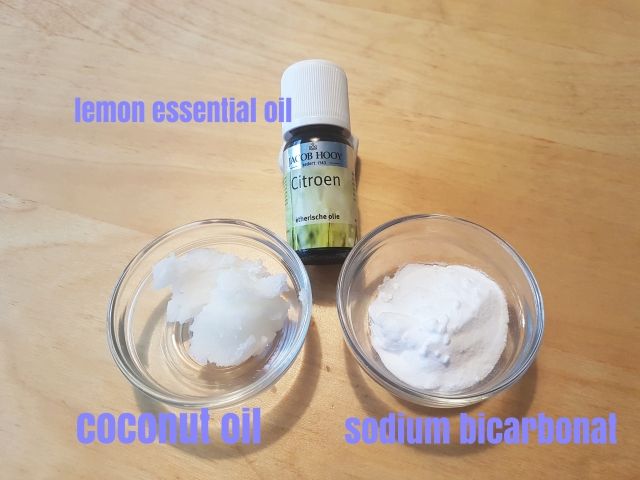
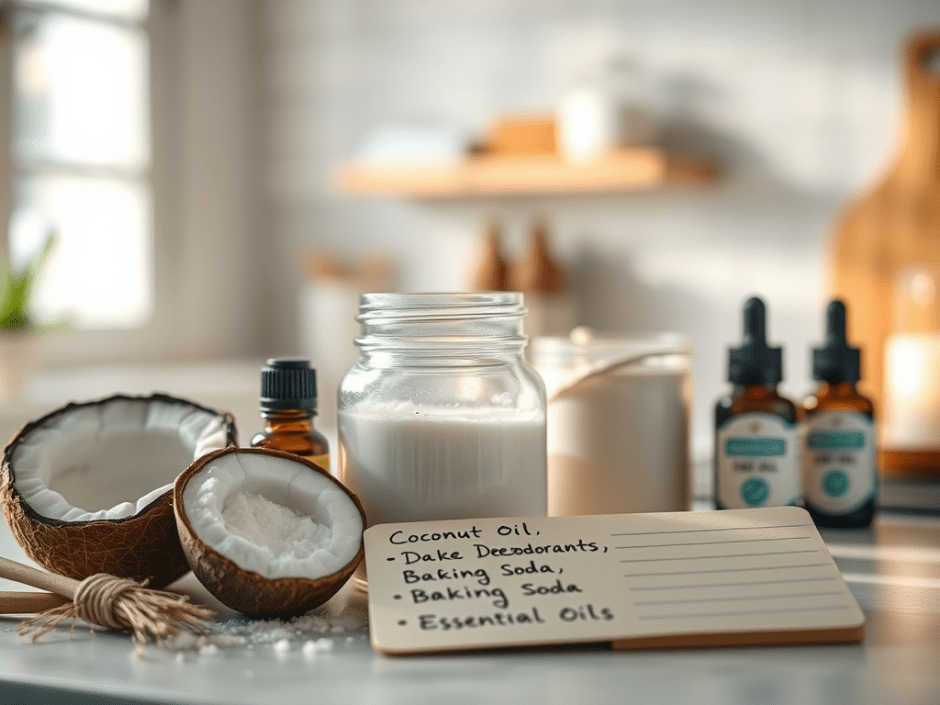
And it is possible to prepare an effective deodorant ready for use with three ingredients: Bicarbonate, coconut oil, and a few drops of lemon EO.

For the sophisticated ones, and to facilitate its duration and transport, we certainly have recipes a little more elaborated.

CREAM DEODORANT with Palm rose EO

INGREDIENTS, for a box of about 50g

20g shea butter

15g baking soda

10 g maizena

5g cocoa butter (if winter, even less)

Optionally, 5 drops of Palm rose EO or Tea Tree, which are the most effective EO when it comes to controlling body odor, and provided that EOs do not cause irritation to your skin.

If you don’t have sensitive skin you can even put a little more amount, EO will make your deodorant even more effective. But, as I always say, with EO, that they are genuine natural antibiotics, it is always better to be cautious and not to overdo it. Especially since deodorant is a product that we use in our daily hygiene.

In any case, if, like me, you have very sensitive skin with a tendency to eczema and hives, it is better that you do not use deodorant usually. (Natural deodorants, even if they are toxic-free, also interfere with your skin’s bacterial barrier, other ways they would have no effectiveness.)

You can, for example, wear it when you go to physical exercise or when it’s too hot and you anticipate that you’re going to sweat too much. Nobody likes to smell bad, of course. If you do this,  you’ll see how many rash attacks you avoid just by letting your skin breathe freely. Don’t forget, sweat doesn’t happen by chance. Sweat has an important body function of removing toxins and in skins whose lipid barrier is altered this is especially important.

NOW WE GO WITH THE ELABORATION PROCESS, which is very easy.

Instructions: Put the shea butter and cocoa butter in the water bath until completely melted. Remove from heat and add baking soda and  maizena. When the mixture starts to cool and thicken, we can add a few drops of essential oil and pack in a container of about 50 grams.

Bicarbonate, due to its alkaline ph, also causes redness and irritation to some people because, as you know, the ph of our skin is rather acidic.

To avoid this, some formulations contain plant allantoin, such as that of the three-hill-soap store, and other recipes, are prepared with less baking soda and more corn starch. Like for example this formulation, it contains only half a teaspoon of baking soda.

For a 50 grs aluminum case.

2TBSP shea butter

1 tsp coconut oil

Melt everything well and add the 3 TBSP of corn starch. And 1/2 tsp of baking soda

Mix well and optionally put a few drops of essential oil. I put a few drops of EO of litsea cubeba and it has a fantastic citrus aroma. Now we can let it cool down a little in the fridge until it hardens and it’s ready.

Other recipes, what they do is avoid baking soda and use other substances with less irritating deodorant capacity such as alum powder or zinc oxide.

ALUMBRE STONE DEODORANT in cream

We’ll need 2 tablespoons (TBSP) of natural alum stone powder

4 tablespoons (TBSP) coconut oil

1 teaspoon white clay

4 drops of palm rose or tea tree essential oil

We will melt the coconut oil in a container in the water bath. Next, we’ll add the alum stone powder and baking soda to the coconut oil that’s in the water bath. Mix well for a smooth, homogeneous texture and remove from the heat.

Finally, once thickened, we will add the essential oils and pack. Coconut oil melts in summer at a temperature of 25ºC, in this case, we can add some cocoa butter to the composition or keep it in the fridge if it stays too soft.

IN STICK: If you want a completely solid version of this deodorant recipe, add 5 grams of beeswax to the recipe (take it to the Maria bath along with coconut oil). Then you can transfer the mixture to a rechargeable stick bar.

ZINC OXIDE DEODORANT in cream:

This recipe is suitable for sensitive skin thanks to the absence of essential oils, but also bicarbonate, which can be irritating to some people.

We need: 25 grams coconut oil

10 grams cornstarch

10 grams kaolin clay

3 grams zinc oxide

0.5 grams of wax

Optionally, a few drops of AE of Palm Rose, lemongrass, litsea cubeba or the aroma that we like the most. (Lemongrass and Litsea Cubeba give it citrus and refreshing aromas).

PROCEDURE:

We’ll melt the coconut oil and wax in the water bath. Turn off the heat and add the powders (i.e. cornstarch, zinc oxide and clay). We mix well. If you have lumps, we will use a small blender or foamer to make the mixture completely homogenic.

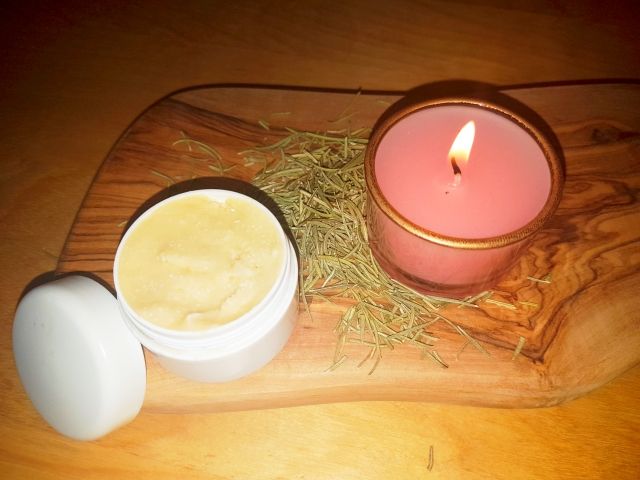
We’ll pour into a container of about 50 grs. The mixture will harden slightly with the wax and will have a pleasant creamy effect. Just take it a little with your fingertip and spread it into your armpits by massaging for a few seconds. There are no white or fatty effects that can stain clothes or disturb!

If you add more wax to this recipe, you can turn it into a solid bar deodorant and pour it into a stick container for ease of use.

And you, still don’t make your own deodorant?

If you’re lazy to make your own deodorant, move on to the alum stone.

About the alum stone we spoke in an earlier post for its many advantages:

-It is skin friendly and does not irritate it despite being astringent, antiseptic and antibacterial.

-Do not stain clothing. It leaves no trace of use, so wear the darkest clothes, it will not turn yellow or white on contact.

-It has no chemicals, no additives, no artificial dyes.

-And also take care of the environment because you can use a recycled bottle or buy one and reuse it so as not to generate waste, a rechargeable deodorant!

MODES OF USE

1.- Solid method: It is possible to use the stone directly by rubbing it into the armpits with a little water.

2.-Spray method: Many stores sell alum powder, or even chunks of alum stone. In this case, we can simply crush the stone to include it, with a little water, in our deodorant spray with atomizer. If you have it powdered, or the pieces are small, put them directly into the atomizer bottle because the next day will be completely melted and you will be able to use the atomizer.

3.-Roll-on method: This method is a little more sophisticated and requires a little more elaboration, but it is the method that gets a more comfortable application in its use.

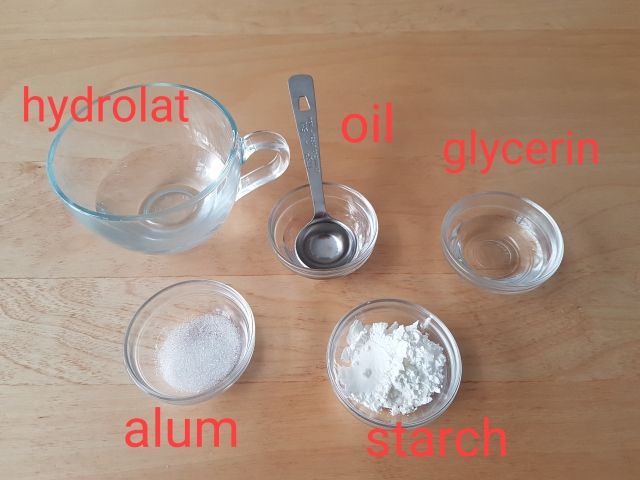
For about 50ml:

50ml hydrolat or distilled water

1 tsp corn starch

3gs alum powder

1 tsp vegetable oil (we have chosen fractionated coconut oil, but almond oil would also be very suitable)

10 ml vegetable glycerin

And a few drops of ylang ylang essential oil, which is very mild and does not cause irritation, and GSP (grapefruit seed extract) which is also a very mild preservative that provides a citrus aroma.

PROCEDURE:

Put our hydrolat in the water bath and add the teaspoon of corn starch. The heat will cause the mixture to start gelling a little. We don’t want it to completely thicken, just gelled a little and then we will remove it from the heat.

In this mixture of hot water and starch (arrowroot, corn, wheat…) we will integrate the alum powder until completely dissolved.

Now add the teaspoon of vegetable glycerin and vegetable oil without stirring. It is important that the mixture is kept warm so that glycerin and vegetable oil are fully integrated.

And finally, a few drops of essential oil (optionally) and ESP to preserve our deodorant for longer.

As you can see, it has a spectacular appearance and emollient texture. If you do not like to pass the alum stone through the armpits and want a little more softness and aroma, this recipe of deodorant in roll-on is comfortable to apply, simple to make, irritates very little and is very effective because alum is and our formulation contains 3 grams of powdered alum dissolved in hydrolat or distilled water.

We hope you liked this entry, if so leave us your comments and subscribe to the bell to receive notifications of our upcoming posts.